
Related News
- 00
0000-00
What determines equipment durability on airport construction sites? - 00
0000-00
How terrain and dealer support shape machinery selection in Latin America - 00
0000-00
How market insight content analysis reveals shifts in equipment demand - 00
0000-00
When do OEM heavy machinery parts justify their higher cost? - 00
0000-00
What to compare among construction equipment manufacturers in North America
Heavy Equipment Rental Costs: Daily vs Monthly Pricing Explained
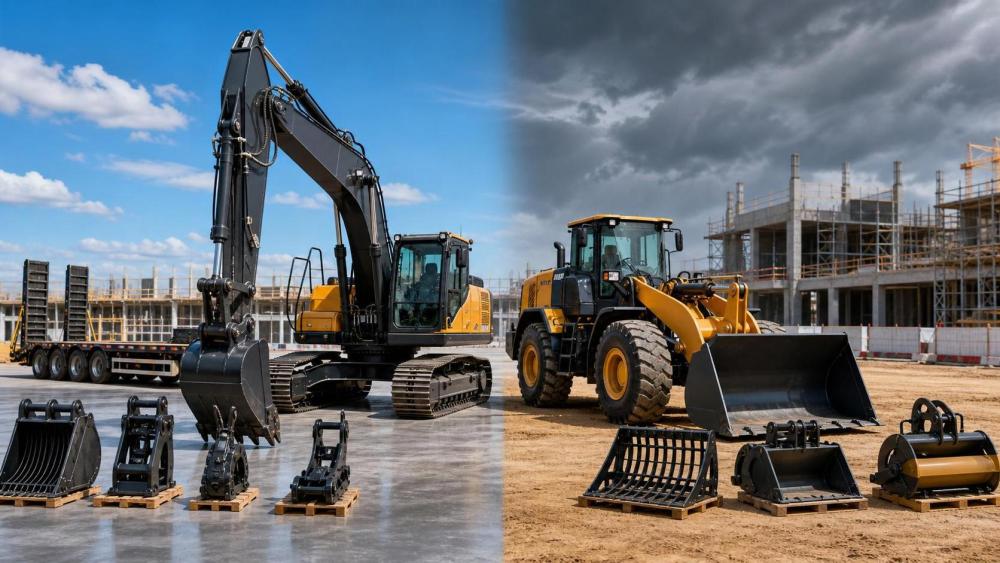
For procurement teams, understanding heavy equipment rental costs is essential to balancing project uptime, cash flow, and total equipment spend.
This guide explains daily versus monthly pricing in plain language.
It helps buyers compare rate structures, usage patterns, transport fees, and hidden charges.
That makes it easier to choose the most cost-effective heavy equipment rental strategy.
Why Daily and Monthly Rates Differ
At first glance, daily rates look simple.
You pay for short access to a machine and return it quickly.
Monthly rates work differently.
They spread fixed supplier costs across a longer rental term.
That usually lowers the effective daily cost.
In actual sourcing, the gap can be significant.
A crawler excavator rented for five days may cost far more per day than one booked for four weeks.
This is why heavy equipment rental decisions should never rely on headline rates alone.
What Suppliers Build Into Pricing
- Fleet utilization risk during slow periods
- Maintenance scheduling and service calls
- Transport planning and fuel logistics
- Operator misuse and wear exposure
- Administrative overhead and insurance handling
The shorter the rental, the more these fixed costs influence the price.
When Daily Heavy Equipment Rental Makes Sense
Daily heavy equipment rental is best for brief, defined tasks.
Think emergency trench repair, one-off loading support, or a short grading window before paving.
It also works when project timing is uncertain.
A short contract reduces commitment if permits, weather, or site access may delay work.
Best Use Cases
- Weekend shutdown work at industrial sites
- Temporary replacement during owned fleet breakdowns
- Small demolition or cleanup jobs
- Testing a machine size before a longer commitment
Still, daily pricing can get expensive fast.
If the rental stretches beyond a week, buyers should recalculate immediately.
More often than not, a monthly rate becomes the smarter heavy equipment rental option.
When Monthly Pricing Delivers Better Value
Monthly heavy equipment rental is usually the better fit for planned production work.
That includes excavation phases, site development, haul road shaping, and repeated material handling.
The unit rate drops, budgeting becomes cleaner, and transport costs are diluted.
This matters even more on large infrastructure jobs.
A wheel loader or motor grader sitting on site for three weeks should rarely stay on a daily contract.
Financial Advantages of Monthly Rental
- Lower effective day rate
- Fewer invoice fluctuations
- Stronger leverage for fuel, delivery, or damage terms
- Better planning for utilization and standby time
From a procurement view, monthly heavy equipment rental supports more predictable total cost control.
The Hidden Charges That Change the Real Cost
The quoted rental rate is only one part of the spend.
The bigger issue is everything around it.
This is where many heavy equipment rental budgets drift off course.
Common Extra Costs
- Delivery and pickup fees
- Mobilization between project phases
- Overtime hour charges
- Weekend or holiday usage premiums
- Damage waivers and insurance add-ons
- Attachment rental for buckets, breakers, forks, or blades
- Cleaning, refueling, and environmental compliance fees
A lower daily rate may still cost more overall if transport is repeated several times.
That is why total landed cost matters more than the visible rental number.
How to Compare Daily vs Monthly Rates Correctly
A clean comparison starts with expected machine hours.
Many suppliers price a day on eight hours and a month on 160 to 176 hours.
Anything above that may trigger overtime.
Without checking hour caps, a cheap quote can become misleading.
Use This Comparison Checklist
- Estimate actual working days, not calendar days alone.
- Confirm included operating hours for each pricing structure.
- Add one-time and repeated transport costs.
- Review attachment needs by task phase.
- Check whether maintenance downtime affects billing.
- Model delay scenarios caused by rain, permits, or utility conflicts.
In practical terms, heavy equipment rental comparisons should be built around actual production conditions.
Sample Cost Logic by Equipment Type
Different machines behave differently in a rental budget.
Utilization, transport complexity, and attachment demand all affect value.
This type of equipment-by-task review usually leads to sharper heavy equipment rental decisions.
Procurement Risks to Watch Before Signing
Recent market shifts make rental terms more important than ever.
Fleet availability can tighten quickly during infrastructure peaks.
At the same time, emission rules and low-hour machine demand are changing supplier priorities.
That means contract detail now matters as much as price.
Review These Clauses Carefully
- Substitution rights if the quoted machine is unavailable
- Responsibility for field repairs and replacement timing
- Billing treatment during breakdown downtime
- Telematics use, idle tracking, and hour verification
- Emission tier compliance for regulated job sites
A strong heavy equipment rental agreement protects uptime, not just unit price.
A Practical Rule for Choosing the Right Rental Term
If machine use is brief, unpredictable, or highly specialized, daily rental is usually reasonable.
If use extends beyond one to two weeks, monthly pricing often deserves a serious review.
The clearer the schedule, the stronger the case for a monthly deal.
The more variable the project, the more flexibility matters.
In real buying situations, the best heavy equipment rental choice balances cost, availability, and risk.
That is especially true for excavators, loaders, graders, bulldozers, and skid steers supporting critical production milestones.
Before issuing a purchase order, compare total hours, total fees, and likely delay exposure.
Then ask suppliers to quote both structures side by side.
That simple step often reveals the real savings opportunity.
For teams managing infrastructure spend, better heavy equipment rental decisions start with better cost framing.
When pricing is viewed through utilization, logistics, and contract risk, the right answer becomes much clearer.
Use that approach consistently, and rental spend becomes easier to control across every project phase.