
Related News
- 00
0000-00
How order volume affects private label equipment production costs - 00
0000-00
Volvo Group Plans Dedicated Mining Entity for Equipment and Autonomous Solutions - 00
0000-00
How much does a 3D grader guidance system cost fully installed? - 00
0000-00
How to verify capacity before sourcing equipment from manufacturers - 00
0000-00
When to choose LGP dozers for infrastructure site preparation
Heavy Equipment Customization: Cost, Lead Time, and ROI Factors
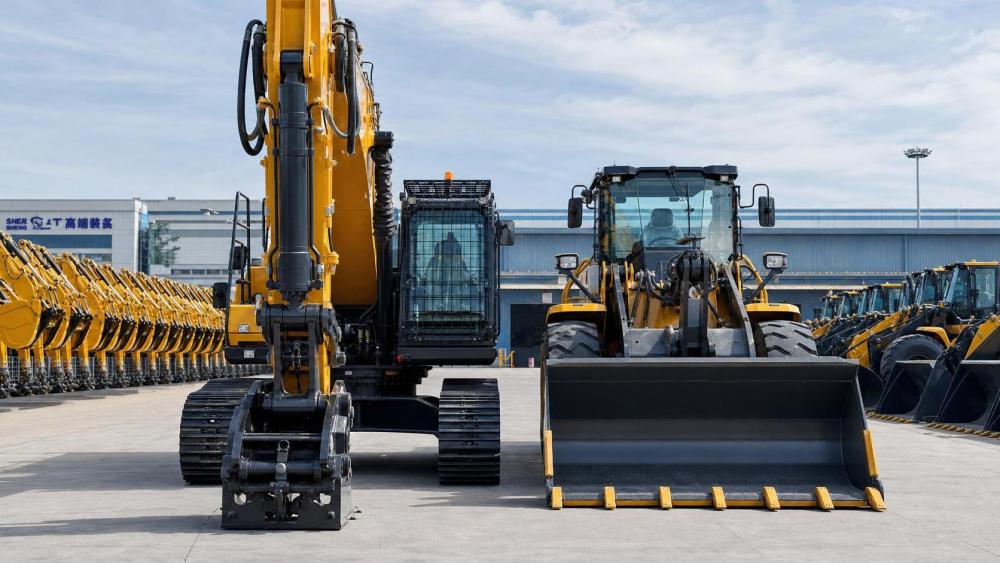
For procurement teams, heavy equipment customization is more than a technical upgrade. It is a capital decision that shapes project timing, utilization, maintenance exposure, and resale outcomes.
In heavy earthmoving, the wrong specification can create years of hidden cost. The right one can improve fuel use, operator productivity, attachment compatibility, and asset life.
That is why heavy equipment customization deserves a disciplined buying framework. Cost, lead time, and return on investment should be evaluated together, not in isolation.
Across excavators, loaders, graders, bulldozers, and skid steers, customization is now tied to tighter emission rules, digital controls, and more specialized jobsite demands.
From a purchasing perspective, the practical question is simple: which custom features create measurable value, and which ones only raise price and delay delivery?
Why Heavy Equipment Customization Is Growing
Standard machines still cover many applications. But recent market shifts are pushing buyers toward more tailored configurations and job-specific equipment packages.
One driver is labor pressure. Fewer experienced operators mean machines must be easier to run, safer, and more forgiving in mixed operating conditions.
Another factor is site complexity. Urban jobs, quarry work, utility trenching, airport grading, and mining support all demand different hydraulic, structural, and control requirements.
More visibly, telematics and machine control systems have moved from premium extras to planning tools. Custom integration now affects reporting, uptime management, and compliance workflows.
This changes the buying conversation. Heavy equipment customization is no longer only about attachments or paint. It now includes software, emissions, guarding, operator environment, and fleet data architecture.
What Drives Customization Cost
Customization cost usually starts with the base machine platform. A common model with factory-supported options is cheaper than a rare build with extensive engineering changes.
The next layer is feature type. Some upgrades are simple bolt-on items. Others affect hydraulics, counterweight balance, control logic, cooling systems, or frame reinforcement.
Main cost categories
- Factory option packages, such as auxiliary hydraulics, quick couplers, grade control, or heavy-duty undercarriages.
- Structural modifications, including boom changes, guarding, blade reinforcement, axle protection, or specialty buckets.
- Powertrain and hydraulic changes that require new flow rates, pressure settings, pumps, cooling, or software calibration.
- Compliance items, such as regional emissions packages, noise reduction, safety lighting, and operator visibility upgrades.
- Digital integration, including telematics, remote diagnostics, payload systems, and machine control interfaces.
There is also a softer cost that often gets missed. Engineering review time, approval cycles, and supplier coordination can add internal procurement expense.
In practice, the lowest quoted price does not always produce the lowest acquisition cost. Rework, installation delays, and warranty ambiguity can erase apparent savings very quickly.
A useful rule is to separate cosmetic customization from operational customization. The second group usually deserves more budget scrutiny because it affects machine behavior and long-term serviceability.
How Customization Affects Lead Time
Lead time risk is where many purchasing plans become fragile. Heavy equipment customization can extend delivery even when the base unit is already in production.
Factory options with standard part numbers usually move faster. Nonstandard fabrication, software edits, or imported components can add weeks or months.
Typical lead time pressure points
- Component availability for pumps, valves, sensors, undercarriage parts, and electronic modules.
- Engineering sign-off for load balance, structural stress, and software validation.
- Regional certification for emissions, transport dimensions, or safety requirements.
- Dealer or upfitter installation capacity, especially during seasonal demand peaks.
- Commissioning and operator training before the machine is released to site.
This also means procurement should ask where the customization happens. Factory-built changes and dealer-installed changes carry different schedule, warranty, and quality implications.
A shorter lead time is not automatically better. Rushed installation can create handover defects, missing documentation, or incomplete calibration that later disrupts operations.
The stronger approach is to map the delivery path from order release to first productive hour. That timeline reveals whether customization is genuinely manageable.
Calculating ROI for Heavy Equipment Customization
ROI should be based on measurable site outcomes. That includes production gains, lower operating cost, fewer delays, reduced safety exposure, and stronger residual value.
For example, an excavator with optimized auxiliary hydraulics may run attachments faster. A grader with integrated 3D control may reduce passes, staking needs, and rework.
The financial case becomes clearer when benefits are translated into hours, fuel, maintenance intervals, labor saved, and avoided subcontractor cost.
Key ROI inputs to compare
Not every custom feature improves ROI. Some upgrades help one project but weaken remarketing potential across broader fleets and regions.
That is why heavy equipment customization should be judged across the full ownership window, not only the first contract or first quarter.
Where Buyers Commonly Misjudge Risk
A frequent mistake is over-customizing for a narrow use case. Machines built around one unusual application may sit underused when the project mix changes.
Another issue is assuming factory and aftermarket modifications are financially equivalent. They rarely are once warranty, diagnostics, and resale are considered.
Documentation gaps are also costly. If hydraulic settings, software versions, or structural changes are not recorded, service teams lose time and support disputes increase.
There is also the training issue. A custom machine without operator onboarding often underperforms, even when the technical package is strong.
More recently, supply chain volatility has made specialized parts a larger concern. If replacements are rare, downtime risk may outweigh the intended performance gain.
A Practical Evaluation Framework
The most reliable heavy equipment customization decisions follow a simple comparison model. Define the application first, then test every option against cost, schedule, and value.
Questions worth asking before release
- Is the feature solving a recurring operational problem or a temporary project preference?
- Does the option reduce labor, fuel, rework, or maintenance in a measurable way?
- Can the supplier commit to lead time with documented milestones and approved drawings?
- Will the customized machine remain compatible with current attachments, trailers, workshops, and fleet software?
- How will the configuration affect warranty coverage, parts support, and resale demand?
This framework keeps discussions commercial as well as technical. It also helps suppliers explain their pricing with more precision and less guesswork.
For larger fleets, a pilot order is often useful. One or two units can validate productivity assumptions before broader standardization.
That step is especially relevant when heavy equipment customization involves control systems, autonomy functions, or unfamiliar hydraulic attachment combinations.
Final Takeaway
Heavy equipment customization can create real commercial advantage. It can also lock in avoidable cost when machine specifications drift away from actual operating needs.
The best decisions usually come from balancing three things at the same time: acquisition cost, delivery certainty, and lifecycle return.
When customization is tied to clear output targets, documented lead times, and realistic service support, the investment case becomes much stronger.
In a market shaped by decarbonization, automation, and tighter jobsite expectations, heavy equipment customization is becoming a core procurement discipline.
The next buying step is straightforward: rank desired options by operational impact, request milestone-based quotations, and test ROI using actual site data before final approval.