
Related News
- 00
0000-00
How to size heavy-duty loaders for North American mining operations - 00
0000-00
How altitude affects mining excavator performance in Latin America - 00
0000-00
Caterpillar Launches New Cat 6060 and Upgraded Autonomous Mining System - 00
0000-00
When does eco-friendly construction equipment pay for itself? - 00
0000-00
Will a wheel loader quick coupler fit your existing attachments?
Why does equipment procurement strategy matter more than price alone?
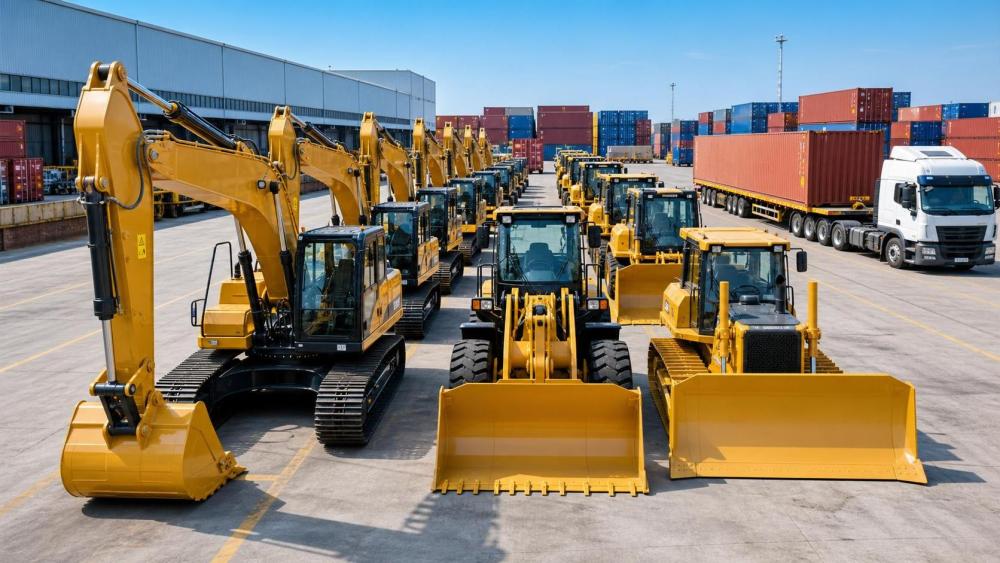
In heavy equipment buying, the lowest quote rarely delivers the lowest total cost. Delays, weak parts support, and poor machine fit often erase early savings.
That is why a practical equipment procurement strategy starts with business continuity. The real question is simple: how do you cut spend without slowing field activity?
For crawler excavators, wheel loaders, bulldozers, motor graders, and skid steer loaders, timing and utilization shape returns as much as purchase price.
A machine delivered two months late can raise subcontracting costs, extend mobilization, and weaken bid margins. A cheaper unit with higher fuel burn can do the same more quietly.
The stronger approach is to compare landed cost, expected uptime, operator efficiency, and delivery certainty in one decision frame.
EMD tracks this shift closely across global infrastructure markets. The pattern is consistent: disciplined buyers protect schedule first, then remove waste across the machine lifecycle.
What does a strong equipment procurement strategy actually include?
It is not a single sourcing tactic. It is a set of rules that connects technical fit, commercial terms, supply risk, and operating economics.
In practice, a strong equipment procurement strategy usually covers five decisions before any approval is given.
- Define the duty cycle clearly, including soil conditions, haul distance, attachment needs, and expected daily utilization.
- Separate must-have specifications from optional features that raise cost but do not improve output.
- Test supplier reliability through delivery history, local service response, and parts availability.
- Model total ownership cost, including fuel, wear parts, downtime, warranty scope, and residual value.
- Align contract structure with project timing, using staged deliveries, framework agreements, or price locks where useful.
This matters even more as fleets move toward low-emission engines, telematics, 3D grading systems, and semi-autonomous controls.
Those technologies can improve productivity. They also complicate comparison if the buying team focuses only on sticker price.
Where do cost savings usually come from without hurting delivery speed?
Most savings come from specification discipline and better timing, not from forcing the last percentage point out of a supplier quote.
For example, some projects buy oversized excavators for flexibility, then run them below efficient load ranges. That increases transport, fuel, and idle costs.
A better equipment procurement strategy matches machine class to actual output requirements, then checks whether attachments can extend use across projects.
Another overlooked saving is lead-time planning. Earlier forecasting gives access to standard configurations, while urgent orders often force premium pricing or compromised specifications.
The table below helps compare common cost levers with their likely effect on schedule control.
The point is not to optimize every line item separately. It is to build an equipment procurement strategy that preserves operational flow while removing expensive assumptions.
How should suppliers be compared when lead times are uncertain?
When supply chains tighten, quoted lead time becomes a commercial promise that needs evidence. A date on paper is not enough.
A useful equipment procurement strategy asks suppliers for recent delivery performance by model family, not just average corporate figures.
This is especially important for machines with advanced hydraulics, grade control sensors, or emissions packages, where component bottlenecks can change quickly.
More reliable comparisons usually include these checks:
- Factory slot confirmation rather than provisional production windows.
- Regional parts stocking for wear components and electronics.
- Field service availability within the first ninety days after commissioning.
- Contract remedies for missed delivery, substitution, or incomplete configuration.
EMD’s market coverage often shows a gap between brand reputation and local execution. A premium name does not always mean stronger readiness in every territory.
That is why local distributor strength should sit beside technical specification in any approval file.
Is buying newer, smarter equipment always the better financial move?
Not always. The answer depends on utilization, labor constraints, emissions exposure, and how measurable the productivity gain really is.
For motor graders with 3D control, the value can be obvious on airport, road base, or precision surface work. Rework drops, fuel use improves, and finish quality becomes more consistent.
For a basic loader working intermittent short cycles, advanced options may look attractive but produce a slower payback.
A grounded equipment procurement strategy separates technology that improves output from technology that mainly improves presentation.
Three questions usually clarify the choice:
- Will the feature reduce cycle time, rework, idle time, or operator dependency in measurable terms?
- Will future emissions rules or client standards make the older configuration harder to deploy?
- Does the supplier provide training and diagnostics that protect uptime after adoption?
In other words, modernization should support asset utilization. It should not become a hidden premium with unclear field impact.
Which mistakes make an equipment procurement strategy look cheap but become expensive later?
The most common error is treating procurement as a price event instead of an operating decision. Heavy machinery punishes that habit quickly.
Another frequent mistake is ignoring utilization assumptions. A machine that appears affordable can become costly if it spends too much time idle or underloaded.
There is also the service trap. Some offers include attractive acquisition terms but weak warranty boundaries, slow parts response, or limited technician access.
The checklist below is useful before final approval:
- Confirm whether quoted delivery includes attachments, software activation, and commissioning.
- Test the cost model against fuel volatility and realistic maintenance intervals.
- Review whether resale demand is stronger for standard configurations than custom builds.
- Check if financing terms hide penalties that outweigh the discount.
- Verify that machine data systems are compatible with fleet reporting standards.
A resilient equipment procurement strategy is careful about these details because they determine the real cost of ownership long after delivery day.
What is the next practical step if approval decisions need to move faster?
Start by building a short approval framework for each equipment class. Keep it focused on application fit, lead-time confidence, support strength, and lifecycle economics.
That framework makes repeat decisions faster and more consistent across excavators, loaders, graders, bulldozers, and compact equipment.
It also helps filter supplier claims during volatile market periods. When macro investment cycles shift and non-road regulations tighten, disciplined comparisons matter more.
EMD’s intelligence lens is useful here because equipment selection no longer sits apart from decarbonization, autonomy, hydraulic efficiency, or remote-control readiness.
A sound equipment procurement strategy connects those market signals to near-term purchasing choices, without losing sight of schedule pressure.
The most reliable path forward is straightforward: define the work, compare total cost instead of headline price, stress-test delivery claims, and document the assumptions behind each approval.
That is how cost control becomes durable. More importantly, it is how savings are achieved without slowing delivery.