
Related News
- 00
0000-00
How an earthmoving equipment portal helps vet factory capabilities - 00
0000-00
How to assess equipment specifications against applicable standards - 00
0000-00
How Middle East climate conditions should shape heavy equipment selection - 00
0000-00
Can an industrial equipment sourcing supplier directory improve vendor selection? - 00
0000-00
How earthmoving equipment is applied in canal construction
Tags
On June 4, 2026, U.S. Customs and Border Protection (CBP) issued Notice 26-089, clarifying that from July 1, 2026, import declarations for smart weighing loaders under HTSUS 8431.49.15 must include a full-condition dynamic weighing calibration report issued by an ISO/IEC 17025-accredited laboratory, including verification of ±0.5% accuracy. For exporters, importers, testing providers, and customs-facing supply chain teams, this is worth close attention because it moves calibration documentation from a technical support item into a filing requirement and is expected to raise both market-entry thresholds and inspection-related costs for shipments to the United States.
What CBP has formally clarified
According to the information provided, CBP released Notice 26-089 on June 4, 2026. The notice addresses the execution details for HTSUS subheading 8431.49.15 covering smart weighing loaders.
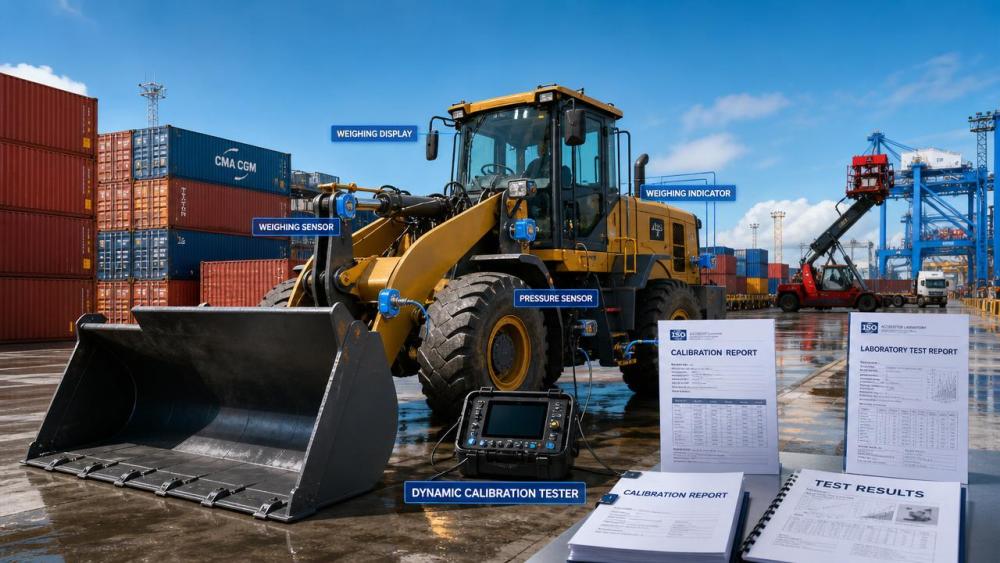
The confirmed requirement is that, starting July 1, 2026, import filings under this subheading must be accompanied by a dynamic weighing system calibration report covering full operating conditions.
The report must be issued by a laboratory accredited to ISO/IEC 17025, and it must include verification that the system meets ±0.5% accuracy.
The information provided also indicates that this change will increase the entry threshold and inspection cost for exports of Smart Weighing Loaders to the U.S. market.
Where the immediate pressure is likely to appear
Exporters and manufacturers will face a documentation gate before shipment
From an industry perspective, the most direct impact falls on companies exporting or manufacturing smart weighing loaders for the U.S. market. The likely pressure point is no longer limited to product configuration itself, but extends to whether calibration evidence is complete, qualified, and available in time for declaration. What deserves closer attention is the connection between technical validation and shipment scheduling, because missing or non-compliant reports could affect filing readiness.
Importers and customs-facing teams must treat calibration records as filing-critical
Analysis shows that U.S. importers, customs brokers, and trade compliance teams may need to review whether current declaration packages already capture the required calibration materials in the required form. The practical effect is likely to be seen in pre-entry document checks, internal compliance review, and communication with overseas suppliers. For these parties, the key change is that calibration documentation now has direct relevance to customs submission rather than remaining only an internal quality reference.
Testing and certification service providers may become a bottleneck
Observably, laboratories and service providers capable of issuing ISO/IEC 17025-based calibration reports may become more important in the transaction process. The likely impact is on testing lead times, report preparation, and coordination around full-condition validation. Even without assuming supply shortages, companies involved in the trade chain may need to pay closer attention to whether qualified testing capacity can match delivery schedules.
Procurement and delivery planning may need earlier coordination
For buyers and supply chain coordinators, the rule change may influence purchase timing, acceptance planning, and shipment readiness reviews. The issue is not only added cost, but also whether the required report is secured before customs declaration. In business terms, this could shift part of the delivery risk upstream into sourcing, production release, and document handover stages.
What companies should watch before the July 1 deadline
Whether the declared product clearly falls under HTSUS 8431.49.15
Analysis shows that the first practical issue is product classification discipline. Because the filing requirement is tied to HTSUS 8431.49.15, companies dealing with smart weighing loaders should pay close attention to whether the goods they plan to ship to the United States are being declared under that subheading and whether internal product descriptions, commercial documents, and compliance records are aligned.
Whether the calibration report meets the stated form and source requirements
What deserves closer attention is not simply having a test report, but having the specific report described in the notice: a full-condition dynamic weighing system calibration report issued by an ISO/IEC 17025-accredited laboratory and including ±0.5% accuracy verification. Companies should distinguish between general product test materials and the document now linked to import declaration.
Whether lead times and costs have been recalculated into delivery commitments
Observably, the notice points to higher inspection-related costs and a higher access threshold. For exporters and importers, this means contractual timelines, shipment preparation windows, and internal approval milestones may need to be revisited. The business focus should be on whether current delivery promises assume documentation that can actually be completed before filing.
Whether customer communication is based on confirmed rules rather than assumptions
From an industry perspective, this is a case where technical compliance, customs filing, and customer expectations intersect. Companies may need to communicate clearly with buyers, distributors, and service partners about what is now confirmed, what documents are required, and what parts still need follow-up verification from official channels. That distinction matters for avoiding unnecessary commitments or incomplete submissions.
Why this reads as more than a routine paperwork update
This section is an observation rather than a statement of fact. Analysis shows that the notice is better understood as a compliance tightening around product performance evidence, not merely a clerical adjustment. By linking entry filing to a calibration report issued by an ISO/IEC 17025-accredited laboratory and requiring ±0.5% accuracy verification, CBP is signaling that document quality and measurable system performance will carry more weight in the import process for this subheading.
It is more appropriate to understand this as an immediate operational change with possible longer-term significance, rather than as a fully settled long-term market outcome. The confirmed facts already create a near-term compliance deadline, but the broader commercial effect on sourcing patterns, testing workflows, and market access costs still needs continued observation.
How the industry may best interpret the change now
At this stage, the clearest takeaway is that smart weighing loader shipments to the United States under HTSUS 8431.49.15 will require more disciplined preparation from July 1, 2026 onward. The notice does not merely add another reference document; it places specific calibration proof into the declaration path.
A neutral reading is that this is a concrete short-term rule change and also a broader compliance signal. Companies should avoid overstating the downstream market impact, but they should also avoid treating the update as a minor formality. For now, it is most appropriate to view the development as a practical customs compliance requirement with implications for cost, timing, and document control.
Basis of this article and points for follow-up
This article is based on the user-provided news title, event date, and event summary concerning CBP Notice 26-089, the updated execution details for HTSUS 8431.49.15, and the new requirement for a dynamic weighing calibration report for smart weighing loaders.
For this type of industry update, commonly relevant source categories include official government notices, company disclosures, industry association information, authoritative media reporting, and standards-related documents. A specific official source link was not provided in the input, so the exact linked source still needs ongoing verification.
Follow-up attention should focus on whether CBP issues further clarifications on filing practice, document interpretation, or implementation details after the July 1, 2026 effective date.