
Related News
- 00
0000-00
How to size heavy-duty loaders for North American mining operations - 00
0000-00
How altitude affects mining excavator performance in Latin America - 00
0000-00
Caterpillar Launches New Cat 6060 and Upgraded Autonomous Mining System - 00
0000-00
When does eco-friendly construction equipment pay for itself? - 00
0000-00
Will a wheel loader quick coupler fit your existing attachments?
Why do hydraulic machinery failures escalate so quickly?
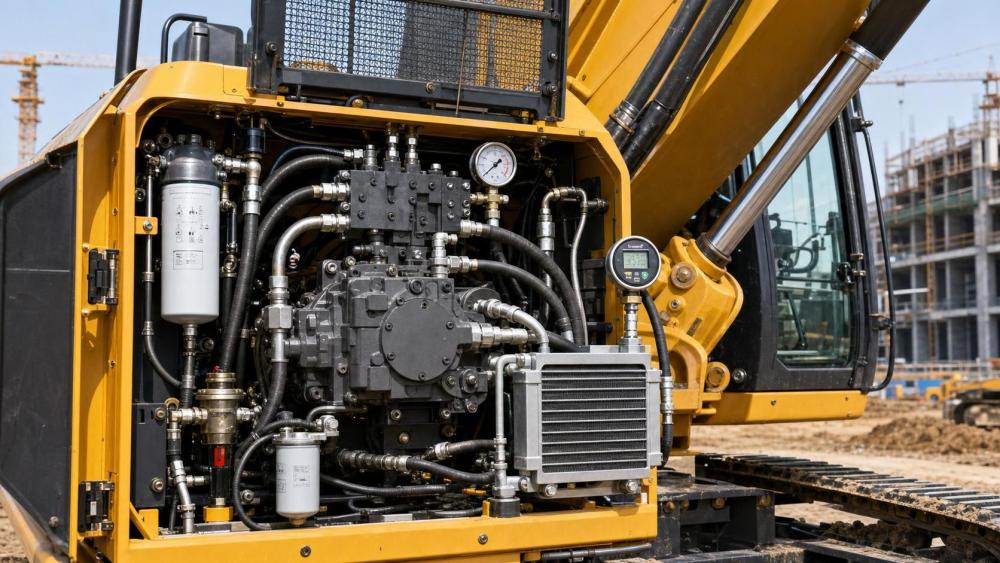
Hydraulic machinery rarely fails without warning. The problem is that early symptoms often look small, then spread across pumps, valves, cylinders, and controls.
On excavators, loaders, graders, bulldozers, and skid steers, one pressure imbalance can reduce breakout force, slow cycle times, and trigger extra heat.
In practical service work, the biggest cost is not only the damaged part. It is downtime, repeat visits, oil loss, and secondary wear.
That is why hydraulic machinery diagnosis has to begin with fault patterns, not guesses. A noisy pump, drifting boom, weak travel, or foaming oil each points somewhere different.
This matters even more as heavy equipment becomes smarter. EMD often tracks how electro-hydraulic controls, telematics, and low-emission machine designs tighten system tolerances.
In other words, modern hydraulic machinery can be more efficient, but it also punishes poor maintenance faster than older platforms did.
Which fault causes show up most often in hydraulic machinery?
If one question comes up repeatedly, it is this: what actually causes most hydraulic machinery failures in the field?
The short answer is contamination, overheating, seal wear, wrong fluid condition, and pressure loss. But each one leaves a different service trail.
Contaminated oil is still the leading trigger
Fine particles damage pump surfaces, spool clearances, and actuator seals. Water contamination is equally dangerous because it reduces lubrication and accelerates corrosion.
In heavy earthmoving fleets, contamination often enters during rushed hose replacement, poor storage, or filter bypass during cold starts.
Heat usually means another problem already exists
Overheating is rarely the root cause by itself. It normally follows internal leakage, relief valve misadjustment, restricted coolers, or excessive load holding.
Once oil temperature stays high, viscosity falls. Then hydraulic machinery loses film strength and wears faster under high-pressure cycles.
Seal wear and pressure loss often travel together
A worn rod seal is visible. Internal bypass inside cylinders or pumps is harder to see, but it causes weak movement and poor holding force.
Machines may still function, just slower and less consistently. That is why this issue is often misread as normal aging.
The table below helps connect common symptoms with likely causes and practical first checks.
How can you tell whether the issue is fluid, pump, valve, or cylinder?
This is where many hydraulic machinery repairs either become efficient or expensive. Replacing parts before isolating the circuit usually creates repeat failures.
A better approach is to test from the easiest evidence to the most invasive check.
- Start with the oil: level, smell, color, foam, water, and service history.
- Then check filters and suction conditions before blaming the main pump.
- Use pressure readings under load, not only at neutral.
- Compare function speed across circuits to see if the fault is local or system-wide.
- Measure case drain when pump wear is suspected.
For example, if travel, lift, and auxiliary functions all feel weak, the issue may involve supply flow, pump efficiency, or charge pressure.
If only one cylinder drifts or stalls, a local valve or cylinder bypass becomes more likely.
On newer machines, electronic inputs also matter. A faulty pressure sensor or proportional solenoid can mimic mechanical hydraulic machinery failures.
That is especially relevant in precision grading and smart excavator systems, where hydraulic response is closely linked to software logic and position feedback.
What fixes work in the field, and what usually wastes time?
Not every repair has the same value. Some actions restore performance quickly. Others only hide the symptom for a few shifts.
Fixes that usually pay off
- Flush contaminated circuits after major component failure, not just top up the tank.
- Replace seals only after checking rod condition, bore scoring, and pressure spikes.
- Reset relief and pilot pressures to specification after valve service.
- Clean coolers and verify fan performance when thermal alarms appear.
- Use oil sampling to confirm whether wear is active or historical.
Fixes that often waste labor
- Changing the pump because the machine feels slow without measuring actual flow loss.
- Replacing hoses while ignoring suction leaks at fittings or tube cracks.
- Treating overheating as a cooler issue only.
- Ignoring software faults on electro-hydraulic systems.
In real operations, the most effective hydraulic machinery repair is the one that removes the cause chain, not only the failed component.
EMD’s coverage of modern earthmoving equipment often shows this pattern clearly. As machines move toward autonomy and lower emissions, fault tracing becomes more integrated.
A hydraulic issue may begin with contamination, but it can surface through control instability, inefficient load response, or abnormal energy draw.
Are some machines more exposed to hydraulic machinery failures than others?
Yes, but not always for the reason people expect. The risk depends less on machine size and more on duty cycle, attachment use, heat load, and control complexity.
Crawler excavators face frequent cylinder cycling, high breakout loads, and fine control demands. Wheel loaders work through repeated lift, steer, and transmission interaction.
Motor graders depend on smooth, accurate blade response, so small hydraulic instability becomes visible quickly. Bulldozers push heat and load into hydrostatic or blade circuits for long periods.
Skid steers often see attachment changes, compact plumbing, and sharp duty variation. That makes contamination control and hose condition especially important.
The more advanced the machine, the more valuable trend-based maintenance becomes. Pressure drift, rising case drain, and repeated high-temperature events should be recorded, not treated as isolated complaints.
This is one reason intelligence platforms like EMD remain useful in the broader equipment sector. Technical updates, emission shifts, and control architecture changes directly affect hydraulic machinery service strategy.
What maintenance habits prevent repeat hydraulic machinery problems?
Prevention is not about doing more work. It is about doing the right checks at the right interval and recording what changes.
A simple prevention plan usually works best when it combines fluid discipline, temperature monitoring, leak tracking, and function testing under load.
- Sample oil at fixed intervals and after major repairs.
- Track filter findings instead of replacing filters silently.
- Inspect breathers, suction lines, and clamps during every service window.
- Log operating temperature by task, season, and attachment.
- Verify calibrations after control valve, sensor, or software changes.
Need a practical rule? If the same hydraulic machinery fault returns twice, the service process needs review, not just the machine.
Repeated seal failures may point to contamination. Repeated overheating may point to hidden bypass. Repeated weak operation may point to missed test conditions.
The goal is steady reliability. That matters on construction sites, in quarry loading, in grading work, and anywhere asset utilization decides project margins.
What should you review before the next failure turns into downtime?
Start with the failure history, then compare it with fluid condition, temperature records, and load-related symptoms. Patterns usually appear faster than expected.
If one machine family shows similar hydraulic machinery issues, review service intervals, hose routing, filtration practice, and calibration steps across the fleet.
Where controls are increasingly digital, include sensor health and software events in the same troubleshooting path as pumps and valves.
The most useful next move is usually simple: build a fault checklist that links symptom, test point, likely cause, and repair confirmation.
That keeps hydraulic machinery decisions consistent, reduces repeat parts replacement, and helps heavy equipment stay productive in demanding field conditions.
When diagnosis is systematic and repairs are verified, hydraulic machinery stops being a source of surprise and becomes a more controllable part of machine reliability.