
Related News
- 00
0000-00
How to size heavy-duty loaders for North American mining operations - 00
0000-00
How altitude affects mining excavator performance in Latin America - 00
0000-00
Caterpillar Launches New Cat 6060 and Upgraded Autonomous Mining System - 00
0000-00
When does eco-friendly construction equipment pay for itself? - 00
0000-00
Will a wheel loader quick coupler fit your existing attachments?
Dozer ripper attachments matter when breakout limits are set by the ground, not by blade capacity alone. In practical terms, they turn a bulldozer from a pushing machine into a pre-loosening tool that can cut cycle time, reduce repeated passes, and improve material movement across difficult surfaces.
That is why the topic now sits higher in equipment evaluation. Across quarry approaches, road subgrade recovery, pipeline trench support, and mine access preparation, a ripper can shift job economics when the formation resists efficient dozing.
For a platform like EMD, which tracks crawler excavators, bulldozers, grading systems, and the wider transition toward smarter and lower-emission fleets, the value of dozer ripper attachments is best understood through measurable breakout efficiency, traction use, and ground response.
What a ripper changes in the breakout process
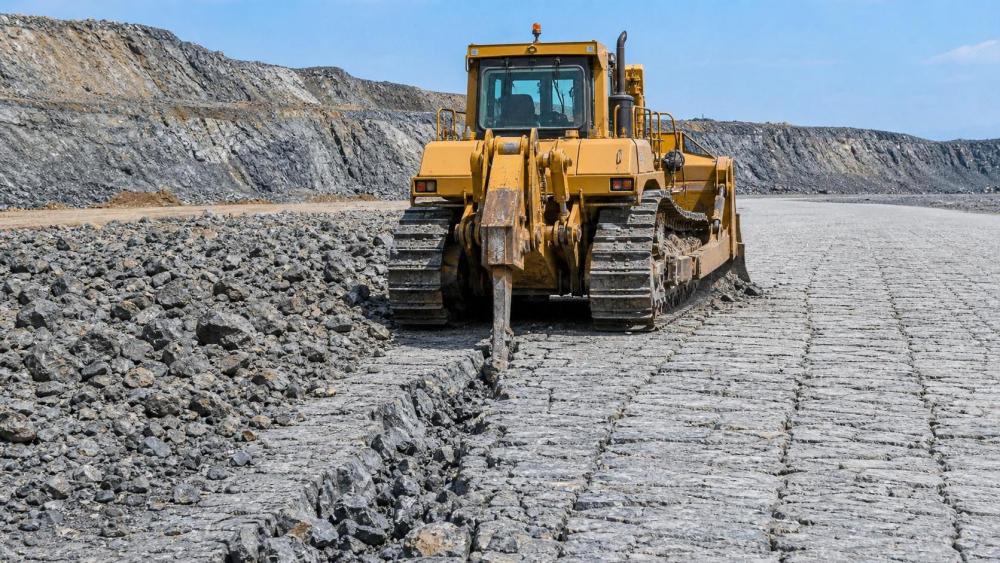
A dozer blade works best when material is already loose enough to shear, roll, and carry. When the surface is cemented, heavily compacted, frozen, laminated, or rock-bound, the blade often wastes power trying to start failure.
Dozer ripper attachments address that exact bottleneck. Their job is to concentrate machine force into narrow teeth, create fracture lines, and weaken the bond structure before the blade enters the cut.
Breakout efficiency improves because the machine stops fighting intact ground with broad contact. Instead, it penetrates first, separates material, and then pushes under lower resistance.
This distinction sounds simple, but it affects everything downstream. Fuel burn per cubic meter, pass count, slot depth consistency, operator fatigue, and undercarriage stress can all move in the right direction when pre-loosening is matched to the site.
Why the industry is paying closer attention
Heavy equipment fleets are under pressure from several directions at once. Projects want higher production, but they also want tighter fuel control, lower idle time, and more predictable maintenance windows.
That raises the bar for attachment decisions. A ripper is no longer judged only by whether it works. It is judged by whether it delivers better machine utilization than sending in an excavator with a breaker, a larger dozer, or repeated blade passes.
EMD’s market view is relevant here. As electrification, autonomy, and machine intelligence expand, attachment choices increasingly sit inside broader productivity models. The right dozer ripper attachments can reduce unnecessary engine load, improve task separation, and support better planning across mixed fleets.
There is also a site-control angle. On projects that use GPS grading, production monitoring, or digital earthwork tracking, pre-loosening quality affects later grading precision. Poor rip patterns can leave hard streaks, uneven density zones, and cleanup delays.
Ground conditions where gains are usually real
Not every surface justifies a ripper. The best returns usually appear when the material resists blade entry but still fractures economically under concentrated force.
Typical high-value conditions
- Compacted clay or fill with high cohesion and low natural breakage.
- Weathered shale, decomposed rock, or laminated formations.
- Frost-bound layers where seasonal hardness blocks normal penetration.
- Caliche, laterite, and other cemented surface horizons.
- Rippable rock that is too strong for efficient dozing but too weak to require continuous hammering.
In those settings, dozer ripper attachments often improve breakout efficiency because they lower the force required to start and sustain material movement. The machine spends less time stalling against an unbroken face.
By contrast, very loose soils may gain little. Massive unweathered rock may also fall outside economical ripping, even with a large tractor and single-shank setup.
How to judge whether a ripper beats another method
The useful comparison is not ripper versus no ripper in isolation. It is ripper versus the best available alternative for that material, depth target, and production schedule.
The key is cost per productive breakage, not attachment presence. Sometimes the ripper wins because it is cheaper. Sometimes it wins because it keeps the dozer in the main work sequence without bringing in another machine.
Machine and attachment factors that shape performance
Breakout gains do not come from the tooth alone. They depend on how the attachment matches tractor size, rear frame strength, hydraulic control, and available traction.
Points that deserve close review
- Single-shank designs usually penetrate deeper and concentrate force better in hard ground.
- Multi-shank designs can work well in lighter materials where width and disturbance rate matter more.
- Tip geometry affects entry, wear rate, and fracture quality.
- Ripper lift and pitch control influence how consistently the shank stays engaged.
- Track condition and machine balance determine whether theoretical force becomes usable ground penetration.
This is where broader fleet intelligence matters. EMD often frames performance through system interaction rather than component marketing. A ripper that looks strong on paper may disappoint if the tractor cannot keep traction or if wear parts are mismatched to abrasive geology.
What to watch in field evaluation
A short site test can reveal more than a brochure. The useful question is whether dozer ripper attachments create repeatable production improvement under actual job constraints.
Useful field indicators
- Penetration depth per pass at stable travel speed.
- Reduction in blade stall or track slip after ripping.
- Change in dozing cycle time across a fixed haul distance.
- Fragment size consistency after pre-loosening.
- Wear rate on tips, shanks, and rear structure.
- Fuel use per bank cubic meter or ton moved.
It also helps to map ripping performance by zone. A site may include fill, weathered caprock, and hard seams within one work area. One blanket conclusion can hide where the ripper truly adds value.
Where breakout efficiency turns into business value
The benefit is broader than faster penetration. Better breakout changes sequencing, downstream material handling, and even fleet allocation.
On roadworks, pre-loosened hard layers can shorten subgrade preparation and reduce grader rework. On mine support tasks, ripping can open haul road widening zones without waiting for dedicated rock-breaking resources.
In pipeline and utility corridors, dozer ripper attachments may help strip difficult overburden quickly enough to keep trenching or loading equipment on schedule. That matters when a delay in one machine spreads across the whole chain.
There is a sustainability angle as well. When the right attachment reduces wasted passes and unnecessary machine hours, the result can support lower fuel intensity and better asset utilization, both central themes in modern earthmoving strategy.
A practical path for the next decision
The next step is to define the material before defining the attachment. Ground class, moisture condition, layer thickness, and desired production rate should lead the discussion.
After that, compare dozer ripper attachments against realistic alternatives using site test data, not assumptions. Include breakout rate, dozing efficiency after ripping, wear cost, and the effect on adjacent equipment.
For organizations following EMD’s intelligence approach, the strongest decisions come from connecting machine physics with operating context. That means reading the ground, the fleet, and the project schedule together.
When those factors align, dozer ripper attachments stop being optional hardware. They become a disciplined way to unlock breakout efficiency where the surface would otherwise control the pace of the job.