
Related News
- 00
0000-00
How to size heavy-duty loaders for North American mining operations - 00
0000-00
How altitude affects mining excavator performance in Latin America - 00
0000-00
Caterpillar Launches New Cat 6060 and Upgraded Autonomous Mining System - 00
0000-00
When does eco-friendly construction equipment pay for itself? - 00
0000-00
Will a wheel loader quick coupler fit your existing attachments?
The timing of the underlying market shift is not explicitly stated in the source material, but the announcement itself shows a clear execution signal: bauma CHINA 2026 will use a first-time dual-venue format while placing electric equipment, intelligent grading, and autonomous-control-related products at the center of exhibition visibility. For equipment manufacturers, exporters, buyers, certification-linked service providers, and supply chain teams, this matters less as a routine event update and more as an indicator that compliance expectations, technical documentation, procurement standards, and delivery readiness around electrification and precision operation are moving closer to practical commercial review.
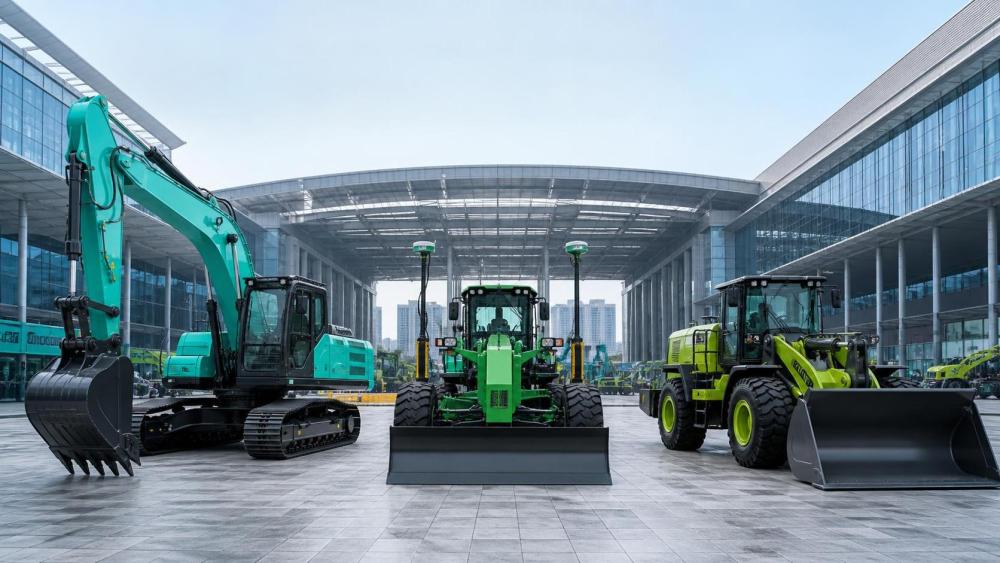
A larger showcase built around electrified and intelligent equipment
According to the provided information, bauma CHINA officially announced on August 12, 2026 that its November 23-27 edition will, for the first time, adopt a two-venue format using the Shanghai World Expo Exhibition & Convention Center and the Shanghai New International Expo Centre. The total exhibition scale is stated at 400,000 square meters, with nearly 4,000 exhibitors participating.
The featured product focus includes electric excavators, 3D GPS graders, AWD motor graders, hydrostatic dozers, and intelligent weighing loaders. The same source states that major companies including Caterpillar, SANY, Zoomlion, LiuGong, and XCMG will appear across both venues. The announcement is presented as reflecting China's global delivery capability in electrification, high-precision operations, and autonomous control systems.
Where the practical pressure may appear first
For manufacturers showing advanced equipment
From an industry perspective, manufacturers may be affected because the highlighted product categories are closely tied to higher technical scrutiny in product specification, software-enabled functions, and system-level performance claims. The business impact is likely to appear in technical files, product descriptions, demonstration readiness, after-sales commitments, and consistency between exhibition messaging and actual deliverable configurations. What deserves closer attention is whether product literature, test materials, certification status, and export-facing compliance documents are aligned before procurement or cross-border discussions move forward.
For buyers and procurement teams evaluating new models
Buyers may be affected because the event emphasis shifts attention toward electric and precision-control equipment rather than conventional hardware alone. In procurement, that changes the center of review from basic capacity comparison to specification alignment, operating logic, data-related functions, and service supportability. Analysis shows that purchasers should pay closer attention to technical bid alignment, model configuration clarity, inspection records, software or control-system descriptions, and delivery documentation that can support acceptance, operation, and later warranty handling.
For exporters and channel partners
Export-oriented businesses and distribution partners may face a different kind of pressure: once high-end electric and intelligent equipment becomes more visible in a global delivery context, questions around product conformity, supporting documentation, service responsiveness, and traceability become more commercially significant. The impact may show up in quotation packages, customs-facing document preparation, customer qualification review, and after-sales coordination. Observably, companies in this part of the chain should focus on whether product claims, technical documents, and delivery conditions can withstand review from overseas buyers or intermediaries.
For certification, testing, and service-related providers
Certification-linked firms, testing bodies, and after-sales service providers may also be affected because more intelligent and electrified equipment usually requires closer coordination between hardware verification, operating performance evidence, and field support readiness. The relevant business links include document review, inspection support, maintenance planning, spare-parts traceability, and fault-response preparation. It is more appropriate to understand this as a signal that supporting service capacity may become a more visible competitive condition in equipment transactions.
What companies should watch before this signal turns into execution
Check whether technical claims are fully supportable
Analysis shows that companies planning to market electric, intelligent, or autonomous-control-related products should review whether brochures, bid materials, demonstration scripts, and export documents describe the same configuration and capability set. Where the source material does not provide specific execution rules, it would be premature to assume a settled compliance outcome; the immediate task is internal consistency and document readiness.
Track how procurement language starts to change
What deserves closer attention is whether buyers, dealers, and project-side evaluators begin placing more weight on precision-operation functions, intelligent weighing, or control-system descriptions in tender and purchasing materials. Even without a stated formal rule change in the source, market-facing requirements can tighten first through specification wording and acceptance expectations.
Prepare certification and inspection materials early
For companies expecting cross-border discussions or larger project sales, early preparation of test reports, product specifications, quality records, and service documentation may reduce later friction. Observably, the more a product is positioned around electrification or intelligent control, the more likely counterparties are to request clearer supporting evidence during pre-sale and delivery review.
Review delivery and after-sales commitments against product complexity
The highlighted equipment categories suggest rising operational complexity in the field. Analysis shows that firms should check whether delivery timelines, commissioning arrangements, service response processes, and quality-traceability records are adequate for products that go beyond conventional mechanical selling points. This remains a watchpoint rather than a confirmed rule outcome, but it is commercially relevant now.
Why this reads as an execution signal, not yet a settled rulebook
Observably, this announcement does not itself set out a formal regulation, certification amendment, or published trade rule in the material provided. Its importance lies elsewhere: it signals which product attributes are being elevated in a major industry platform and therefore where market review standards may harden next. It is more appropriate to understand this as an execution signal with compliance and procurement implications, rather than as proof that a fully defined new rule framework has already been issued.
From an industry perspective, continued attention is warranted because exhibition focus often precedes adjustments in buying language, technical review practice, and delivery expectations. The current stage still requires observation of how official wording, commercial qualification standards, and customer-side document requests evolve.
How the market should read this development now
At this stage, the bauma CHINA 2026 dual-venue move is best read as a practical indicator that electrification, high-precision grading, and autonomous-control-related equipment are being moved closer to mainstream commercial scrutiny. The confirmed facts support that interpretation, but they do not by themselves prove a completed regulatory shift. A neutral conclusion is that companies should treat the announcement as a meaningful market and compliance signal, while continuing to verify how procurement practice, certification expectations, and delivery requirements develop in follow-on execution.
Basis of this article and points still requiring verification
This article is generated from the user-provided news title, event timing note, and event summary. For this type of development, relevant source categories would typically include official organizer announcements, regulator releases, customs or trade authority information, industry association updates, standards documentation, and reporting by authoritative trade media.
No specific official source link was provided in the input, so the exact official reference still needs ongoing verification. Further observation is also needed on any later policy detail, certification interpretation, tender-document change, market feedback, and actual enterprise implementation linked to the equipment categories highlighted in the announcement.