
Related News
- 00
0000-00
How an earthmoving equipment portal helps vet factory capabilities - 00
0000-00
How to assess equipment specifications against applicable standards - 00
0000-00
How Middle East climate conditions should shape heavy equipment selection - 00
0000-00
Can an industrial equipment sourcing supplier directory improve vendor selection? - 00
0000-00
How earthmoving equipment is applied in canal construction
When uptime starts slipping, heavy equipment maintenance becomes a strategic decision
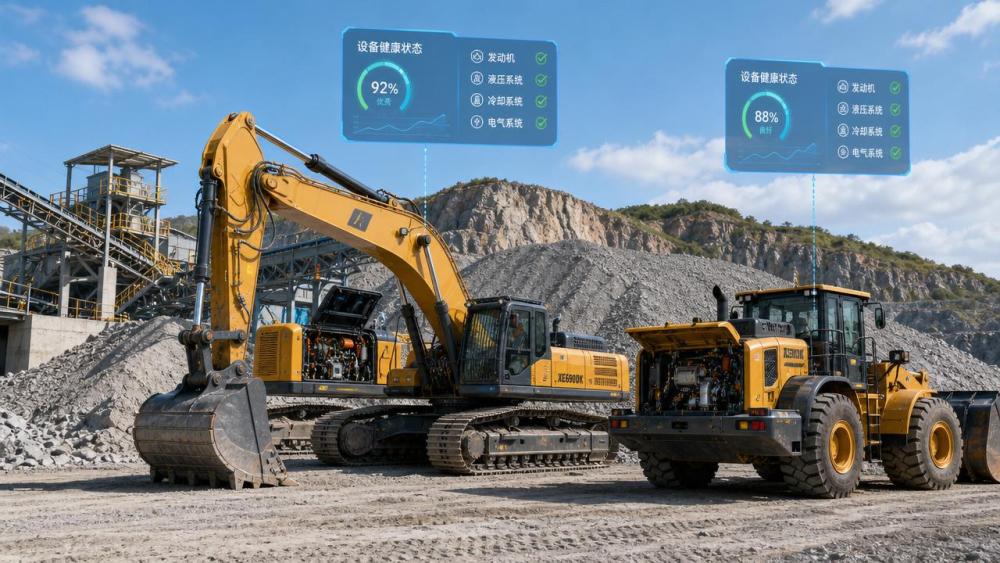
Heavy equipment maintenance rarely fails all at once. It usually weakens through small signals that seem manageable until production slows, fuel burn rises, or a machine misses a critical shift.
That pattern matters across excavators, loaders, dozers, graders, and skid steers. In earthmoving, roadbuilding, quarry work, and urban utility jobs, the same warning light can mean very different risks.
EMD follows this reality closely. The platform’s focus on hydraulic force, grading precision, and autonomous control reflects a simple truth: heavy equipment maintenance is no longer just repair work.
It is also about protecting utilization, emissions compliance, digital accuracy, and resale value. In practice, the right action depends on where the machine works, how hard it cycles, and what failure would disrupt next.
The clearest fleets are not the ones with the most service reports. They are the ones that recognize early signs, interpret them by application, and respond before minor wear becomes structural loss.
Different job conditions change what the warning signs really mean
A crawler excavator cutting dense clay stresses hydraulics differently than a motor grader holding tolerance on a runway shoulder. A skid steer in municipal work faces more attachment changes than a bulldozer in mass push operations.
So heavy equipment maintenance should not rely on generic hour-based thinking alone. More useful judgment comes from matching symptoms with terrain, duty cycle, idle patterns, operator variation, and control-system sensitivity.
This is especially relevant as fleets adopt telematics, electro-hydraulic controls, and lower-emission powertrains. Newer machines often reveal problems through performance drift before they show obvious physical damage.
Once that context is clear, the seven signs become easier to judge and much harder to ignore.
The first signs usually appear in performance, not in catastrophic failure
1. Slower cycle times under the same load
If an excavator needs longer to crowd, swing, and dump in familiar material, heavy equipment maintenance should move up the priority list. The same applies when a loader hesitates into the pile.
This often points to hydraulic inefficiency, pump wear, valve response drift, or pressure loss. On high-output sites, even a small delay compounds into measurable production loss within days.
2. Fuel use climbs without a matching output gain
Rising fuel consumption is one of the most overlooked heavy equipment maintenance indicators. It can signal poor combustion, clogged filters, excess idling, regeneration issues, or hydraulic drag.
On bulldozers and wheel loaders, this often shows up before operators report a fault. In grading fleets, the cost issue may look small at first, but precision passes start taking longer.
3. Heat builds faster than the workload suggests
Temperature creep during normal ambient conditions is rarely random. Cooling pack blockage, fan faults, oil contamination, or transmission stress are common triggers.
Machines in dusty stripping operations face this constantly. Compact units in stop-start urban work can show the same symptom for different reasons, especially when airflow and idle patterns are poor.
In precision work, the warning signs are subtler but more expensive
4. Controls feel inconsistent, delayed, or harder to predict
For motor graders, advanced excavators, and remote-capable machines, inconsistent control response is a serious heavy equipment maintenance signal. The machine may still operate, yet accuracy is already slipping.
The issue may involve electro-hydraulic proportional control, joystick calibration, software faults, sensor degradation, or low-voltage events. In tight-tolerance applications, that can turn rework into the real cost.
5. Attachment points, pins, edges, and undercarriage wear faster than expected
Wear is normal. Uneven or accelerated wear is not. Heavy equipment maintenance teams should pay attention when bushing movement increases, cutting edges disappear too quickly, or track components age unevenly.
This matters because the cause may sit upstream. Poor lubrication discipline, misalignment, incorrect ground engagement, or oversized attachments can all push wear beyond the normal pattern.
A common misread is treating these items as consumables only. In reality, wear patterns often reveal whether the machine is mismatched to the task or simply overdue for intervention.
Leaks and fault codes are obvious, but they still need context
6. Fluid leaks, contamination, or repeat top-offs become routine
A visible leak is never just a housekeeping problem. In heavy equipment maintenance, repeat hydraulic, coolant, or final drive fluid loss usually means pressure, sealing, or contamination issues are already progressing.
On a skid steer, a small auxiliary hydraulic leak may interrupt attachment reliability. On a crawler excavator, the same delay can affect breakout force, cycle smoothness, and eventually component life.
7. Fault alarms return after resets or basic service
Recurring alarms are often treated as electrical nuisance. That is risky. Repeated alerts may indicate unstable sensors, harness damage, aftertreatment issues, or deeper control logic problems.
With autonomous and semi-autonomous functions becoming more relevant, heavy equipment maintenance must cover communication stability as well as physical parts. A machine that moves still may not be ready for precise work.
What changes from one fleet segment to another
The same seven signals should not trigger identical action plans. Different machine classes lose value in different ways, so the response needs to fit both production risk and component economics.
- Crawler excavators usually demand early hydraulic diagnostics, pin and bushing inspection, and swing system review when motion slows or heat increases.
- Wheel loaders often justify faster attention to transmission behavior, tire wear symmetry, and bucket linkage fatigue when fuel use rises.
- Motor graders need close checks on blade control smoothness, calibration drift, and sensor cleanliness when finish quality becomes inconsistent.
- Bulldozers deserve immediate undercarriage, final drive, and cooling review when push efficiency drops under constant ground conditions.
- Skid steers benefit from frequent checks on couplers, auxiliary flow, and start-stop electrical health because compact duty cycles hide wear well.
In actual use, that difference is where heavy equipment maintenance creates real savings. It prevents teams from spending time on the wrong subsystem while the real failure path continues growing.
Where fleets misjudge maintenance needs most often
One frequent mistake is relying on service intervals without checking how the machine actually works. Hours alone do not capture abrasive material, high idle time, repeated short cycles, or attachment shock loads.
Another is treating similar sites as identical. A loader feeding a crusher and a loader handling damp stockpile material may accumulate stress in very different systems.
There is also a growing digital blind spot. Fleets may inspect hoses and edges carefully, yet overlook calibration drift, communication latency, or sensor contamination that undermines smart control performance.
Good heavy equipment maintenance avoids these traps by combining physical inspection, operating data, and jobsite context instead of choosing only one source.
A practical next step is to build a response standard around the seven signs
Start by ranking which of the seven signs appears most often in each machine category. Then compare that pattern with duty cycle, environment, fluid history, and control-system behavior.
From there, define trigger points for inspection, not just repair. Heavy equipment maintenance works better when slow cycles, heat rise, repeat alarms, and abnormal wear automatically prompt targeted checks.
That approach aligns with the broader EMD view of infrastructure machinery: reliability comes from connecting mechanical stress, digital precision, and long-term asset use instead of reacting to breakdowns alone.
If the current fleet already shows two or three of these signs, the next move is straightforward. Review site-specific conditions, confirm the affected subsystem, and act before lost hours turn into major capital decisions.