
Related News
- 00
0000-00
How a supplier solution database reduces sourcing risk - 00
0000-00
How market insight content shapes equipment demand forecasts - 00
0000-00
When does stainless steel bulk material transfer equipment prevent contamination? - 00
0000-00
How an earthmoving equipment portal helps vet factory capabilities - 00
0000-00
How to assess equipment specifications against applicable standards
When downtime starts costing more than the repair
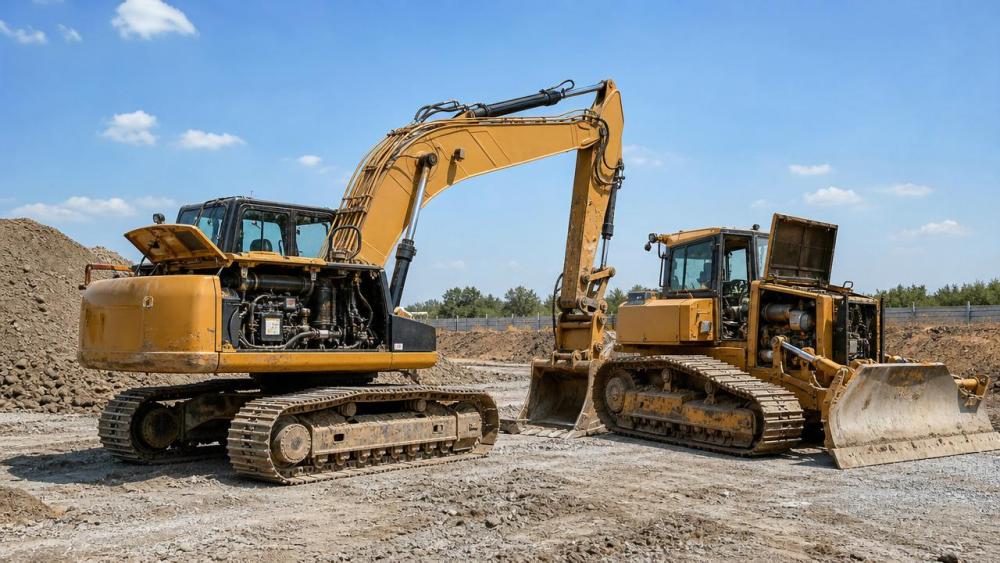
Earthmoving machinery rarely fails at a convenient time.
A stalled excavator can halt trenching, delay haul cycles, and force crews to reshuffle work under pressure.
A grader fault during final pass work can be even more disruptive, because precision tasks leave little room for improvisation.
In practice, fast recovery depends less on guesswork and more on understanding why earthmoving machinery fails differently across operating conditions.
That difference matters across crawler excavators, wheel loaders, bulldozers, motor graders, and skid steer loaders.
Each machine carries distinct load patterns, hydraulic demand, control logic, and contamination exposure.
EMD follows these patterns closely because equipment uptime now sits at the center of asset utilization, decarbonization targets, and jobsite reliability.
The most effective response is usually not the biggest repair.
It is the fastest correct diagnosis, matched to the actual duty cycle, service history, and site environment.
Different jobs create different failure patterns
Earthmoving machinery used in quarry loading does not age like machinery shaping a road base or working inside dense urban projects.
The same warning code can point to very different root causes depending on shock load, idle time, dust level, slope work, or attachment changes.
A wheel loader cycling nonstop between stockpile and hopper often shows brake heat, tire stress, and transmission strain before structural issues appear.
A crawler excavator in rocky trenching tends to expose hose damage, pin wear, and swing system stress sooner.
Motor graders add another layer, because control accuracy matters as much as mechanical health.
If the GPS, laser, or electro-hydraulic response drifts, downtime may begin as quality loss before the machine fully stops.
That is why EMD often frames reliability through both component behavior and operating context.
Without that context, teams may replace parts quickly yet still miss the reason downtime keeps coming back.
A quick comparison helps narrow the first checks
On high-load sites, hydraulic faults usually speak first
Hydraulic trouble remains one of the most common earthmoving machinery downtime drivers.
Yet the fix changes with the work pattern.
In hard digging, demolition, and heavy dozing, leaks are often only the visible symptom.
The deeper issue may be pressure spikes, hose routing fatigue, cylinder seal wear, or contaminated oil accelerating valve damage.
A fast response starts with isolating whether the loss is external, internal, or control related.
If a boom drifts but no oil appears outside, internal bypass is more likely than a ruptured line.
If multiple functions slow together, check pump output, suction restriction, and oil temperature before replacing actuators.
On sites with abrasive debris, temporary hose replacement alone often leads to repeat downtime.
Routing guards, clamp position, and contamination cleanup usually matter just as much as the new hose itself.
Fast fixes that work in the field
- Confirm whether the fault affects one function or the whole hydraulic circuit.
- Measure oil level and inspect for aeration before deeper disassembly.
- Use temperature difference and pressure readings to locate restricted flow.
- Replace damaged seals and hoses only after checking alignment and mounting stress.
- Flush contamination when metal debris or burnt oil appears.
Electrical downtime looks small until the machine becomes unpredictable
Modern earthmoving machinery depends on sensors, controllers, displays, and networked harnesses more than many service routines still assume.
That is especially true for motor graders, advanced excavators, and remote-ready equipment used in hazardous or tightly controlled environments.
Electrical faults often show up as intermittent behavior first.
A machine starts normally, then loses response after vibration, moisture, or temperature rise.
In these cases, replacing a sensor without checking connectors, grounding, and harness rub points wastes both time and parts.
For graders using 3D control or laser guidance, a calibration issue may feel like a mechanical lag problem.
For skid steers with many hydraulic attachments, auxiliary circuit faults can be traced back to electrical enable logic rather than oil flow alone.
The practical rule is simple.
When symptoms come and go, inspect signal quality and wiring protection before assuming hard component failure.
Undercarriage and wear issues build slowly, then stop production all at once
Tracked earthmoving machinery often gives warning signs long before a breakdown, but those signs are easy to normalize on busy sites.
Bulldozers and crawler excavators working in abrasive ground may continue operating with rising vibration, loose track tension, and uneven wear.
Then a damaged roller, worn sprocket, or seized idler turns gradual loss into immediate downtime.
This is one area where fast fixes are only useful if they are paired with a wear pattern review.
Simply tightening tracks can reduce noise for a day while accelerating bushing and link wear underneath.
On long push applications, debris packing around the undercarriage also raises fuel burn and heat load.
That matters for reliability and for the broader efficiency targets now shaping fleet decisions.
A short inspection routine at shift change often prevents the expensive kind of downtime that requires recovery equipment.
What different operating settings usually demand
The judgment point is not only machine type.
It is also how the machine is being used over time.
Some downtime is rooted in use patterns, not failed parts
Operator-related issues are often discussed too generally.
In reality, the problem is usually a mismatch between machine settings, attachment choice, and task rhythm.
A skid steer repeatedly stalling auxiliary flow may be running an attachment outside the recommended hydraulic range.
A bulldozer overheating on push work may be spending too long in a pattern better suited to a different blade setup or pass length.
A wheel loader showing premature tire wear may simply be turning too tightly in a layout that was never optimized for cycle flow.
These are not minor details.
They shape maintenance frequency, parts life, and fuel efficiency across the full earthmoving machinery lifecycle.
The more advanced the machine becomes, the more important it is to align usage, settings, and service data instead of treating every issue as isolated hardware failure.
Where misdiagnosis happens most often
Several repeat mistakes keep earthmoving machinery out of service longer than necessary.
- Focusing on rated specifications while ignoring dust, slope, idle ratio, and shock load.
- Treating similar sites as identical, even when material density or duty cycle differs sharply.
- Prioritizing the cheapest replacement part over contamination control or root-cause inspection.
- Assuming every electronic symptom is software related, or every slow function is hydraulic only.
- Using generic service intervals where high-load or high-precision applications need tighter checks.
In actual field conditions, the best shortcut is a disciplined fault sequence.
Start with operating context, confirm the affected system, isolate the fault path, and then decide whether a temporary fix is safe.
That approach shortens downtime without pushing hidden damage into the next shift.
A practical way to keep earthmoving machinery jobsite-ready
Fast fixes matter, but repeat uptime comes from matching maintenance intensity to real application conditions.
For earthmoving machinery, that means separating high-load hydraulic risk from precision control risk, wear risk, and usage-pattern risk.
It also means reviewing service data by machine role, not only by fleet average.
A quarry loader, a finish grader, and an urban skid steer should not trigger the same inspection priorities.
A useful next step is to map recent downtime by operating scenario, component type, repair delay, and recurrence rate.
Then compare those patterns against site conditions, calibration routines, contamination control, and undercarriage or attachment practices.
That is usually where the clearest gains appear.
For EMD, this broader view of reliability is no longer separate from performance.
It is part of how modern earthmoving machinery supports tougher production targets, lower waste, and more dependable infrastructure execution.