
Related News
- 00
0000-00
How an earthmoving equipment portal helps vet factory capabilities - 00
0000-00
How to assess equipment specifications against applicable standards - 00
0000-00
How Middle East climate conditions should shape heavy equipment selection - 00
0000-00
Can an industrial equipment sourcing supplier directory improve vendor selection? - 00
0000-00
How earthmoving equipment is applied in canal construction
Construction Equipment Technology That Cuts Rework
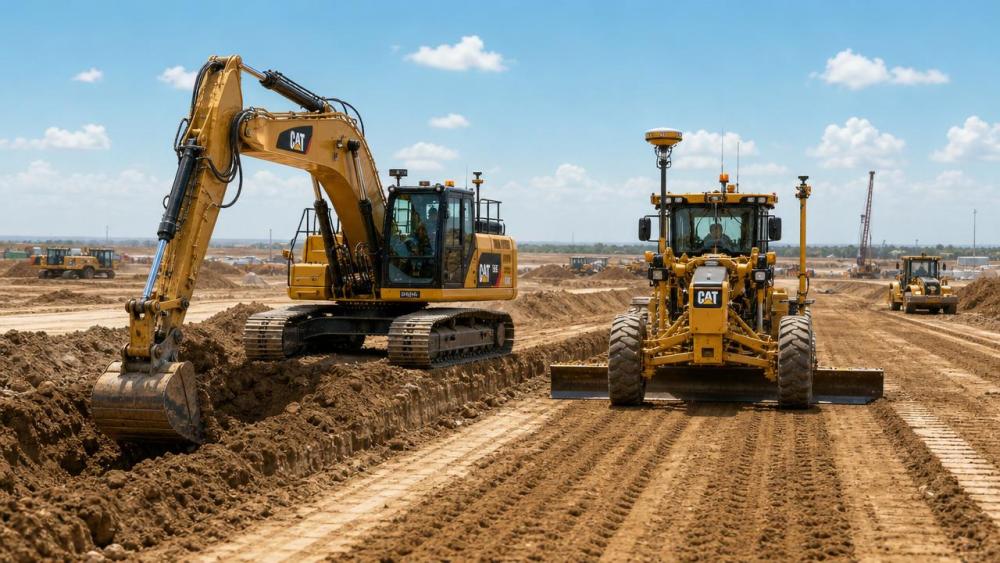
For project leaders, rework is not just an inconvenience. It quietly eats labor hours, fuel budgets, material yield, and schedule confidence.
That is why construction equipment technology now matters far beyond machine performance alone. It directly shapes first-pass accuracy and downstream productivity.
Across excavation, grading, loading, and site preparation, contractors want fewer corrections, tighter tolerances, and clearer field decisions.
The biggest shift is simple. Machines are no longer only moving dirt. They are generating guidance, verification, and performance data in real time.
When machine control, sensing, telematics, and hydraulic precision work together, rework drops because crews stop relying on guesswork.
This is where modern construction equipment technology creates practical value. It helps teams hit grade faster, avoid overcutting, reduce idle corrections, and protect margins.
In real projects, that can mean fewer survey callbacks, fewer truck cycles, and less disruption between earthworks and follow-on trades.
Why Rework Happens on Earthmoving Projects
Rework often starts with small misses. A shallow cut, a poor stake reference, or delayed grade confirmation can compound quickly.
Traditional workflows depend on repeated checking between operators, survey teams, and supervisors. That handoff process creates lag, especially on large sites.
Ground conditions also shift daily. Moisture, haul road wear, changing stockpiles, and unstable edges make static plans harder to execute cleanly.
Another issue is inconsistent machine response. If hydraulic control feels uneven, operators may overshoot depth, blade angle, or bucket position.
This is why advanced construction equipment technology is increasingly tied to risk control. Better visibility and tighter machine behavior reduce human correction loops.
Common rework triggers
- Inaccurate depth or slope during first-pass excavation
- Overcutting that increases backfill, compaction, and material handling
- Delayed grade verification between crews and survey support
- Poor coordination between excavators, dozers, graders, and loaders
- Limited visibility into machine utilization and cycle inefficiencies
The Core Construction Equipment Technology That Reduces Rework
Not every upgrade delivers the same value. The most effective construction equipment technology usually improves accuracy, consistency, and decision speed at the same time.
1. 3D machine control
3D guidance systems help operators work to a digital design surface instead of depending only on stakes and spot checks.
This is especially useful for crawler excavators, motor graders, and bulldozers working across complex elevations or long linear corridors.
The result is more accurate first cuts, fewer passes, and less need to reopen finished areas.
2. GNSS, laser, and sensor fusion
High-precision positioning matters because many errors come from drift between design intent and machine location.
Integrated GNSS, laser receivers, inertial sensors, and blade or bucket sensors help maintain control even when site conditions change.
For finish grading, this level of construction equipment technology can tighten tolerance and reduce final trimming work.
3. Electro-hydraulic precision
Smarter hydraulic control improves how faithfully the machine follows the operator’s input or automated target position.
That matters in trenching, slope shaping, and finish grading, where small movement errors can trigger expensive corrections later.
More refined hydraulic response also reduces fatigue, which supports steadier performance over long shifts.
4. Telematics and live jobsite visibility
Telematics turns machine data into field management insight. It shows idle time, fuel burn, pass counts, location, and operating patterns.
This allows teams to catch process drift early instead of waiting until a quality issue becomes obvious.
Used well, this construction equipment technology becomes a control layer for schedule protection.
Where These Systems Deliver the Fastest Payback
From recent project patterns, the clearest returns appear where tolerances are tight and correction costs spread across several crews.
Mass excavation
Excavators with 3D control reduce overdigging and support cleaner benching, trench profiles, and cut-fill balance.
That lowers hauling waste and protects follow-on pipe, utility, and structural work.
Roadbuilding and airfield grading
Motor graders benefit heavily from construction equipment technology that combines blade control with GPS and laser references.
Better first-pass grading reduces stone waste, compaction variability, and paving corrections later in the sequence.
Mine stripping and high-volume loading
Wheel loaders and bulldozers gain from telematics and payload visibility. Operators can keep cycles consistent and avoid stockpile reshaping inefficiencies.
This also improves material flow between digging, loading, and haulage assets.
Urban utility and tight-access work
Skid steer loaders and compact excavators often work near existing services, curbs, or finished surfaces.
In these spaces, precise attachment control and better situational data reduce accidental damage and cleanup rework.
How to Apply Construction Equipment Technology Without Disrupting Production
The best rollout is usually phased. Trying to digitize every machine and process at once often slows adoption.
A smarter path is to target work packages where rework is visible, measurable, and expensive.
A practical rollout sequence
- Audit recent rework causes by activity, not just by project summary.
- Start with one machine family, such as graders or excavators.
- Match digital design data to field workflows before deployment.
- Train operators and supervisors together, not in separate silos.
- Track first-pass success, fuel use, pass count, and survey callbacks.
- Expand only after the first pilot proves measurable field value.
This approach keeps construction equipment technology tied to outcomes instead of turning it into a disconnected procurement exercise.
What to watch during implementation
- Poor design file quality can undermine even advanced machine control.
- Inconsistent calibration creates trust issues in the field.
- Weak site connectivity can limit telematics and remote support value.
- Operator acceptance improves when the system reduces stress, not autonomy.
What Decision Makers Should Compare Before Investing
Not all construction equipment technology packages solve the same problem. Some improve grade accuracy. Others improve visibility, uptime, or coordination.
A useful evaluation should compare operational fit, not just feature lists.
A strong buying decision also looks at service support, data compatibility, retrofit options, and operator learning time.
Those factors often decide whether the technology cuts rework quickly or remains underused.
Why This Matters More Now
The pressure on infrastructure delivery is increasing. Schedules are tighter, labor is harder to secure, and emissions expectations are rising.
That means wasted passes and avoidable corrections are becoming less acceptable on modern jobsites.
More importantly, construction equipment technology now supports broader goals around fuel efficiency, machine uptime, and lower-carbon operation.
Cutting rework is no longer only a quality objective. It is part of cost control, asset utilization, and competitive project delivery.
A Smarter Path to Fewer Corrections
The most effective construction equipment technology does not replace field judgment. It sharpens it with cleaner data, steadier control, and better timing.
For contractors managing excavators, graders, dozers, loaders, and compact equipment, the opportunity is clear.
Start where rework is hurting margin the most. Choose technology that fits that workflow. Measure first-pass performance, then scale with discipline.
That is how construction equipment technology moves from a promising upgrade to a reliable operating advantage.