
Introduction: Selecting a crawler equipment manufacturer is not only about machine specifications or purchase price. It is about securing dependable support throughout the equipment lifecycle.
For procurement teams, poor service support can turn a competitively priced excavator, bulldozer, or tracked loader into a costly source of schedule disruption and avoidable risk.
The strongest supplier is not necessarily the manufacturer with the nearest depot or the largest advertised service network. It is the one that can restore production predictably.
That requires verified parts access, capable technicians, clear escalation paths, useful digital diagnostics, commercial accountability, and support commitments that survive the initial equipment delivery.
Start with Downtime Risk, Not the Service Brochure
Procurement teams should begin by defining what one hour of crawler equipment downtime means on the intended project, mine, quarry, fleet, or infrastructure site.
A machine parked during foundation work, bulk excavation, airport grading, or material handling may delay trucks, operators, subcontractors, inspections, and downstream construction activities simultaneously.
That operational exposure should shape the evaluation criteria. A service model suitable for low-utilization municipal work may be inadequate for continuous production or remote mining operations.
Ask each crawler equipment manufacturer to describe support for the exact machine class, duty cycle, operating climate, attachment package, and location under consideration.
Generic statements about global coverage do not establish local capability. Procurement needs evidence that qualified people, critical inventory, and diagnostic tools are available where assets will work.
Separate routine maintenance support from breakdown recovery. Scheduled service is easier to organize, while unexpected hydraulic, electrical, undercarriage, or control-system failures test supplier readiness.
A practical assessment considers three questions: how quickly can the manufacturer identify the fault, dispatch resources, and obtain the components needed to return the machine to work?
These questions should be evaluated before contract award, not after a machine has been mobilized to a difficult site with limited replacement capacity.
Build a Service Evaluation Matrix for the Procurement Decision
A structured scorecard prevents procurement decisions from being driven by sales presentations, isolated references, or an attractive initial discount that obscures lifetime support costs.
Assign weighted scores to parts availability, field response, technician competence, warranty administration, remote diagnostics, service documentation, preventive maintenance, and commercial service-level commitments.
For high-criticality fleets, parts access and response capability should usually receive more weight than convenience features, branded portals, or broad but unverified marketing claims.
Include operational stakeholders in the scoring process. Maintenance managers, site supervisors, fleet teams, and operators often identify practical service gaps that procurement cannot see alone.
Require suppliers to answer identical questions and submit supporting evidence. This makes it easier to compare competing crawler equipment manufacturers on an equivalent basis.
Useful evidence includes local technician rosters, parts-stock lists, depot addresses, sample service reports, escalation procedures, warranty turnaround data, and customer references from comparable applications.
Do not treat every score as equally certain. Mark claims as verified, partially verified, or unverified, then prioritize due diligence around the gaps with highest operational consequences.
This approach also creates a documented rationale for supplier selection, which is valuable when procurement must defend a lifecycle-cost decision to finance, operations, or project leadership.
Verify Parts Availability and Logistics Before Signing
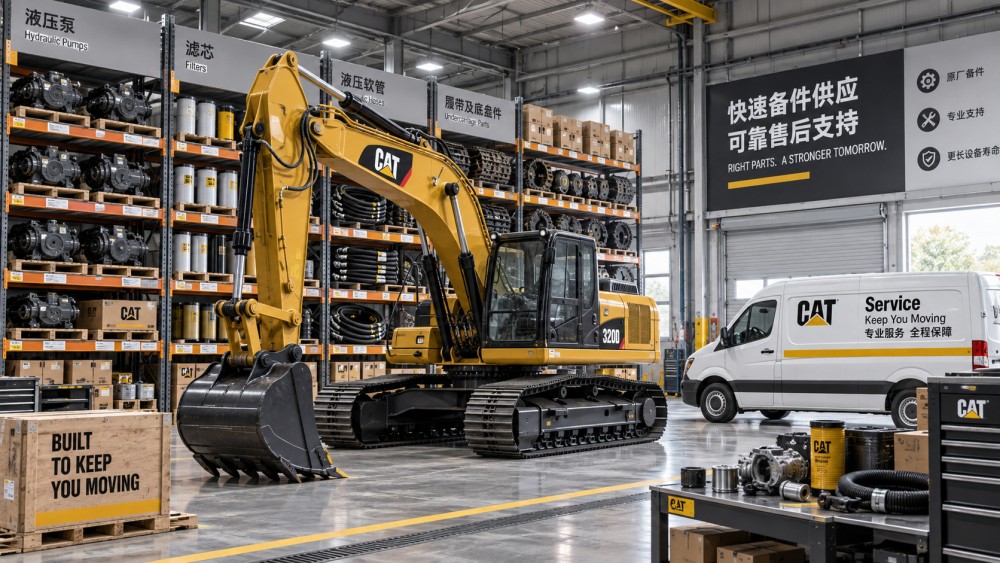
Parts availability is often the most important service-support variable because even an excellent field technician cannot restore production without the required component in time.
Ask the crawler equipment manufacturer which fast-moving, critical, and long-lead parts are stocked locally, regionally, and centrally for the proposed machine model.
Fast-moving parts include filters, seals, hoses, pins, bushings, teeth, fluids, belts, and common electrical items. Their availability determines maintenance continuity and minor repair speed.
Critical parts are those that can immobilize the machine, including hydraulic pumps, travel motors, controllers, sensors, swing components, cylinders, final drives, and engine-control modules.
Long-lead components deserve special scrutiny for imported machines. A low purchase price loses value quickly when a major assembly requires weeks of international transport.
Request actual fill-rate data rather than broad assurances. Suppliers should explain their first-pick fulfillment rate, emergency-order process, normal lead times, and backorder communication practices.
For remote projects, consider a site-based consignment inventory or recommended startup package. This can reduce dependence on uncertain transport routes during critical construction phases.
The package should be tailored to utilization, climate, terrain, machine age, and attachment use. A generic filter kit does not address the true failure exposure of a demanding site.
Clarify who owns consigned inventory, how replenishment occurs, and whether unused parts can be returned. These terms affect working capital and avoid unnecessary stock accumulation.
Evaluate the manufacturer’s ability to identify parts accurately. Serial-number discipline, illustrated catalogs, online ordering, and component supersession data reduce errors during urgent repairs.
Parts support should include undercarriage expertise. Track chains, rollers, idlers, sprockets, shoes, and tensioning components require application-specific advice to protect operating costs.
Ask whether the supplier can perform undercarriage inspections and provide wear forecasts. This helps fleet managers plan replacements before a preventable failure damages adjacent components.
Measure Field-Service Capability Where Equipment Will Operate
Field-service capability matters more than the total number of technicians shown in a national organization chart. What matters is qualified coverage near the operating location.
Request the number of technicians assigned within the relevant territory, their travel radius, shift coverage, certifications, and experience with the proposed crawler equipment platform.
A supplier may have many technicians overall but only limited capability for advanced hydraulics, emissions systems, telematics, electric drivetrains, or machine-control integrations.
Ask for a typical response-time record for emergency callouts. Distinguish between acknowledgment time, technician dispatch time, arrival time, diagnosis time, and repair completion time.
These measures reveal whether a stated four-hour response means a person is onsite, a call is answered, or a service request is merely entered into a system.
For major projects, define response categories in the service agreement. Safety-critical stoppages, complete machine immobilization, reduced performance, and scheduled maintenance require different commitments.
Review workshop capacity as well. Some repairs require specialized lifting equipment, machining, calibration, emissions testing, software tools, or controlled environments unavailable in the field.
Visit the proposed dealer or service branch when the purchase is material. Inspect service bays, diagnostic equipment, mobile vans, warehouse organization, and the quality of work-order controls.
Customer references should be selected by application, not simply by brand loyalty. Speak with owners running comparable machines in similar climates, loads, and utilization patterns.
Ask references about difficult failures, not only routine service. The most informative question is how the supplier handled a breakdown when the needed part was unavailable.
Assess Technical Depth and Diagnostic Capability
Modern crawler equipment increasingly depends on software, electronic controls, sensors, telematics, and integrated machine guidance. Technical support must match this complexity.
Ask whether field technicians can access manufacturer-authorized diagnostic software, controller updates, wiring diagrams, calibration procedures, and technical bulletins without unnecessary escalation delays.
Independent service capability can be valuable, but procurement should understand which repairs require proprietary access or OEM approval to preserve warranty and machine performance.
A capable crawler equipment manufacturer should explain its remote diagnostic workflow clearly. The process should identify what data is monitored and how potential faults are prioritized.
Useful systems can detect fault codes, abnormal temperatures, pressure deviations, fuel consumption changes, idle time, location, utilization, and overdue maintenance conditions before failures escalate.
However, telematics only create value when someone reviews the data and acts on it. Ask who receives alerts and what response follows a critical warning.
For equipment using GPS grading, payload monitoring, autonomous functions, or remote-control features, confirm whether local support teams can troubleshoot both machine and digital-system interfaces.
Integration failures often sit between equipment, software, connectivity, and site workflows. Responsibility must be clear when the machine functions mechanically but the productivity system does not.
Request examples of technical service bulletins or recurring defect remedies for comparable models. Transparent suppliers can explain known issues and the corrective actions applied across fleets.
Technical competence also includes operator and maintenance training. Improper daily checks, attachment setup, track tension, operating modes, or shutdown practices can create avoidable warranty disputes.
Examine Preventive Maintenance and Lifecycle Support
Reliable support is not limited to emergency repairs. The best service programs reduce failure frequency through disciplined inspections, planned maintenance, and condition-based interventions.
Ask the manufacturer for recommended maintenance intervals based on actual application severity, not only generic hour-based schedules published for standard operating conditions.
Dust, high ambient temperatures, abrasive materials, steep grades, heavy attachments, short cycles, and extended idling can materially change maintenance needs and component wear rates.
Review whether maintenance contracts include labor, travel, fluids, filters, inspections, software updates, sampling, undercarriage measurements, and reporting. Scope gaps can create surprise invoices.
A useful service report should identify completed work, measured wear, fault history, recommended actions, urgency, estimated cost, and the risk of deferring each repair.
Procurement should also assess support after warranty expiry. Many fleets retain crawler excavators and dozers long enough that post-warranty parts and technical support drive total ownership costs.
Ask how long the manufacturer guarantees parts availability after production ends. Confirm whether remanufactured components, exchange programs, or approved alternatives are available for aging equipment.
Rebuild support can be especially important for high-value machines. A credible program should include inspection standards, component traceability, warranty terms, and realistic downtime planning.
For organizations pursuing decarbonization targets, assess support for low-emission engines, electric equipment, charging infrastructure, battery systems, and energy-management diagnostics before deployment.
Turn Support Promises into Contractual Commitments
Verbal assurances from sales teams should never be the final basis for assessing support. Important commitments must be documented in the purchase agreement or service contract.
Specify service hours, emergency contact arrangements, response definitions, escalation contacts, parts-order cutoffs, transport responsibilities, and communication requirements for extended equipment downtime.
Where project exposure justifies it, negotiate measurable service-level agreements. These may address technician arrival targets, parts dispatch timing, equipment availability, and reporting frequency.
Service-level agreements should include reasonable exclusions for weather, access constraints, customer-caused damage, and force majeure. Ambiguous clauses are difficult to enforce during urgent events.
Define the warranty process in practical terms. Confirm claim submission requirements, diagnostic authorization, labor coverage, travel costs, replacement-part treatment, and expected approval timing.
Pay particular attention to exclusions involving attachments, third-party machine-control systems, consumables, wear items, contamination, improper fluids, and unauthorized software modifications.
For fleet purchases, consider quarterly performance reviews. These meetings should examine downtime events, repeat repairs, parts fulfillment, maintenance compliance, safety issues, and corrective actions.
Commercial remedies should be proportionate and achievable. The goal is not punitive language, but a clear mechanism that keeps service performance visible to both parties.
Compare Total Support Cost, Not Just the Purchase Price
A lower equipment price can be rational only when the supplier’s service model can protect utilization. Procurement should compare total support cost across the planned ownership period.
Include scheduled maintenance, consumables, labor rates, travel charges, diagnostic fees, parts pricing, expected wear costs, training, telematics subscriptions, and likely downtime exposure.
Downtime should be estimated using the project’s actual economics. Include replacement equipment, labor disruption, lost output, contractual penalties, delayed milestones, and supervisory time.
Compare proposed maintenance plans using common assumptions for annual hours, operating conditions, fuel quality, operator behavior, and expected component replacement intervals.
Be cautious with fixed-price maintenance offers that exclude high-risk components or limit visits. A low fixed fee may transfer significant operational uncertainty back to the buyer.
Conversely, a higher-priced support package may be justified when it includes local inventory, condition monitoring, trained technicians, and defined recovery processes for critical assets.
Procurement should present this analysis as a lifecycle business case. It connects service support with availability, production continuity, residual value, and the broader project schedule.
Use a Final Due-Diligence Checklist
Before selecting a crawler equipment manufacturer, confirm that local parts coverage, technician capability, diagnostic access, warranty administration, and escalation contacts have been independently verified.
Confirm that the proposed service branch supports the exact models being purchased, including attachments, digital guidance systems, emissions technology, and any specialized operating configurations.
Obtain written lead times for critical parts and identify which components will be stocked locally, regionally, or only at a central international warehouse.
Review at least two relevant customer references, preferably including one customer that experienced a significant breakdown or required support in a remote operating environment.
Ensure service contracts define measurable responsibilities and do not rely on vague wording such as reasonable efforts, subject to availability, or standard response where risk is high.
Finally, involve operations and maintenance teams before award. Their acceptance is essential because they will experience the real quality of the manufacturer’s support after delivery.