
Related News
- 00
0000-00
How to size heavy-duty loaders for North American mining operations - 00
0000-00
How altitude affects mining excavator performance in Latin America - 00
0000-00
Caterpillar Launches New Cat 6060 and Upgraded Autonomous Mining System - 00
0000-00
When does eco-friendly construction equipment pay for itself? - 00
0000-00
Will a wheel loader quick coupler fit your existing attachments?
How to Compare Construction Equipment Manufacturers Beyond Price
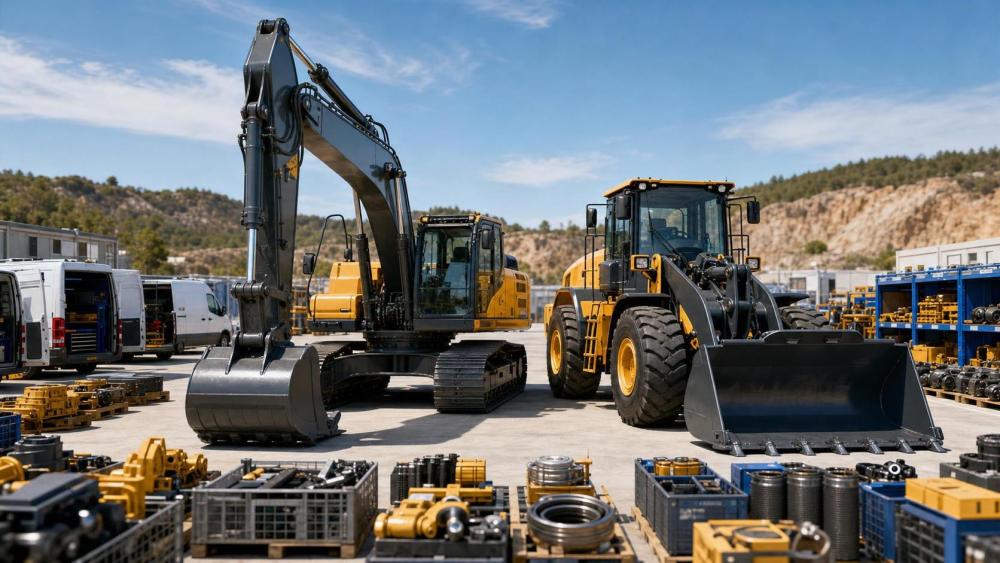
When evaluating construction equipment manufacturers, price is only the opening number on the spreadsheet.
A lower quote can look attractive, then become expensive through downtime, fuel burn, and weak service support.
That is why smart comparison starts with total operating value, not just upfront cost.
In real procurement work, the strongest manufacturers usually prove themselves through reliability, support coverage, and predictable lifecycle performance.
For buyers handling excavators, wheel loaders, graders, bulldozers, or skid steers, that broader view reduces risk and protects project schedules.
This guide explains how to compare construction equipment manufacturers in a practical, performance-based way.
Start with the Application, Not the Brochure
Before comparing brands, define the exact work environment and operating targets.
A manufacturer that performs well in quarry loading may not be ideal for urban utility work.
This matters even more when comparing construction equipment manufacturers across multiple machine categories.
- Define duty cycle, material type, travel distance, and attachment requirements.
- List expected daily operating hours and seasonal workload peaks.
- Confirm site limits such as emissions zones, transport width, and ground pressure needs.
- Identify operator skill level and digital system familiarity.
Once these factors are clear, manufacturer comparison becomes sharper and far less emotional.
Measure Reliability in Real Working Conditions
Reliability is often the biggest separator between construction equipment manufacturers.
The question is not whether a machine looks durable on paper.
The question is how it behaves after thousands of hours in dust, mud, heat, vibration, and stop-start cycles.
Look for evidence from field populations, fleet users, and service histories.
- Engine and hydraulic failure rates over similar applications.
- Average hours before major component rebuild.
- Recurring issues involving cooling, pins, bushings, or electronic controls.
- Performance stability in cold start and high-ambient conditions.
A slightly higher-priced machine with fewer failures usually delivers stronger return over the contract period.
Compare Hydraulic and Fuel Efficiency
Hydraulic efficiency shapes cycle time, responsiveness, and overall productivity.
For excavators, loaders, and dozers, smooth power delivery often matters more than peak advertised output.
Many construction equipment manufacturers publish impressive specifications, but field efficiency tells the real story.
Compare fuel use against actual output, not idle brochure claims.
- Measure liters per hour against tons moved or cubic meters handled.
- Review swing speed, lift stability, breakout force, and attachment response.
- Check whether power modes are genuinely useful or mostly marketing labels.
- Verify idle management, auto shutdown, and eco-mode impact.
From a lifecycle view, small efficiency gains can outweigh initial price differences very quickly.
Do Not Underestimate Parts Availability
One weak parts network can erase the advantage of an otherwise strong machine.
This is where many buyers discover that not all construction equipment manufacturers are equally prepared.
Ask direct questions about fill rates, lead times, and stocking strategy for wear and critical parts.
- What percentage of fast-moving parts is available locally?
- How long do pumps, valves, final drives, or control modules take to arrive?
- Are aftermarket alternatives approved or discouraged?
- How are urgent breakdown shipments handled?
Good availability improves uptime, but it also strengthens budget forecasting.
That predictability matters when projects run on penalties and tight completion windows.
Evaluate Dealer Support and Technical Depth
The brand name matters, but the local support partner often matters more.
When comparing construction equipment manufacturers, assess the dealer as if it were part of the machine package.
A capable dealer reduces downtime, improves diagnostics, and makes warranty handling less painful.
In practice, the best support teams prevent small problems from becoming expensive project disruptions.
Review Compliance, Technology, and Future Readiness
Procurement decisions now carry more regulatory and technology risk than before.
More buyers are screening construction equipment manufacturers for emissions compliance, telematics maturity, and electrification direction.
That shift is especially visible in urban projects, public tenders, and multinational fleet standards.
- Confirm compliance with current local emissions requirements.
- Check telematics quality for fuel, idle time, fault code, and geofencing visibility.
- Review machine control integration for grading or digging precision.
- Ask about electric, hybrid, or autonomous roadmap relevance.
A manufacturer that cannot support future compliance may create replacement pressure earlier than expected.
Look at Resale Value and Fleet Standardization
Purchase price is immediate, but resale value appears later as a silent profit or loss line.
Some construction equipment manufacturers hold value better because of stronger demand, proven durability, and better service reputations.
Also consider whether the brand fits the rest of the fleet.
Standardization lowers training time, simplifies parts planning, and improves operator confidence.
If one new supplier creates a separate toolchain, separate software, and separate filters, the hidden cost rises fast.
Use a Weighted Comparison Scorecard
A structured scorecard keeps decisions consistent and easier to defend internally.
This is one of the most effective ways to compare construction equipment manufacturers objectively.
Weight each category based on actual business impact.
- Reliability and uptime history.
- Fuel and hydraulic efficiency.
- Dealer support and parts availability.
- Compliance and technology readiness.
- Operator acceptance and training needs.
- Resale outlook and total cost of ownership.
- Quoted purchase price.
Notice that price still matters.
It just should not dominate the final decision.
Final Decision: Choose the Lowest Risk, Not Just the Lowest Quote
The best construction equipment manufacturers earn their place through dependable performance over years, not through a one-time discount.
When you compare brands through uptime, efficiency, support, compliance, and resale strength, the decision becomes clearer.
That approach also creates a stronger case for internal approval and long-term fleet planning.
Start with the job requirement, pressure-test every supplier claim, and score each manufacturer against business-critical outcomes.
In the end, the right choice is usually the manufacturer that keeps machines working, operators productive, and project risk under control.