
Related News
- 00
0000-00
What determines equipment durability on airport construction sites? - 00
0000-00
How terrain and dealer support shape machinery selection in Latin America - 00
0000-00
How market insight content analysis reveals shifts in equipment demand - 00
0000-00
When do OEM heavy machinery parts justify their higher cost? - 00
0000-00
What to compare among construction equipment manufacturers in North America
How to Choose Heavy Equipment for Road and Mining Jobs
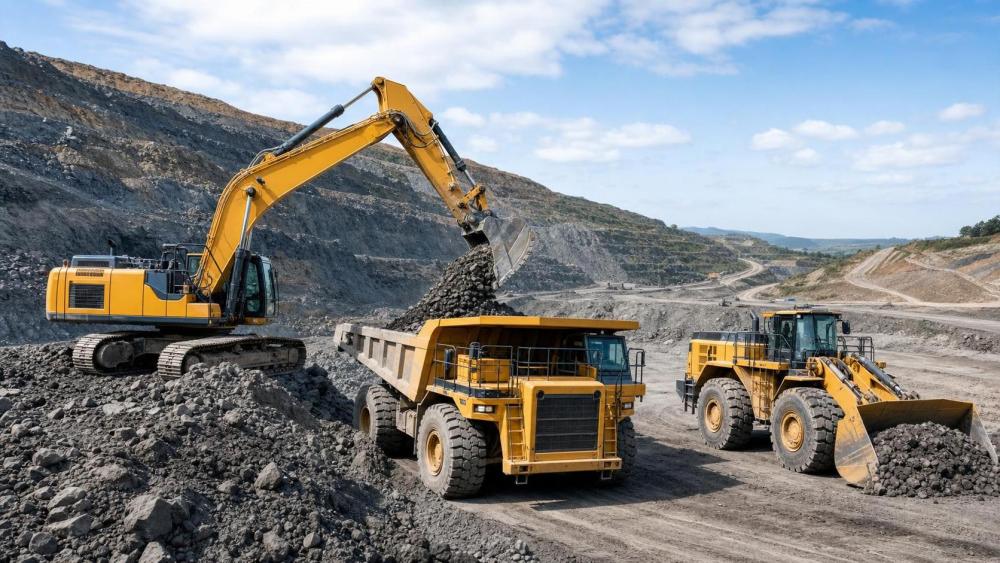
Choosing the right heavy equipment for road construction and mining shapes cost, safety, and delivery speed from day one.
A poor match creates fuel waste, idle time, breakdown risk, and production bottlenecks across the site.
A smart match improves material flow, machine utilization, and operator confidence under demanding conditions.
For most projects, selecting heavy equipment is not about buying the biggest machine.
It is about fitting machine capability to haul distances, ground conditions, daily output targets, and lifecycle cost.
In road work and mining, the same model can perform very differently depending on grade, weather, and support planning.
That is why equipment selection should combine field reality, data, and commercial discipline.
This guide breaks down the practical factors that matter most when choosing heavy equipment for high-pressure jobs.
Start with the Job, Not the Machine
The first step is defining the real production task in measurable terms.
For road construction, that usually means cut-and-fill volumes, finish tolerances, haul routes, and paving schedules.
For mining, it means overburden removal, material density, cycle time, bench design, and loading consistency.
These details determine which heavy equipment category will create value and which will slow the operation.
A crawler excavator may excel in trenching and rock breakout.
A wheel loader may deliver better loading speed in stockpile handling or short-cycle quarry work.
A motor grader is often essential when surface precision affects drainage, pavement life, or haul-road safety.
A bulldozer becomes critical when traction, pushing force, and rough ground mobility drive production.
In practice, the best heavy equipment decision begins with workflow mapping.
Track the sequence from excavation to loading, hauling, grading, and final finishing.
Once that flow is clear, machine sizing becomes much easier and more accurate.
Match Heavy Equipment to Terrain and Material
Terrain changes equipment behavior more than many teams expect.
Soft ground, steep grades, loose aggregate, and wet conditions all affect traction, stability, and cycle efficiency.
Tracked heavy equipment often performs better on unstable or uneven surfaces.
Wheeled machines usually move faster and may reduce travel time on prepared surfaces.
Material type matters just as much.
Dense rock, abrasive ore, sticky clay, and mixed overburden place very different demands on buckets, blades, and undercarriage systems.
This is where application-specific configuration becomes important.
- Choose reinforced bucket structures for abrasive materials.
- Use ripper and blade combinations where ground penetration is difficult.
- Prioritize sealed components in muddy or waterlogged environments.
- Check ground pressure if working on weak subgrade or reclaimed land.
From a risk standpoint, wrong terrain matching shortens component life and increases operator fatigue.
That usually shows up later as unplanned repairs and slower production, not on the original spec sheet.
Focus on Productivity Metrics That Actually Matter
Many equipment decisions go wrong because teams compare headline power instead of jobsite productivity.
Engine horsepower matters, but it is not the whole story.
The better question is how much usable output the heavy equipment delivers per hour in real conditions.
For loaders and excavators, measure bucket fill factor, swing time, breakout force, and truck matching.
For graders, watch blade response, control accuracy, and pass efficiency.
For bulldozers, evaluate drawbar pull, balance, and push performance over repeated cycles.
A simple evaluation table can keep the decision grounded.
When comparing options, ask suppliers for production data in applications close to your own.
That gives a far better picture than brochure claims alone.
Look Beyond Purchase Price
Heavy equipment should be evaluated on total lifecycle value, not just initial capital cost.
A cheaper machine can become the more expensive option after fuel, wear parts, downtime, and resale are included.
This is especially true in mining, where long shifts magnify every efficiency gap.
A useful buying framework includes five cost layers.
- Acquisition price and financing terms.
- Fuel or energy consumption over planned hours.
- Maintenance intervals and parts availability.
- Expected downtime and service response time.
- Residual value at replacement.
Recent market shifts make this even more important.
Stricter emissions standards, higher fuel prices, and digital fleet management are reshaping what counts as efficient heavy equipment.
More buyers now weigh telematics, remote diagnostics, and idle control as financial features, not just technical extras.
Prioritize Reliability, Service, and Parts Support
Even high-performing heavy equipment can become a weak choice if support is slow or inconsistent.
Road and mining projects often run under tight sequence pressure.
One immobilized machine can delay trucks, labor, subcontractors, and downstream work fronts.
That is why local dealer strength matters almost as much as machine performance.
Before deciding, review these support questions.
- How fast can critical parts reach the site?
- Is field service available during night or weekend shifts?
- What uptime guarantees are included in the contract?
- Can technicians access machine data remotely?
- Are wear components stocked locally?
In actual operations, support quality often separates average fleet decisions from excellent ones.
This is one reason intelligence platforms like EMD track not only machine evolution, but also broader service and reliability trends.
Consider Technology, Safety, and Future Readiness
Modern heavy equipment is increasingly defined by software, sensing, and control systems.
That trend is stronger in precision road work and hazardous mining environments.
Grade control, payload monitoring, obstacle detection, and remote diagnostics can reduce waste and improve safety.
For graders and dozers, 3D positioning can cut rework and shorten finishing time.
For excavators and loaders, machine guidance can improve bucket accuracy and loading consistency.
In mining, remote-control capability may also reduce exposure in dangerous zones.
Future readiness also means checking energy strategy.
Some heavy equipment fleets now include low-emission or electrified models for specific duty cycles.
That may not fit every site today, but it should be part of long-term planning.
The best decision balances immediate production with future compliance and operating resilience.
A Practical Heavy Equipment Selection Checklist
If the process feels complex, simplify it into a repeatable checklist.
- Define material type, target output, and daily operating hours.
- Map terrain limits, weather exposure, and haul conditions.
- Shortlist heavy equipment by application, not brand alone.
- Compare cycle efficiency, fuel performance, and uptime expectations.
- Review attachments, undercarriage, tire, and bucket configuration.
- Audit local service coverage and parts response capability.
- Include telematics, safety systems, and compliance requirements.
- Estimate full ownership cost before final approval.
This approach helps prevent emotional buying, oversizing, and hidden cost surprises.
It also creates a stronger basis for supplier negotiation.
Final Takeaway
Choosing heavy equipment for road and mining jobs is really a decision about operational fit.
The right machine supports production targets, controls risk, and holds value across its working life.
The wrong machine creates friction everywhere, from fuel use to schedule recovery.
Start with the job, test every assumption against site conditions, and compare heavy equipment with lifecycle discipline.
That is the clearest path to better equipment decisions and more predictable project performance.