
How a Supplier Solution Database Reduces Sourcing Risk
Introduction: For procurement teams sourcing excavators, loaders, graders, and critical hydraulic or automation components, supplier risk can quickly become project risk.
A robust supplier solution database brings verified capabilities, compliance data, technical fit, and market intelligence into one decision-ready view for faster, more defensible decisions.
It helps buyers compare global partners with greater confidence, reduce disruptions, and secure reliable equipment solutions for demanding infrastructure, mining, and earthmoving operations.
The central question is not whether a database contains supplier names. It is whether it helps procurement identify suppliers capable of delivering reliably under real operating conditions.
Why Supplier Risk Becomes Equipment and Project Risk
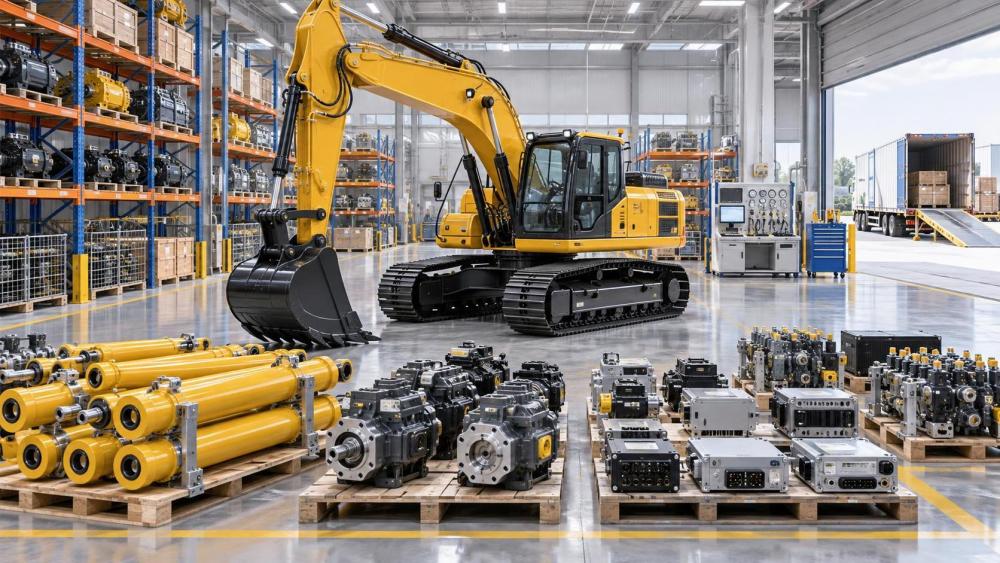
In earthmoving equipment procurement, a supplier failure can delay machine assembly, halt maintenance work, increase rental costs, or expose a contractor to schedule penalties.
A missing hydraulic pump, incompatible control module, delayed undercarriage component, or unverified attachment interface can create consequences far beyond the original purchase order.
Buyers often face pressure to lower purchase prices while maintaining uptime, technical performance, emissions compliance, warranty protection, and spare-parts availability across multiple markets.
That combination makes supplier selection a risk-management activity rather than a simple vendor comparison exercise based on unit price, lead time, and commercial terms.
Traditional supplier lists rarely provide enough context. They may show contacts and product categories, but omit production resilience, engineering depth, audit results, and recent delivery performance.
A supplier solution database reduces sourcing risk by connecting these fragmented signals. Procurement teams can assess whether a supplier is appropriate for a specific equipment application.
For example, a component manufacturer qualified for compact skid steer attachments may not have the material controls, capacity, testing discipline, or service network needed for mining loaders.
The database should therefore support a practical conclusion: which suppliers are suitable, which need further qualification, and which should be excluded from critical sourcing decisions.
What Procurement Teams Actually Need to Know Before Selecting Suppliers
Procurement professionals usually need answers that are more specific than “Is this supplier reliable?” They need evidence tied to product, location, production capacity, and operating risk.
The first requirement is capability verification. Can the supplier manufacture or distribute the exact excavator assembly, hydraulic component, grading technology, or automation system required?
This includes technical specifications, compatible machine classes, material standards, tolerance requirements, pressure ratings, attachment interfaces, and documented testing procedures for relevant applications.
The second requirement is operational confidence. Buyers need to understand factory location, approved production capacity, tooling constraints, workforce capability, quality controls, and likely lead-time exposure.
For aftermarket and fleet maintenance purchasing, service reach matters equally. A technically qualified supplier is still risky if replacement parts cannot reach remote sites quickly.
The third requirement is commercial and financial stability. Buyers need visibility into ownership, market presence, export experience, payment risks, customer concentration, and continuity planning.
Finally, procurement teams need compliance evidence. Emissions regulations, product certifications, environmental requirements, trade restrictions, and safety documentation can determine whether a sourced solution is usable.
A useful supplier solution database converts these concerns into searchable records and comparable fields, allowing buyers to focus due diligence where the potential impact is highest.
How a Supplier Solution Database Creates a More Defensible Decision
A good database does not replace procurement judgment. It gives buyers a structured basis for applying judgment consistently across suppliers, product families, regions, and sourcing events.
Instead of relying on scattered spreadsheets, email threads, trade-show contacts, and individual memory, teams can work from a shared supplier record with traceable evidence.
Each record should link supplier identity with relevant capabilities, approved products, qualification status, certifications, audit observations, commercial history, and known operational constraints.
This creates a single view of supplier suitability. Stakeholders from engineering, quality, legal, logistics, and procurement can review the same information before approving a supplier.
Structured comparison also improves internal alignment. Engineering can define technical requirements while procurement evaluates sourcing options without losing critical performance or integration details.
For crawler excavators, this may involve comparing hydraulic cylinder suppliers by bore size capability, coating process, seal compatibility, fatigue testing, and available field support.
For motor graders, the evaluation may focus on GNSS compatibility, calibration support, software update policy, sensor accuracy, and long-term availability of electronic control components.
When decision evidence is organized centrally, supplier approval becomes easier to explain to management, project teams, customers, auditors, and risk committees.
Key Data Fields That Make the Database Useful in Heavy Equipment Sourcing
The value of a supplier solution database depends on data quality. A large directory with weak or outdated entries can create false confidence and waste procurement time.
Start with core identity information: legal entity name, operating locations, manufacturing sites, distribution centers, ownership structure, primary contacts, and relevant business registrations.
Next, document product capability in detail. Broad labels such as “hydraulic supplier” are insufficient when buyers need pumps, valves, hoses, cylinders, filters, or integrated systems.
Capture machine applications and performance ranges. Relevant fields may include equipment tonnage, operating pressure, payload class, breakout-force requirements, environmental operating limits, and duty cycles.
Quality data should include ISO certifications, incoming inspection methods, process controls, traceability practices, nonconformance rates, corrective action history, and customer audit outcomes where available.
Supply resilience records should address production capacity, capacity utilization, key subcontractors, raw-material dependencies, alternate manufacturing locations, inventory policies, and recovery plans for disruptions.
Commercial records should cover quoted pricing history, payment terms, minimum order quantities, warranty commitments, delivery performance, dispute history, and contractual limitations affecting procurement flexibility.
Finally, retain intelligence that changes over time, including expansion announcements, mergers, regulatory developments, market demand shifts, and changes in regional infrastructure investment activity.
Reducing Technical Fit and Quality Failure Risk
Technical mismatch is one of the most expensive sourcing risks because it may only become visible during assembly, commissioning, field operation, or a critical maintenance event.
A supplier solution database helps buyers connect specifications with real application evidence rather than accepting general capability claims from sales materials or preliminary quotations.
For heavy machinery components, procurement should search for documented experience in similar loads, temperatures, vibration levels, contamination conditions, and operating hours.
Hydraulic systems require particular attention. A valve that meets nominal pressure requirements may still perform poorly if response characteristics or contamination tolerances differ from the intended design.
Electronic controls also require disciplined evaluation. Compatibility must include communication protocols, software support, cybersecurity practices, sensor integration, diagnostic access, and update lifecycle commitments.
The database should identify approved technical documents, sample-test results, first-article inspection status, field trials, engineering deviations, and unresolved quality concerns for every significant supplier.
This prevents a common mistake: treating a supplier’s certification as proof that every product configuration is suitable for every operating environment and equipment platform.
When technical evidence is visible early, teams can request samples, schedule validation testing, or involve engineering before a low-cost quotation becomes an expensive sourcing commitment.
Using Supplier Intelligence to Build Resilient Supply Options
Supplier risk cannot be eliminated entirely, especially when procurement depends on specialized castings, advanced hydraulics, control software, batteries, or scarce electronic components.
The practical objective is resilience: understanding exposure early enough to create alternatives, adjust inventory, negotiate protections, or redesign sourcing strategies before disruption occurs.
A supplier solution database helps identify single-source dependencies by mapping which suppliers provide critical parts, which plants produce them, and where common upstream dependencies exist.
This is especially important when two apparently separate suppliers rely on the same foundry, semiconductor distributor, port route, or regional logistics network.
Procurement teams can use database insights to categorize suppliers by criticality. High-impact, low-substitutability suppliers deserve deeper monitoring and more frequent qualification reviews.
For critical excavator, bulldozer, or loader components, buyers may maintain qualified secondary suppliers even when the primary supplier has a strong delivery record.
The database can also reveal where dual sourcing is unrealistic. In those cases, procurement can focus on contractual safeguards, safety stock, repair capability, and supplier collaboration.
Resilience decisions become more precise when risk signals are connected to actual machine programs, fleet maintenance requirements, construction schedules, and project geography.
Supporting Compliance, Sustainability, and Market Access
Compliance failures can block shipments, delay equipment acceptance, create customer disputes, or damage an OEM’s reputation in public infrastructure and regulated mining projects.
A supplier solution database should make compliance evidence easy to review before contracts are issued, particularly when sourcing across jurisdictions with different regulatory requirements.
Relevant records may include product safety certifications, emissions-related documentation, material declarations, environmental management standards, export controls, sanctions screening, and labor compliance information.
For machinery manufacturers pursuing decarbonization goals, supplier intelligence should also cover energy practices, recycled-material capabilities, electrification expertise, battery supply chain visibility, and lifecycle reporting readiness.
This information matters because customers increasingly evaluate equipment not only by productivity, but also by fuel efficiency, emissions profile, reporting quality, and regulatory eligibility.
Procurement should avoid treating sustainability information as a marketing appendix. It can affect tender eligibility, financing requirements, customer acceptance, and future product development choices.
By storing evidence and expiry dates centrally, teams reduce the risk of depending on outdated certificates or assuming a prior approval applies to a changed supplier facility.
Compliance intelligence is most valuable when integrated into supplier approval workflows, so buyers cannot overlook mandatory documentation during urgent or high-volume sourcing events.
How to Implement a Database Without Creating Another Administrative Burden
A supplier solution database succeeds when it supports existing sourcing decisions. It fails when users see it as a separate reporting task with no operational value.
Begin with the categories that carry the greatest risk: critical hydraulic systems, powertrain components, undercarriage assemblies, grade-control technologies, safety parts, and high-value maintenance items.
Define a common supplier profile template with mandatory fields. Keep it focused enough for regular updates while preserving the evidence required for technical and commercial decisions.
Assign clear ownership. Procurement may manage commercial fields, while engineering owns technical approval, quality manages audit evidence, and compliance validates regulatory documentation.
Create review triggers instead of relying only on annual updates. Trigger reassessment after repeated late deliveries, major quality incidents, ownership changes, certification expiry, or capacity expansion.
Use supplier scorecards carefully. Numerical ratings are useful for prioritization, but buyers should always be able to review the evidence behind a risk score.
Integrate the database with sourcing workflows whenever possible. Supplier searches, request-for-quotation lists, approval gates, contracts, and performance reviews should use the same supplier information.
Most importantly, measure whether the database improves outcomes: shorter qualification cycles, fewer supplier-related disruptions, stronger delivery performance, and fewer late-stage technical surprises.
Questions Buyers Should Ask Before Relying on Supplier Data
Before using any supplier solution database, procurement leaders should ask how information is verified, how frequently records are updated, and who is accountable for accuracy.
A platform that merely aggregates supplier claims is useful for discovery, but it should not be treated as final evidence for technically critical or high-risk sourcing.
Buyers should also ask whether the database supports application-specific searching. Generic product labels cannot adequately support sourcing for demanding earthmoving equipment requirements.
Another important question concerns global coverage. The strongest supplier choice may depend on manufacturing location, local service needs, trade exposure, and project delivery timing.
Data should support both strategic and urgent sourcing. A long-term OEM program needs capability and resilience intelligence, while a breakdown event requires availability and logistics visibility.
Finally, procurement teams should confirm that the system records negative findings. Excluding poor audit results, delivery failures, or unresolved claims creates a misleading supplier picture.
A credible database is not designed to make every supplier look qualified. It is designed to make uncertainty visible before it becomes a costly operational problem.
Conclusion: Better Supplier Data Produces Better Sourcing Decisions
A supplier solution database reduces sourcing risk when it gives procurement teams relevant, verified, current, and application-specific information at the point of decision.
For excavators, wheel loaders, motor graders, bulldozers, skid steers, and their critical systems, supplier selection directly influences equipment uptime, project delivery, safety, and total cost.
The most effective databases combine technical fit, quality evidence, supply resilience, compliance status, commercial performance, and market intelligence in one usable supplier view.
Procurement teams should treat the database as a decision system, not a contact directory. Its purpose is to expose risk early and support reliable equipment sourcing.