
Related News
- 00
0000-00
How to size heavy-duty loaders for North American mining operations - 00
0000-00
How altitude affects mining excavator performance in Latin America - 00
0000-00
Caterpillar Launches New Cat 6060 and Upgraded Autonomous Mining System - 00
0000-00
When does eco-friendly construction equipment pay for itself? - 00
0000-00
Will a wheel loader quick coupler fit your existing attachments?
Heavy Construction Equipment Cost Drivers in 2026
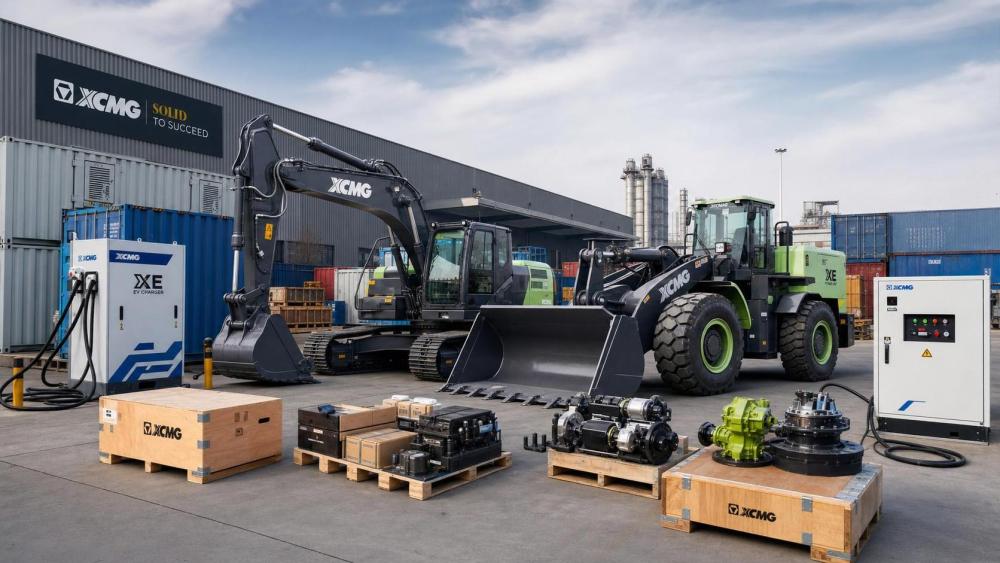
In 2026, heavy construction equipment costs are moving beyond base machine pricing.
What matters now is the full cost structure around ownership, compliance, uptime, and resale.
For companies buying excavators, loaders, graders, bulldozers, and skid steers, that shift is significant.
A cheaper machine can quickly become expensive when fuel burn, maintenance, software, and delivery risk enter the picture.
That is why heavy construction equipment sourcing now requires a sharper cost lens.
From a procurement standpoint, 2026 brings five visible pressures.
Emissions rules are tighter, electrification is advancing, hydraulic systems are becoming smarter, automation is adding new layers, and supply chains remain uneven.
The result is a market where price comparison alone no longer works.
The better approach is to identify the real drivers behind heavy construction equipment cost, then rank them by business impact.
Why Purchase Price Tells Only Part of the Story
Most heavy construction equipment budgets still start with capital expenditure.
That is necessary, but no longer sufficient.
A crawler excavator with a lower upfront quote may need higher filter replacement frequency.
A wheel loader with an advanced powertrain may cost more initially, yet deliver lower hourly operating cost.
This is even more obvious in applications with long idle time, high breakout demand, or difficult site logistics.
In practical terms, equipment value now depends on total cost of ownership.
That includes acquisition, freight, financing, training, fuel or energy, service, parts, software access, utilization, and end-of-life recovery.
When heavy construction equipment buyers ignore these layers, cost surprises usually appear in the second year.
The Cost Stack to Watch
- Base machine price and factory options
- Shipping, tariffs, and dealer delivery fees
- Fuel, battery charging, or hybrid energy costs
- Consumables, wear parts, and hydraulic service intervals
- Telematics subscriptions and software updates
- Residual value and remarketing speed
Emissions Compliance Is Raising the Floor
One major cost driver in heavy construction equipment is emissions regulation.
Across many markets, non-road diesel standards continue to tighten.
That pushes manufacturers toward more complex aftertreatment systems, cleaner combustion strategies, and smarter electronic controls.
These upgrades improve environmental performance, but they also raise equipment complexity and service sensitivity.
For buyers, the direct effect is higher machine pricing in many diesel segments.
The indirect effect is even more important.
If service teams are unfamiliar with aftertreatment systems, downtime risk rises.
That matters especially for bulldozers and excavators working in remote or high-load environments.
What to Verify Before Ordering
- Regional emissions certification for the intended jobsite
- DEF consumption and storage requirements
- Dealer capability for diagnostics and field repair
- Impact on resale in regulated and less regulated markets
Electrification Changes Both CapEx and OpEx
Another clear shift is electrification.
Battery-electric and hybrid heavy construction equipment is no longer limited to pilot projects.
In urban construction, indoor demolition, and low-noise zones, electric compact equipment is already practical.
Larger categories are following, though not evenly across applications.
The cost impact is mixed.
Purchase prices are usually higher because battery packs, thermal management, and power electronics remain expensive.
At the same time, some operating costs can fall through lower energy spend and fewer engine-related maintenance tasks.
However, those savings depend heavily on site readiness.
Without dependable charging access, fleet rotation planning, and trained technicians, electric heavy construction equipment can create hidden delays.
The Real Evaluation Questions
- Will the machine complete a full shift in real conditions?
- What charging infrastructure must be added on site?
- How does battery warranty affect long-term ownership cost?
- Will project owners pay a premium for low-emission operation?
Hydraulic and Control System Complexity Matters More Than Ever
For heavy construction equipment, hydraulic architecture remains a core cost driver.
High-performance excavators, dozers, and graders now rely on more precise electro-hydraulic systems.
That delivers better controllability, productivity, and attachment compatibility.
But it also raises repair complexity and parts costs.
This trend is easy to miss during sourcing because performance features look attractive on specification sheets.
The more useful question is whether those features match the task profile.
If a fleet mainly handles repetitive bulk movement, simpler systems may produce better cost control.
If the work involves fine grading, mixed attachments, or remote hazardous operations, advanced controls may easily justify the premium.
High-Value Checks for Technical Procurement
- Hydraulic pump brand, valve system, and service network depth
- Sensor dependency for normal operation and fault recovery
- Compatibility with grade control or machine control packages
- Lead time for critical hydraulic components
Automation and Software Are New Cost Centers
Software is now part of heavy construction equipment economics.
Machine guidance, telematics, payload monitoring, remote diagnostics, and semi-autonomous functions are becoming standard in premium models.
These features can cut rework, improve fuel efficiency, and reduce operator variability.
Still, they are not free after purchase.
Subscription fees, calibration support, data integration, and software licensing can expand annual operating budgets.
This is particularly relevant for motor graders and precision earthmoving fleets.
On those machines, digital accuracy directly affects output quality.
In contrast, some basic loading applications gain little from advanced automation packages.
That is why software options should be tied to measurable site outcomes.
Supply Chain Volatility Still Affects Equipment Cost
Recent years changed how the market views lead time risk.
In 2026, supply chains are better than crisis levels, but not fully stable.
Components such as semiconductors, hydraulic parts, batteries, and tires can still affect delivery timing.
For heavy construction equipment buyers, delayed delivery has a real cost.
Projects may require rental bridging, rushed substitutions, or under-optimized machine selection.
In some cases, faster delivery from a stronger supplier is worth a higher quote.
That tradeoff becomes more compelling when project penalties are high.
A Practical Comparison Table
Utilization, Uptime, and Resale Often Decide the Best Buy
The strongest heavy construction equipment decision is often not the lowest quote.
It is the machine that stays productive, fits the duty cycle, and exits the fleet cleanly.
This is where utilization discipline becomes essential.
If a premium machine runs at low annual hours, the return case weakens quickly.
If a mid-priced machine suffers repeated downtime, its apparent savings disappear.
Resale is equally important.
Well-supported brands, common configurations, and documented service records usually protect asset value better.
That can materially reduce net ownership cost across excavators, wheel loaders, and dozers.
A Smarter Procurement Checklist for 2026
- Model total cost by hour, not only purchase price
- Match machine complexity to actual job requirements
- Stress-test delivery time and parts availability
- Review software, warranty, and battery terms carefully
- Estimate resale value before final approval
In 2026, heavy construction equipment purchasing is becoming more analytical and less price-driven.
The most effective decisions combine technical fit, operating efficiency, compliance readiness, and supply resilience.
When those factors are reviewed together, buyers can reduce long-term cost exposure and choose heavy construction equipment with greater confidence.