
Related News
- 00
0000-00
How to size heavy-duty loaders for North American mining operations - 00
0000-00
How altitude affects mining excavator performance in Latin America - 00
0000-00
Caterpillar Launches New Cat 6060 and Upgraded Autonomous Mining System - 00
0000-00
When does eco-friendly construction equipment pay for itself? - 00
0000-00
Will a wheel loader quick coupler fit your existing attachments?
Tags
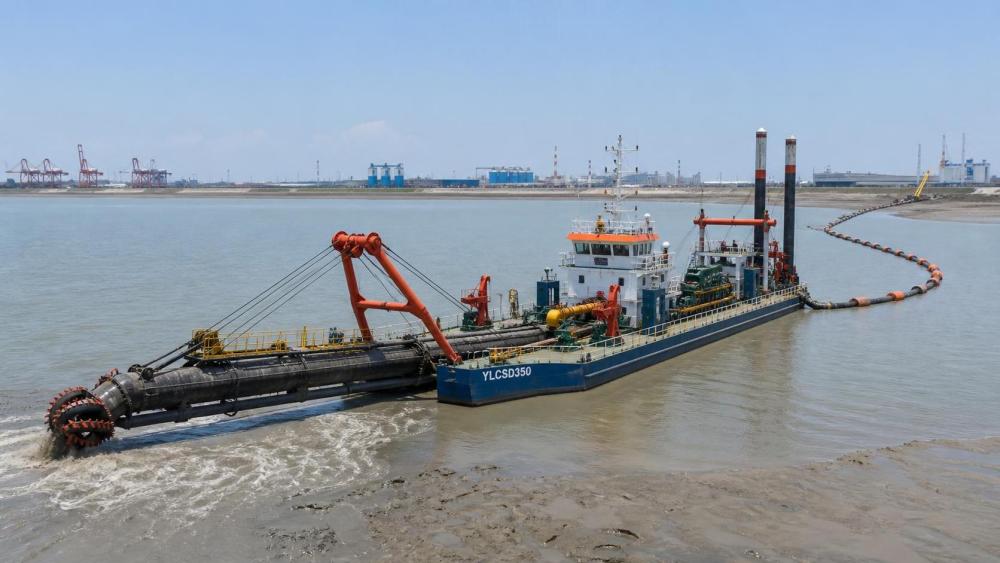
A cutter suction dredger can look comparable on a quotation sheet while behaving very differently once it reaches a river, pond, port basin, or sand-mining site. This is especially true when procurement teams are assessing a model identified as a YLCSD350. The designation may suggest a certain size class, but it does not by itself confirm pump performance, cutter suitability, installed power, discharge distance, structural design, or the condition of the equipment delivered.
The main purchasing risk is treating the model name as a complete technical specification. A dredger is a system in which the cutter head, ladder, dredge pump, pipeline, winches, pontoon structure, power package, electrical controls, and auxiliary equipment must work together under site-specific conditions. A mismatch in one area can limit the whole operation. For procurement personnel, the aim is not simply to compare the lowest purchase price; it is to determine whether the proposed machine can move the required material safely and consistently within the intended operating envelope.
Do Not Treat the Model Number as a Performance Guarantee
A YLCSD350 designation is commonly associated with a cutter suction dredger category, yet naming conventions are not always standardized across manufacturers. One supplier may use a model number to indicate nominal discharge pipe diameter, while another may incorporate different design assumptions or offer several configurations under the same base designation. Buyers should avoid assuming that two machines with similar labels have equivalent hydraulic capacity or production capability.
Before comparing offers, the procurement specification should define the required operating duty rather than relying on a model name. That duty should include the expected material type, average and maximum dredging depth, discharge route, total pipeline length, discharge elevation, operating hours, and access constraints at the site. A dredger selected for loose river sand may be unsuitable for compacted clay, gravel-bearing material, or sediment containing debris, even if the nominal pipe size appears adequate.
When reviewing a proposed YLCSD350 cutter suction dredger, purchasers should request a configuration-level description covering the pump, cutter drive, engine or electrical supply, hull arrangement, control system, discharge pipeline interface, and available auxiliary equipment. This creates a more meaningful basis for comparison than a general brochure description.
The Material Being Dredged Drives More Than Production Output
Many buying errors begin with an incomplete understanding of the material. “Sand,” “silt,” or “mud” are often used in early project discussions, but these broad labels are rarely sufficient for equipment selection. Grain size, density, clay content, compaction, shell content, cobbles, organic matter, debris, and abrasive mineral content all affect how the cutter and pump will perform.
Fine, free-flowing material may be transported with a relatively high water content and lower cutting resistance. Dense sand or compacted sediment can require more cutter torque and more careful control of feed rate. Material containing coarse particles may increase wear in the pump, pipeline, valves, and cutter components. If the machine is selected only for a desirable theoretical production rate, rather than for the actual solids and particle conditions, actual output may fall well below the planning assumption.
Procurement documents should distinguish between ordinary operating material and the most difficult material the dredger is expected to encounter. A supplier’s stated capacity should also be clarified: is it based on mixture volume, dry solids, loose material, or an idealized pumping condition? Without a common definition, capacity figures from different quotations cannot be compared reliably.
Hydraulic Mismatch Is Often Hidden in the Discharge Arrangement
A cutter suction dredger does not operate in isolation from its pipeline. The discharge route can be the deciding factor in whether a dredging system performs as expected. Long floating pipelines, land pipelines, bends, elevation changes, booster pump requirements, and fluctuating discharge locations all add resistance to the slurry transport system.
A frequent risk is specifying the dredger based on dredging depth and pump size but overlooking total dynamic head. The pump must generate enough head to move the slurry through the intended line while maintaining a workable solids concentration. If pipeline resistance is underestimated, the machine may require lower production rates, more dilution water, or intermittent operation to prevent clogging and excessive load.
The bid review should identify:
- Nominal discharge pipe diameter and actual internal diameter at wear points;
- Planned floating and shore pipeline lengths;
- Expected static lift or elevation difference between dredger and discharge point;
- Number and type of bends, valves, reducers, and connection points;
- Whether a booster pump may be required now or later;
- Maximum permissible pipeline pressure and the pressure rating of supplied hose sections.
A proposal that includes a dredger but leaves the discharge system undefined may appear inexpensive at first. Later additions such as pontoons, hoses, pipe supports, booster equipment, fittings, and wear-resistant sections can materially change the project cost and commissioning schedule.
Cutter Head and Ladder Design Must Match the Workfront
The cutter head is often described in simple terms, yet its design has direct implications for penetration, fuel or power consumption, wear, and pumpability. Cutter geometry, tooth arrangement, cutter drive power, rotational speed, and suction opening all influence how material enters the slurry stream. A cutter set up for soft sediment may not efficiently loosen denser material. A more aggressive cutter arrangement can improve excavation in difficult ground but may also increase wear or overload downstream pumping components if operated without proper control.
Buyers should ask how the cutter head is intended to be used in the stated material, what replaceable wear parts are included, and whether replacement teeth, adapters, and protective components are readily obtainable. The evaluation should also cover ladder structure, lifting mechanism, pivot points, and bearing protection. These elements are exposed to vibration, shock loads, abrasive slurry, and repeated movement during normal operation.
For work involving obstructions, submerged roots, construction debris, or variable ground, the risk is not merely slower dredging. Sudden impact can damage cutter components, bend structures, or cause blockages. A realistic scope may require debris-management procedures, site clearing, alternative tools, or a defined operating restriction rather than assuming the dredger can process any material encountered.
Installed Power Is Not the Same as Usable Dredging Power
Quoted engine or motor power can be misleading when considered in isolation. The dredge pump, cutter drive, hydraulic systems, winches, lighting, control systems, and auxiliary pumps may all draw from the available power supply. In diesel-driven arrangements, engine rating conditions, ambient temperature, fuel quality, cooling performance, and altitude can influence usable output. In electric systems, local voltage stability, cable sizing, transformer capacity, and protection arrangements require equal attention.
A procurement review should ask for a power balance showing how the main consumers are allocated under normal duty. The key question is whether the pump and cutter can operate together at the expected work condition without chronic overload. Equipment that works only when either the cutter or pump demand is reduced may be unsuitable for the desired production cycle.
Fuel consumption should be assessed in relation to expected operating duty, not as a standalone hourly figure. A lower-powered unit may consume less fuel per hour while taking substantially longer to complete the work. Conversely, a larger power package can be wasteful if the site cannot support its pumping capacity. The useful comparison is total operating cost per unit of dredged material under realistic conditions, including labor, fuel or electricity, wear parts, downtime, pipeline losses, and mobilization.
Structural and Marine Conditions Are Easy to Underestimate
Floating dredgers must remain stable during excavation, pipeline movement, repositioning, and transport. Pontoon dimensions, compartment design, hull plate thickness, framing, buoyancy reserve, deck layout, anchor arrangement, and connection points should be reviewed against the waterway and transport plan. A unit intended for sheltered inland water may need different safeguards from one exposed to wind, current, tidal variation, or wake from passing vessels.
Transport is another source of avoidable risk. Procurement teams should establish whether the dredger will be delivered assembled, dismantled into transportable modules, or partially assembled for local completion. The size and weight of pontoons, ladder sections, machinery skids, and pipeline components affect permits, lifting equipment, road access, port handling, and site assembly time.
Site conditions may also require consideration of draft restrictions, launch access, bridge clearance, seasonal water-level changes, and anchoring limitations. If the project requires frequent relocation, the practicality of moving and reconnecting pipeline sections can matter as much as the dredger’s headline capacity.
Wear Parts and Maintenance Support Should Be Evaluated Before Contract Award
Dredging equipment works in an abrasive environment. Pump liners, impellers, cutter teeth, suction-side components, pipe sections, seals, bearings, hoses, and valves can all require inspection and replacement. Wear rates vary sharply with slurry characteristics and operating practice, so suppliers should not be expected to provide a universal replacement interval. Still, they should be able to identify normal service items, recommended inspection points, and the material specifications of critical wear components.
The most useful spare-parts review separates commissioning spares, routine operating spares, and contingency spares for high-consequence failures. Buyers should confirm part numbers, drawings where appropriate, interchangeability, packing requirements, expected lead times, and whether critical components can be sourced locally or must be shipped internationally. A low initial spare-parts allowance can become expensive if a single unavailable part keeps the machine idle during a narrow dredging window.
Maintenance access also deserves attention. Can personnel inspect the pump, remove wear parts, service the cutter drive, and access filters and lubrication points without extensive dismantling? A machine may be technically capable but costly to operate if ordinary maintenance requires cranes, special tools, or prolonged shutdowns.
Acceptance Criteria Need to Be Measurable
Vague acceptance language leaves too much room for disagreement. Terms such as “high efficiency,” “suitable for sand,” or “strong performance” are not test criteria. The purchase contract should describe what will be inspected before dispatch, what documentation will be supplied, what site conditions are necessary for commissioning, and what constitutes completion of acceptance testing.
Relevant documents may include general arrangement drawings, equipment lists, electrical diagrams, hydraulic schematics where applicable, manuals, spare-parts lists, inspection records, and certificates for purchased components when included in the contract scope. For diesel equipment, the supplied engine documentation and emissions requirements should be checked against the destination’s applicable rules. For electrically driven systems, the responsibility for grid connection, cable supply, grounding, and electrical protection should be explicitly assigned.
Factory inspection can verify workmanship, component identity, dimensions, control functions, and assembly quality, but it cannot fully replicate every site condition. Site acceptance should account for actual material, pipeline length, water depth, and discharge elevation. If the project requires a defined production result, the parties need to agree on the test material, operating method, measurement approach, and conditions that may invalidate the test, such as unexpected debris or unsuitable feed material.
Commercial Scope Gaps Can Distort the Lowest Bid
Comparison tables should show what is included and excluded from every offer. Common gaps include discharge pipeline, floating hose, pontoons for the pipeline, anchors, winches, generator sets, control cables, operator training, commissioning labor, lifting tools, spare parts, transport cradles, customs documentation, and packaging suitable for sea freight or inland transit.
Warranty terms should be read alongside operating obligations. Coverage may depend on correct installation, prescribed maintenance, approved lubricants, or use within stated conditions. Procurement teams should identify exclusions related to wear components, abrasive material, improper operation, and third-party modifications. These exclusions are not necessarily unreasonable, but they should align with the planned operating environment.
The safest buying decision is usually the one built around a documented duty point and a transparent scope, rather than the most attractive nominal capacity or lowest initial figure. A YLCSD350-class dredger can be an appropriate option when its pump curve, cutter arrangement, power balance, hull configuration, pipeline design, and maintenance plan are matched to the site. If those connections remain unverified, the procurement risk moves from the quotation stage into commissioning and daily operation, where corrections are usually slower and more costly.