
Related News
- 00
0000-00
How to size heavy-duty loaders for North American mining operations - 00
0000-00
How altitude affects mining excavator performance in Latin America - 00
0000-00
Caterpillar Launches New Cat 6060 and Upgraded Autonomous Mining System - 00
0000-00
When does eco-friendly construction equipment pay for itself? - 00
0000-00
Will a wheel loader quick coupler fit your existing attachments?
Tags
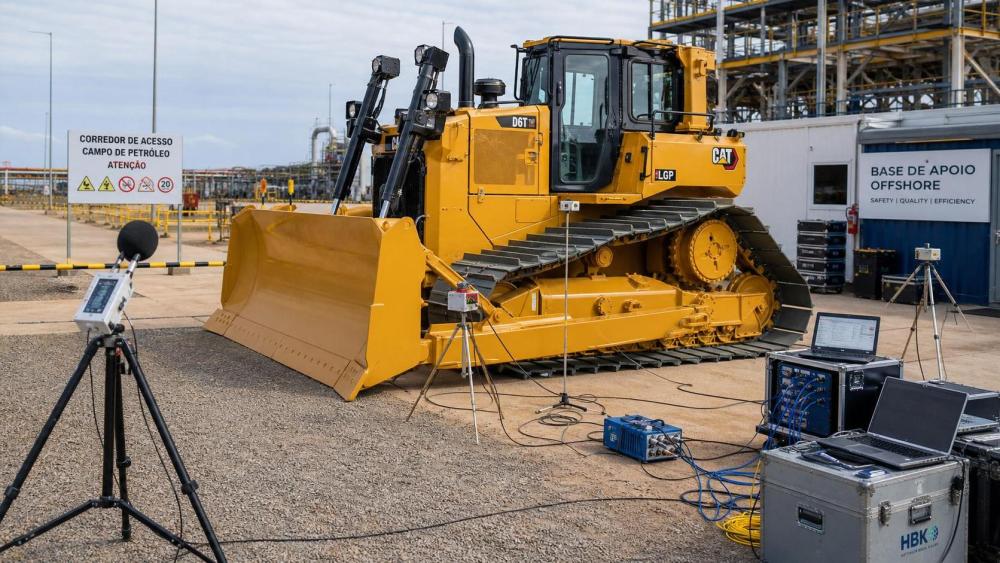
On August 1, 2026, Brazil moved from policy language to enforceable market access requirements for imported swamp-type and LGP (Low Ground Pressure) bulldozers used in oilfield access roads and offshore support bases. According to the confirmed enforcement of ANP Resolution No. 892/2026, these machines must complete on-site noise and whole-body vibration testing at accredited Brazilian laboratories, including INMETRO-certified facilities. For importers, equipment suppliers, project buyers, testing providers, and delivery teams, the point worth watching is not only the rule itself, but the fact that overseas certifications such as CE or EPA do not remove the local testing requirement.
What the Rule Now Requires
Brazil’s National Agency of Petroleum, Natural Gas and Biofuels (ANP) has confirmed enforcement of Resolution No. 892/2026 with effect from August 1, 2026. The measure applies to all imported swamp-type and LGP bulldozers used in oilfield access roads and offshore support bases.
Under the confirmed requirement, covered machines must undergo on-site testing in Brazil for noise and whole-body vibration. The testing must be carried out by accredited Brazilian laboratories, such as INMETRO-certified facilities.
The rule does not provide exemptions for units that already hold CE or EPA certification. Based on the information provided, foreign certification does not replace the local testing step required for these imported machines.
Where the Pressure Shifts Across the Supply Chain
Import procedures now carry an added compliance gate
From an industry perspective, importers and direct trading companies are likely to face the most immediate operational impact because the rule adds a Brazil-based testing requirement to covered equipment. The main pressure point is the compliance sequence before market use, especially where delivery planning previously relied on overseas certification packages.
What deserves closer attention is whether internal import documentation, product files, and delivery checklists clearly reflect the need for local noise and vibration testing in Brazil, rather than assuming CE or EPA certificates are sufficient.
Procurement teams may need to revisit bid and delivery assumptions
For buyers in oilfield access road and offshore support base projects, the change may affect procurement timing, supplier qualification review, and technical bid alignment. Analysis shows that purchasing decisions for swamp-type and LGP bulldozers can no longer be assessed only on machine specifications and existing international certifications if local testing is now a mandatory condition for imported units.
Teams involved in tendering, contract review, and equipment acceptance should pay attention to whether technical documents and bid conditions reflect the Brazilian testing requirement and whether suppliers can support the required local process.
Manufacturers and exporters face a narrower certification path
For overseas manufacturers and export-oriented suppliers, the confirmed rule means product access for the covered use cases in Brazil depends on a local compliance step that cannot be bypassed through existing CE or EPA credentials. The impact is likely to be felt in pre-shipment planning, customer communication, and after-sales readiness if buyers ask for clearer compliance support before placing orders.
Observably, exporters should focus on how product technical documentation, test preparation materials, and customer commitments are presented, because the issue is no longer only product design conformity but the ability to complete the required local validation path.
Testing and compliance service providers may become more central
For accredited Brazilian laboratories and related compliance service providers, the rule places local testing capacity closer to the center of transaction execution for the affected machines. The business impact may show up in scheduling, coordination with importers, and handling of technical files tied to noise and whole-body vibration assessment.
At the same time, companies that depend on such services should pay attention to laboratory accreditation status, testing scope, and document consistency, since the local testing step is explicitly part of the rule as described in the provided information.
Practical Points Companies Should Watch Now
Review whether covered products fall within the rule’s use-case scope
Companies should first check whether the bulldozers they sell, import, or procure fall within the identified categories: swamp-type or LGP bulldozers imported into Brazil for use in oilfield access roads and offshore support bases. This is a basic but necessary screening step before discussing delivery or compliance timing.
Do not treat CE or EPA files as a substitute for Brazilian testing
Analysis shows that one of the clearest signals in this development is the absence of exemptions for CE- or EPA-certified units. Companies should therefore avoid structuring compliance files, quotations, or delivery promises on the assumption that existing foreign certifications will satisfy the Brazilian requirement.
Prepare technical and documentary workflows around local testing
Because the confirmed requirement refers to on-site testing in accredited Brazilian laboratories, importers, exporters, and buyers should pay closer attention to the readiness of technical documents, test-related records, and compliance coordination materials that may be needed to support the local process. The provided information does not describe the full execution procedure, so this should be treated as a monitoring point rather than a settled administrative workflow.
Track official wording and market implementation practice
What deserves closer attention is how the requirement is reflected in subsequent official communications, tender documents, supplier qualification checks, and market practice. Since the input does not provide detailed enforcement mechanics beyond the confirmed local testing obligation, companies should continue watching for clarification in execution language and practical compliance expectations.
Why This Looks More Like an Execution Signal Than a Draft Policy
Observably, this development is better understood as an implemented compliance signal rather than a loose policy direction, because the enforcement date is identified and the local testing requirement is described in mandatory terms. At the same time, analysis should remain measured: the information provided confirms the rule and its scope, but it does not set out the full downstream operating details that companies would need for day-to-day execution.
That is why the market should pay sustained attention to how this requirement appears in procurement files, inspection expectations, and compliance documentation practice. The rule itself is confirmed, while some practical interpretation points may still depend on later implementation behavior.
How the Market Should Read This Development
At this stage, the most reasonable reading is that Brazil has reinforced a local compliance threshold for specific imported bulldozers used in defined oilfield and offshore support scenarios. The immediate significance lies less in a broad policy narrative and more in a concrete change to certification and delivery assumptions for affected equipment.
It is more appropriate to understand this as a confirmed rule now shaping market access conditions, while still recognizing that companies will need to keep watching how the requirement is applied in documentation, project procurement, and testing arrangements on the ground.
Basis of This Article and What Still Needs Verification
This article is based on the user-provided news title, event date, and event summary concerning ANP enforcement of Resolution No. 892/2026 from August 1, 2026. It has been written as an industry analysis piece rather than a verbatim policy notice.
For this type of development, relevant source categories would typically include official regulatory notices, publications from supervisory authorities, customs or trade-administration updates, industry association communications, standards-related documents, accredited testing body information, and reporting by authoritative trade media. A specific official source link was not provided in the input, so the underlying publication path still needs to be verified on an ongoing basis.
Further observation should focus on any detailed implementation language, certification interpretation, tender document adjustments, laboratory execution practice, industry feedback, and how affected companies organize compliance and delivery around the local testing requirement.