
Related News
- 00
0000-00
How to size heavy-duty loaders for North American mining operations - 00
0000-00
How altitude affects mining excavator performance in Latin America - 00
0000-00
Caterpillar Launches New Cat 6060 and Upgraded Autonomous Mining System - 00
0000-00
When does eco-friendly construction equipment pay for itself? - 00
0000-00
Will a wheel loader quick coupler fit your existing attachments?
Tags
Bulldozer Guide: When a Powershift Transmission Makes Sense
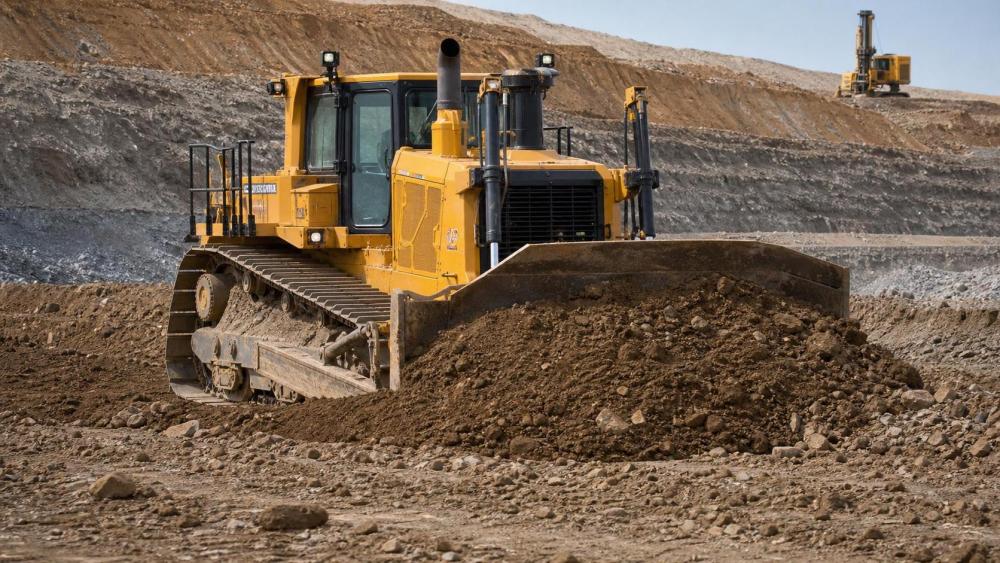
In this bulldozer guide, the key question is simple. When does a powershift transmission deliver better value than other drivetrain options?
For technical evaluation, the answer depends on duty cycle, terrain, operator behavior, and the expected service model across the machine lifecycle.
A powershift bulldozer is not automatically the best fit. It becomes the right fit when production consistency matters more than absolute finesse.
That usually happens in high-load pushing, slot dozing, rough cut work, landfill operations, and repetitive cycles with frequent directional changes.
More importantly, a good bulldozer guide should not stop at headline productivity. It should examine controllability, drivetrain durability, maintenance exposure, and operator learning demands.
That broader view is where powershift transmission decisions become clearer, especially when equipment must perform across mixed jobsite conditions instead of one ideal surface.
How a Powershift Transmission Changes Bulldozer Performance
A powershift transmission allows gear changes under load without fully interrupting power flow. In dozing work, that matters more than it may seem on paper.
The practical advantage is momentum retention. When the blade stays loaded, fewer interruptions can translate into cleaner passes and shorter cycle times.
This is especially useful where the machine repeatedly pushes dense material, reverses, repositions, and returns to the cut with minimal delay.
In a bulldozer guide focused on decision-making, three performance effects stand out:
- quicker directional response during repetitive pushing cycles
- more predictable load handling on uneven or changing surfaces
- better production rhythm for crews working against time-sensitive schedules
That said, powershift efficiency is not only about speed. It is about usable speed under load, with less disruption to traction and machine balance.
From a selection standpoint, this means the powershift transmission often fits projects where throughput is measured by repeatability, not occasional peak output.
When a Bulldozer Guide Should Recommend Powershift First
A strong bulldozer guide should recommend powershift first when the application rewards robust torque transfer and fast cycle recovery.
The clearest use cases are not subtle. They show up where the machine spends long hours in continuous material resistance.
Best-fit operating scenarios
- Mass earthmoving with long daily pushing hours
- Land clearing with irregular resistance and frequent correction moves
- Mine support work requiring dependable tractive effort
- Landfill operations with constant forward-reverse cycling
- Rough grading where precise final trim is not the dominant task
In these settings, a powershift transmission often gives a better balance between operator command and production output than simpler mechanical arrangements.
The stronger signal is jobsite variability. If material density, slope, and traction conditions change through the shift, powershift flexibility becomes more valuable.
This also means the bulldozer guide should favor powershift when fleet managers need one machine specification to cover several task profiles acceptably well.
Where the Trade-Offs Start to Matter
No bulldozer guide is useful if it ignores compromises. Powershift transmission benefits come with real evaluation points that affect total lifecycle value.
The first issue is drivetrain complexity. Compared with simpler systems, powershift units introduce more clutch packs, hydraulic controls, and thermal management demands.
The second issue is maintenance discipline. Fluid quality, filtration, cooling performance, and service interval compliance matter more when transmission durability is under review.
The third issue is operating style. Aggressive shifting patterns and poor throttle coordination can shorten component life faster than many procurement models assume.
In practical terms, a powershift transmission makes less sense where workloads are light, blade engagement is intermittent, and fine control dominates over sustained pushing force.
That does not mean powershift is weak. It means the specification should earn its complexity through real production demand.
Main risk flags during evaluation
- limited service support in remote regions
- poor transmission oil management history
- high operator turnover and inconsistent training
- applications centered on finish grading instead of heavy pushing
Comparing Productivity, Control, and Durability
A useful bulldozer guide should compare transmission choices through three filters. Productivity is first, but control feel and durability often decide the final specification.
This comparison matters because many procurement teams overrate purchase price and underrate operational consistency.
In reality, the best bulldozer guide treats powershift transmission value as a function of production hours, maintenance capability, and operator quality together.
A Practical Evaluation Framework for Selection
For selection work, the most reliable approach is a structured scoring model tied to site conditions and expected operating behavior.
A bulldozer guide should answer five questions before recommending a powershift transmission.
- Will the machine spend most of its time in loaded pushing rather than light trimming?
- How often will it reverse, re-enter the cut, or change pace during each cycle?
- Can the service team maintain fluid cleanliness, cooling health, and inspection discipline?
- Is there enough operator stability to protect drivetrain durability over several years?
- Does the project economics model reward hourly output more than minimal system simplicity?
If most answers point upward, powershift usually deserves serious priority. If several answers remain weak, the case becomes less convincing.
From recent market changes, a clearer signal is fleet standardization. Many buyers now prefer fewer machine variants with broader task coverage.
That trend often supports the bulldozer guide conclusion that powershift transmission choices make sense where utilization uncertainty is high.
Final Decision: When the Powershift Choice Is the Right One
The shortest answer in this bulldozer guide is straightforward. Choose a powershift transmission when the machine must push hard, cycle fast, and stay productive across changing ground conditions.
Choose it when jobsite output depends on repeatable loaded movement, fast reversals, and dependable tractive effort under real resistance.
Be more cautious when the work is lighter, precision grading dominates, or long-term service support remains uncertain.
The right decision is rarely about one specification line. It comes from matching powershift transmission behavior to actual production logic, maintenance reality, and lifecycle economics.
That is the practical value of a serious bulldozer guide. It turns a familiar feature into a defensible selection decision.
For technical evaluation, the most effective next step is simple. Score the target applications, review service readiness, and test whether powershift advantages will appear every shift, not just on paper.