
Related News
- 00
0000-00
How to size heavy-duty loaders for North American mining operations - 00
0000-00
How altitude affects mining excavator performance in Latin America - 00
0000-00
Caterpillar Launches New Cat 6060 and Upgraded Autonomous Mining System - 00
0000-00
When does eco-friendly construction equipment pay for itself? - 00
0000-00
Will a wheel loader quick coupler fit your existing attachments?
Tags
Effective August 1, 2026, Brazil’s ANP is applying a new local compliance requirement to swamp dozers and low-ground-pressure dozers used in oil and gas infrastructure projects. The change centers on Brazil-specific noise and vibration certification under NBR 15724:2026 together with ANP Supplement 2026-03, and the testing must be completed in accredited Brazilian laboratories. For equipment suppliers, importers, project buyers, certification service participants, and delivery planners, the development deserves attention because it adds a local testing step and extends import clearance by about 21 days.
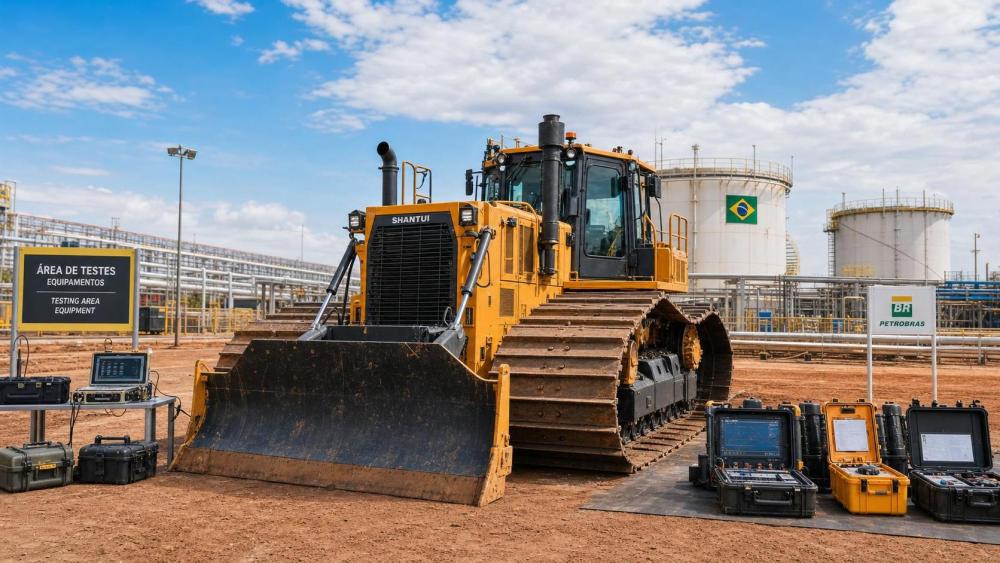
A Local Testing Requirement Now Sits Ahead of Project Use
The confirmed change is that Brazil’s National Agency of Petroleum, Natural Gas and Biofuels (ANP) has required country-specific noise and vibration certification for all swamp dozers and low-ground-pressure dozers operating in oil and gas infrastructure projects.
The applicable references provided in the event summary are NBR 15724:2026 and ANP Supplement 2026-03. The effective date is August 1, 2026.
The event summary also states that certification must be carried out in accredited Brazilian laboratories. As a direct procedural effect, import clearance is expected to take around 21 additional days.
Where the Immediate Pressure Will Be Felt
Imported equipment programs may face a longer pre-delivery path
From an industry perspective, companies bringing swamp or LGP dozers into Brazil for oil and gas infrastructure work may be affected first because the rule inserts a Brazil-based certification step into the movement of equipment. The main pressure point is timing: procurement schedules, customs planning, and site mobilization windows may all need to reflect the additional clearance time tied to laboratory certification.
What deserves closer attention is whether existing equipment files, test records, and product documentation are already organized in a way that supports submission into a Brazilian accredited lab process. Even where equipment specifications remain unchanged, the compliance pathway has changed.
Project buyers and contractors may need to adjust bid and delivery assumptions
Buyers and project contractors involved in oil and gas infrastructure work may also be affected because eligible equipment now depends on a specific local certification outcome. The practical impact may appear in tender documentation, technical qualification checks, delivery commitments, and equipment acceptance planning.
Analysis shows that procurement teams should pay closer attention to how certification status is reflected in supplier offers, delivery dates, and compliance documentation. Where purchasing cycles are tight, an added 21-day import clearance period can become a planning issue even before any operational issue appears.
Certification and testing service participants may see a more central role
Observably, the rule gives accredited Brazilian laboratories a decisive role in whether covered equipment can move through the required compliance path for these projects. For companies coordinating testing, technical files, and submission packages, the change may shift more work into document readiness, scheduling, and alignment with Brazilian certification procedures.
The key business implication here is not only the test itself, but also the sequencing of lab access, document preparation, and shipment timing. Firms supporting compliance workflows should therefore monitor whether customers begin asking for earlier certification planning before equipment dispatch.
What Companies Should Watch Closely Now
Check whether covered models fall within the new certification path
Companies handling swamp dozers or low-ground-pressure dozers for Brazil oil and gas infrastructure projects should first review whether the specific equipment in scope will require the local noise and vibration certification before project use or import completion. This is a basic but necessary compliance screen because the event summary ties the requirement to a defined equipment category and project application.
Revisit lead times, shipment sequencing, and contract dates
Analysis shows that the reported addition of about 21 days to import clearance should be treated as a practical planning variable. Procurement teams, exporters, and logistics coordinators may need to review shipment timing, promised delivery dates, and internal approval milestones so that project schedules are not based on pre-rule assumptions.
Prepare technical files and certification documents earlier
What deserves closer attention is document readiness. Because the certification must be conducted in accredited Brazilian labs, companies may need to organize test-related records, technical descriptions, and supporting compliance materials earlier in the transaction cycle. The event summary does not provide the detailed document list, so this should be treated as a current watchpoint rather than a fixed checklist.
Follow execution language in tenders and official communications
Observably, the headline rule is already effective from the stated date, but companies should continue tracking how it is expressed in procurement documents, technical specifications, and any subsequent official wording linked to implementation. Where execution details are not yet fully visible in the input information, businesses should avoid assuming that commercial practice will remain unchanged simply because the equipment itself is familiar.
Why This Looks Like More Than a Routine Technical Update
Analysis shows that this development is better understood as a real compliance gate rather than a symbolic standards reference. The combination of a named standard path, an ANP supplement, mandatory use of accredited Brazilian laboratories, and an identified import-clearance delay indicates that the rule has operational consequences across trade and project execution.
At the same time, it is more appropriate to understand this as a rule now in force with execution details still worth observing, rather than as a fully settled market outcome. Industry participants still need to watch how certification timing, procurement wording, and on-the-ground implementation evolve after the effective date.
How the Market Should Read This Change
In practical terms, this event signals that local certification is becoming part of the market-entry and project-delivery path for covered dozers in Brazil’s oil and gas infrastructure segment. The immediate significance is not a broad conclusion about demand or market size, but a narrower and more important point: compliance timing, documentation flow, and lab-based certification now matter more directly to whether equipment moves smoothly into project use.
Current observation suggests this should be read as an implemented rule change with tangible delivery and clearance implications, while the finer points of execution still merit continued attention from suppliers, buyers, and compliance teams.
Basis of This Article and What Still Needs Verification
This article is based on the user-provided news title, event date, and event summary concerning ANP’s August 1, 2026 local noise and vibration certification requirement for swamp and low-ground-pressure dozers used in oil and gas infrastructure projects in Brazil.
For events of this kind, relevant source categories typically include official regulator notices, regulatory agency releases, customs or trade authority information, industry association updates, standards organization documents, and reporting by authoritative trade media. A specific official source link was not provided in the input, so the exact underlying publication should still be verified on an ongoing basis.
Further verification should continue to focus on implementation detail, including official certification wording, laboratory execution practices, tender-document updates, market feedback, and how affected companies are handling the additional clearance time in practice.