
Related News
- 00
0000-00
How to size heavy-duty loaders for North American mining operations - 00
0000-00
How altitude affects mining excavator performance in Latin America - 00
0000-00
Caterpillar Launches New Cat 6060 and Upgraded Autonomous Mining System - 00
0000-00
When does eco-friendly construction equipment pay for itself? - 00
0000-00
Will a wheel loader quick coupler fit your existing attachments?
Tags
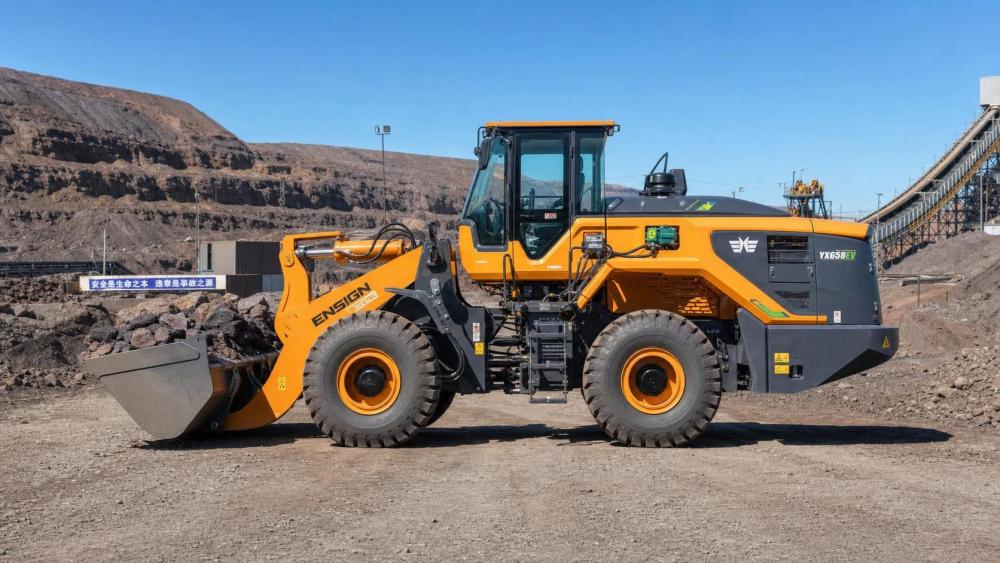
On 2026-06-10, the reported surge in China’s electric loader exports and the growing share of orders that explicitly require Smart Weighing Loaders point to more than a sales change: they indicate a shift in procurement rules and delivery expectations in African mining demand, especially in copper-belt destinations. For exporters, equipment manufacturers, procurement teams, service providers, and documentation-related functions, the key issue is that purchase decisions appear to be moving beyond rated tonnage alone toward equipment configurations that support traceable operating data and dispatch accuracy.
What the reported export figures confirm
The confirmed information is limited but clear. From January to May 2026, China exported 1,232 electric loaders, up 208% year on year. Of those orders, 37% specifically required smart weighing systems, described as Smart Weighing Loaders. The main destinations mentioned are mining customers in the copper-belt areas of Zambia and the Democratic Republic of the Congo. The summary further states that this pattern reflects a procurement shift from tonnage-led decisions to data-closed-loop-led decisions.
Why procurement and delivery requirements may now tighten
Export suppliers are likely to face more specification-led bidding
From an industry perspective, when a growing share of orders explicitly names smart weighing capability, exporters may face a more demanding technical alignment process at the quotation and contract stage. The business impact may show up in equipment configuration sheets, technical bid language, packing lists, acceptance descriptions, and after-sales scope. What deserves closer attention is whether buyers increasingly treat weighing functionality as a required configuration rather than an optional add-on.
Manufacturers may need closer coordination between machine and system delivery
Analysis shows that the pressure on manufacturers is not only about producing electric loaders, but also about ensuring that the weighing system is integrated into the delivered product in a way that matches procurement documents. This may affect factory testing records, technical documentation, interface descriptions, and the consistency between the machine supplied and the order specification. Where orders are written around dispatch precision, the compliance focus may shift toward whether the delivered unit supports the required data use case.
Mining buyers and procurement teams may adjust evaluation criteria
Observably, the reported change suggests that some mining customers are giving greater weight to data capture and scheduling precision in procurement decisions. For buyers, this can affect tender wording, acceptance standards, and supplier qualification reviews. The practical implication is not yet a confirmed regulatory change, but it can function as an execution signal that procurement rules at project level may be evolving in favor of equipment that supports measurable operating feedback.
Service and documentation functions may see more traceability demands
Supply-chain service providers, commissioning teams, and after-sales support functions may also be affected if customers expect clearer records around system configuration and operating output. In practice, this can mean closer attention to technical files, delivery documents, installation confirmation, and quality traceability materials tied to the smart weighing function. The event does not confirm a new formal certification rule, but it does suggest that documentation quality could become more commercially important.
What companies should watch in the next execution cycle
Check whether smart weighing is written into core bid documents
Analysis shows that companies should closely review whether future inquiries, bid specifications, and purchase contracts present smart weighing capability as a standard requirement, a scoring item, or a delivery condition. That distinction will shape pricing, production planning, and risk allocation.
Review technical files and acceptance descriptions early
Where orders explicitly reference Smart Weighing Loaders, exporters and manufacturers should pay attention to whether technical documents, test records, and acceptance language are consistent with the ordered configuration. This is especially relevant when procurement decisions are linked to dispatch accuracy rather than basic machine capacity alone.
Watch for changes in delivery and support expectations
What deserves closer attention is whether customers begin to request more detailed support around installation, calibration-related records, operator use, or data-related handover materials. The current input does not confirm a settled execution standard, so this should be treated as a monitoring point rather than an established obligation.
Track market-specific compliance and trade handling signals
For companies serving the named African mining destinations, it is more appropriate to monitor whether customer-side requirements begin to affect export documentation, inspection expectations, service commitments, or supplier qualification thresholds. At this stage, the information supports attention and preparation, not a conclusion that a single uniform rule has already taken effect across the market.
Why this looks more like an execution signal than a finished rulebook
Observably, the most important meaning of this development is not simply that exports increased, but that a notable share of orders already names smart weighing capability in the purchasing requirement. That makes the event more relevant as a market execution signal tied to procurement rules and operational accountability. Analysis shows that the shift toward data-closed-loop decision-making may influence how equipment value is judged, but the available information does not establish a formal new regulation, a published standard revision, or a unified certification requirement. Continued observation is therefore necessary.
How this development is best understood for now
At present, this event is best understood as evidence that some overseas mining demand is translating operational management goals into more explicit equipment requirements. For the industry, the practical significance lies in procurement wording, technical alignment, delivery documentation, and service readiness. It is more appropriate to read this as a clear directional change in market execution, while still reserving judgment on how far it will develop into stable purchasing rules across broader mining projects.
Basis of this article and what still needs verification
This article is generated based on the user-provided news title, event date, and event summary. For developments of this type, relevant source categories usually include official notices, regulator releases, customs or trade authority information, industry association materials, standard-setting documents, tender documents, and reporting by authoritative media. No specific official source link was provided in the input, so the exact official basis remains to be verified. Further monitoring is still needed on procurement wording, possible compliance interpretations, tender document changes, certification-related expectations, market feedback, and actual execution by companies.