
Related News
- 00
0000-00
How to size heavy-duty loaders for North American mining operations - 00
0000-00
How altitude affects mining excavator performance in Latin America - 00
0000-00
Caterpillar Launches New Cat 6060 and Upgraded Autonomous Mining System - 00
0000-00
When does eco-friendly construction equipment pay for itself? - 00
0000-00
Will a wheel loader quick coupler fit your existing attachments?
Tags
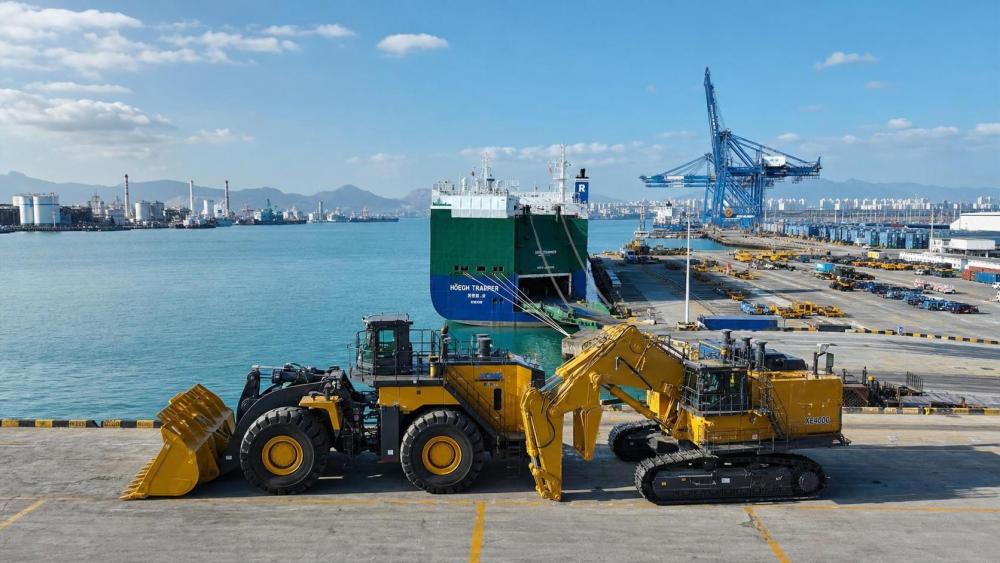
On June 19, 2026, the main navigation channel of the Strait of Hormuz resumed full commercial passage, according to an IMO notice issued on June 20. For companies shipping Heavy Mining Excavators and Large Mining Loaders from Qingdao to Sohar for onward movement to mining areas in southern Iran, this is not just a traffic update but a practical change in execution conditions: transit times, freight pricing, procurement timing, and delivery planning are all affected. The development matters because it sits at the intersection of shipping access, cross-border equipment delivery, and the restart of suspended mining expansion purchasing.
What Has Been Confirmed So Far
The confirmed facts are limited but commercially relevant. The IMO notice states that the main channel of the Strait of Hormuz fully resumed commercial navigation from 00:00 on June 19, 2026. Following that change, average ro-ro transit time for complete-unit shipments of Heavy Mining Excavators and Large Mining Loaders from Qingdao Port in China to Sohar Port in Oman, for transfer to mining areas in southern Iran, shortened by 12 to 18 days. The freight index for newly signed orders in June fell by 7.2%. The same input also indicates that several Middle Eastern EPC contractors have restarted previously paused procurement plans tied to copper mine expansion.
Where the Immediate Pressure Points Shift
Equipment exporters face a new delivery baseline
For exporters of complete mining equipment, the reopening changes the operational baseline for delivery commitments. A shorter sea leg can affect shipment scheduling, customer communication, and the drafting of delivery clauses in sales and export documents. What deserves closer attention is whether quotation validity, shipment windows, and handover timing in commercial paperwork still reflect the older transit assumptions.
Project buyers and EPC teams may revise procurement sequencing
For procurement teams and EPC contractors, the restart of paused copper mine expansion purchasing suggests that order timing may move faster than it did under restricted passage conditions. From an industry perspective, the practical issue is not only whether freight is lower, but whether technical bid alignment, shipping terms, and planned arrival dates in tender or procurement files need to be updated to match the restored route conditions.
Supply-chain service providers need tighter document coordination
Ro-ro operators, freight forwarders, and related logistics service providers may see changes in booking rhythm and delivery expectations. Their exposure is concentrated in shipping schedules, cargo handover coordination, and document consistency. Observably, once route access returns, discrepancies between contract delivery language and actual vessel arrangements can become a compliance and claims-management issue, especially for large complete-unit cargoes.
After-sales and site-delivery teams should watch the handover stage
For service teams tied to installation, commissioning, or site acceptance, a shorter marine transit cycle can compress preparation time on the receiving side. The relevant concern is operational rather than speculative: technical files, delivery records, and quality traceability materials may need to be aligned more closely with revised arrival expectations if project owners accelerate downstream execution.
What Companies Should Review Now
Check whether contract timing language still matches route reality
Analysis shows that companies involved in current or newly negotiated shipments should review delivery schedules, dispatch assumptions, and any timing commitments linked to the previous shipping environment. If internal planning still uses longer route assumptions, the mismatch may affect procurement coordination and acceptance milestones.
Reconfirm shipping and tender documentation
Where bids, purchase orders, or shipment files reference delivery periods, route arrangements, or transfer timing, those documents deserve a fresh review. This is especially relevant for complete-unit exports of Heavy Mining Excavators and Large Mining Loaders, where logistics timing often links directly to technical and commercial commitments.
Follow the execution tone, not only the headline change
Although the restored passage and shorter transit cycle are confirmed, the input does not provide detailed implementation rules beyond the notice and the observed logistics effects. It is more appropriate to understand this as a change in executable conditions rather than as a fully settled downstream framework. Companies should therefore monitor how customers, carriers, and project counterparts translate the reopening into actual booking, delivery, and procurement practice.
Watch for changes in paused-to-active procurement behavior
The restart of previously suspended copper mine expansion purchasing is a concrete market signal, but it does not by itself define a broader trend. From an industry perspective, firms should pay attention to whether this leads to updated tender files, revised delivery requirements, or stricter scheduling expectations in live procurement activity.
How This Signal Should Be Read
Observably, this development is best understood as an execution signal with immediate trade and logistics relevance. It reflects a restored shipping condition that can directly change lead times and freight levels for large mining equipment moving through the affected corridor. At the same time, it is not yet a complete picture of downstream market behavior, because the provided information does not establish how broadly procurement standards, contractual terms, or project acceptance timelines have already been revised.
A Practical Reading for the Market
The industry significance of this update lies in the fact that shipping access has moved from constraint to restored operability for a defined equipment flow, and that change is already visible in transit time, freight index movement, and the resumption of some EPC purchasing activity. Analysis shows that the most balanced interpretation is to treat the event as a confirmed logistics and trade-execution improvement, while continuing to watch how procurement documents, delivery expectations, and market feedback adjust in practice.
Basis of This Article and What Still Needs Verification
This article is generated from the user-provided title, event date, and event summary. For this type of event, commonly relevant source categories may include official notices, regulator or maritime authority releases, trade or customs information, industry association updates, standard-setting documents, and reporting by authoritative media. No specific official source link was provided in the input, so the precise official link still requires follow-up verification. What still needs continued observation includes implementation details, procurement document changes, certification or compliance wording in project files, market feedback from participants, and how companies adjust execution in response to the restored passage.