
Related News
- 00
0000-00
What determines equipment durability on airport construction sites? - 00
0000-00
How terrain and dealer support shape machinery selection in Latin America - 00
0000-00
How market insight content analysis reveals shifts in equipment demand - 00
0000-00
When do OEM heavy machinery parts justify their higher cost? - 00
0000-00
What to compare among construction equipment manufacturers in North America
Why Evaluating Construction Machinery Components Matters
For technical evaluators, service life starts long before failure appears. A smart review of construction machinery components helps predict durability, not just document damage.
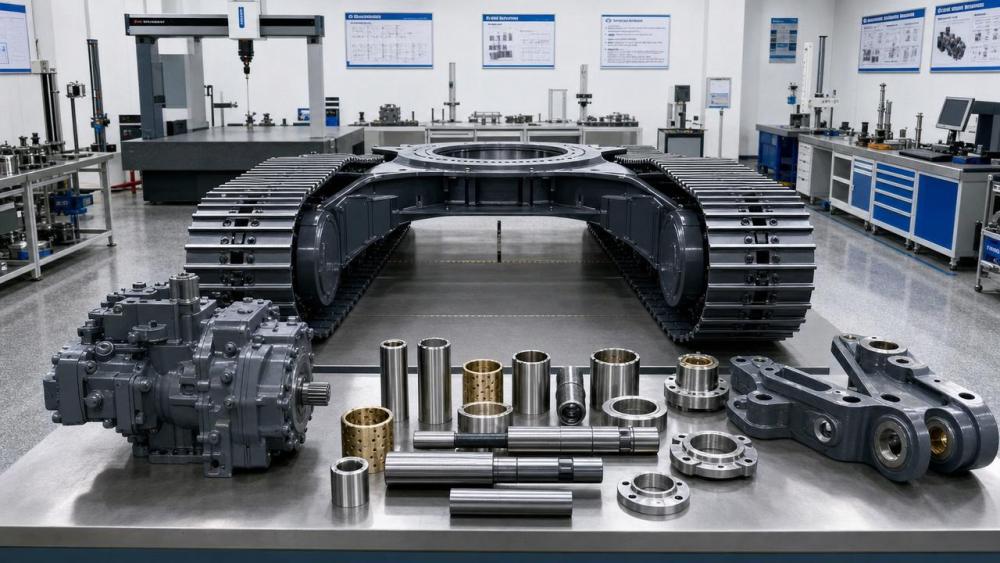
That matters even more today. Machines work harder, cycle faster, and face tighter uptime targets across infrastructure, mining, and urban projects.
In practical terms, a good evaluation balances three questions. How long will the part last, what risks are hidden, and what will replacement really cost?
This is especially important for crawler excavators, wheel loaders, motor graders, bulldozers, and skid steer loaders. Their performance depends heavily on component integrity under shock, heat, and contamination.
At EMD, long-life thinking is tied to reliability, energy efficiency, and smarter asset use. Evaluating construction machinery components is therefore a technical and economic decision at the same time.
The most effective reviews are structured. They connect inspection data, operating conditions, supplier quality, and maintenance history into one decision framework.
Start with the Real Duty Profile
A component cannot be judged in isolation. First define the machine’s actual duty cycle, not the brochure description.
Look at material density, travel frequency, impact loading, slope work, idle ratio, and ambient temperature. These factors shape wear patterns faster than many teams expect.
For example, the same bucket pin behaves differently in quarry rock, wet clay, and demolition debris. Service life changes because load direction and contamination change.
The same logic applies to pumps, seals, track chains, cutting edges, and bearings. A sound evaluation of construction machinery components always begins with jobsite reality.
Key duty factors to document
- Average load intensity and peak shock events
- Working hours per shift and seasonal utilization swings
- Dust, moisture, chemical exposure, and abrasive fines
- Operator habits such as overloading or high-speed reversal
- Maintenance intervals versus actual field execution
Once the duty profile is clear, comparisons become more reliable. Without that step, even high-grade construction machinery components can appear weak for the wrong reason.
Focus on the Most Failure-Sensitive Components
Not every part deserves the same attention. Prioritize construction machinery components that drive downtime, safety risk, or major repair cost.
In excavators, hydraulic pumps, cylinder seals, bushings, and undercarriage parts often dominate lifecycle cost. In loaders, driveline and articulation wear may rise faster.
For graders and bulldozers, blade system wear, track system integrity, and final drive condition often deserve early review. Skid steers may show faster stress in couplers and auxiliary hydraulics.
High-priority evaluation zones
- Hydraulic system components exposed to pressure spikes and contamination
- Undercarriage assemblies affected by abrasion, misalignment, and tension errors
- Structural joints where fatigue cracks can grow unnoticed
- Powertrain components with heat-related efficiency loss
- Wear parts that influence fuel use and cutting efficiency
From a decision angle, the best construction machinery components are not simply the hardest or most expensive. They are the ones matched to the dominant failure mode.
Check Material Quality, Process Control, and Tolerances
This is where many evaluations become more precise. A part may look acceptable visually, yet still fail early because of poor metallurgy or unstable processing.
Review hardness range, heat treatment consistency, weld quality, surface finish, and dimensional tolerance. Small variation can cause large wear acceleration in loaded interfaces.
For pins and bushings, tolerance fit matters as much as raw material. For gears and pump internals, surface integrity and machining precision often decide long-term stability.
Recent market changes also make traceability more valuable. As global sourcing widens, consistent quality between batches becomes a major filter in selecting construction machinery components.
Useful quality verification points
- Material certificates and batch traceability records
- Heat treatment reports and hardness consistency checks
- Dimensional inspection against OEM or equivalent standards
- Coating performance in corrosive or wet environments
- Field failure history from similar machine applications
In real procurement work, this step separates durable construction machinery components from low-cost options that only appear competitive on paper.
Use Inspection Data, Not Assumptions
Visual checks still matter, but they are rarely enough. Longer service life comes from combining observation with measurable condition data.
For hydraulic construction machinery components, fluid analysis can reveal contamination, oxidation, and metal particles before performance drops become obvious.
For structural and rotating parts, track crack growth, vibration trend, temperature rise, and alignment deviation. These signals often show the real condition earlier than operator feedback.
This also supports better timing. Replacing construction machinery components too early wastes capital, while replacing too late expands collateral damage.
Recommended data sources
- Oil analysis and contamination trend reports
- Wear measurements against rejection limits
- Temperature and pressure logs from telematics systems
- Non-destructive testing for cracks and hidden defects
- Repair records showing repeat failure patterns
A practical rule is simple. If a component decision cannot be supported by trend data, the service life estimate remains weak.
Compare Total Lifecycle Value, Not Unit Price Alone
A lower purchase price may still raise total cost. This is one of the most common mistakes when choosing construction machinery components.
Include installation labor, downtime exposure, lubrication demand, fuel impact, damage to mating parts, and expected replacement frequency. Then compare normalized cost per operating hour.
For example, a better undercarriage component may cost more upfront yet reduce track adjustment time and improve traction efficiency. Over time, that difference becomes meaningful.
The same applies to hydraulic construction machinery components. Stable sealing and cleaner fluid control can reduce unplanned stoppage far beyond the initial price gap.
A simple comparison framework
This lifecycle view creates better decisions, especially when evaluating construction machinery components for mixed fleets and high-utilization machines.
Assess Supplier Capability and Aftermarket Support
Component quality does not end at manufacturing. Supplier responsiveness affects service life because delays, poor documentation, and weak technical support create avoidable risk.
Check whether the supplier understands application differences across excavators, loaders, graders, bulldozers, and skid steers. Generic answers usually signal weak field depth.
Also review warranty logic, failure analysis speed, parts availability, and engineering feedback loop. Strong suppliers help refine construction machinery components through real operating evidence.
More clearly now, the market rewards suppliers that combine technical transparency with stable global delivery. That becomes a strategic advantage during urgent maintenance windows.
Build an Evaluation Checklist That Improves Over Time
The best process is repeatable. A living checklist turns scattered findings into consistent decisions across teams and machine types.
Include duty profile, failure mode, material data, inspection results, lifecycle cost, and supplier score. Then update the checklist after every major replacement cycle.
Over time, this creates stronger internal benchmarks for construction machinery components. It also reduces subjective judgment during urgent sourcing decisions.
What a strong checklist should answer
- Is the component matched to the actual duty cycle?
- What is the primary failure mode in this application?
- Which data confirms remaining useful life?
- How does the total hourly cost compare?
- Can the supplier support fast corrective action?
A disciplined method makes each future review easier. More importantly, it helps extend service life without gambling on assumptions.
In the end, evaluating construction machinery components is about seeing the full operating picture. When duty, data, quality, and lifecycle economics align, longer service life becomes a managed outcome, not a lucky result.