
Related News
- 00
0000-00
How to size heavy-duty loaders for North American mining operations - 00
0000-00
How altitude affects mining excavator performance in Latin America - 00
0000-00
Caterpillar Launches New Cat 6060 and Upgraded Autonomous Mining System - 00
0000-00
When does eco-friendly construction equipment pay for itself? - 00
0000-00
Will a wheel loader quick coupler fit your existing attachments?
Why do fuel specs matter more than list price in heavy equipment decisions?
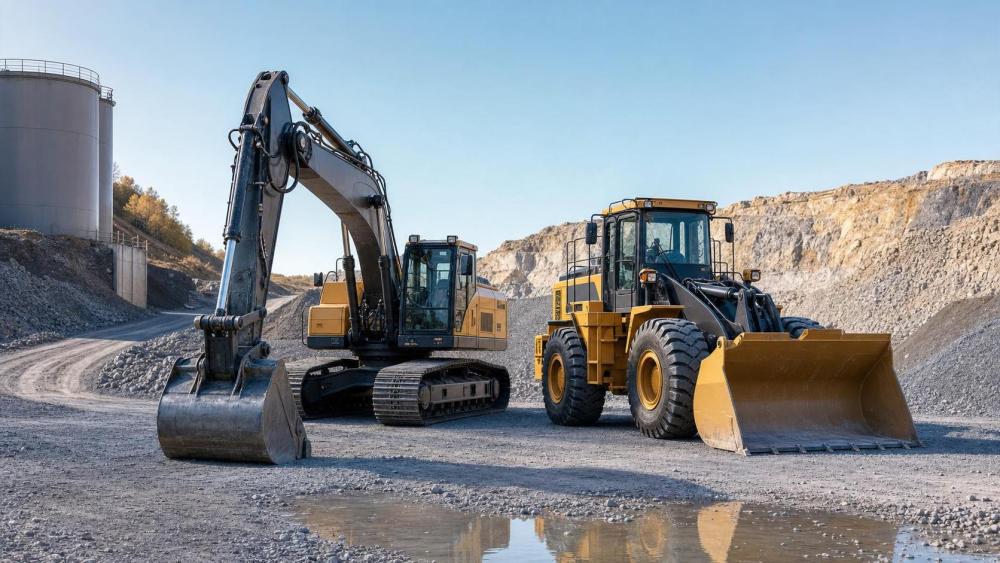
A machine can look competitive on purchase price and still become the costliest asset in the fleet.
That is why heavy equipment specifications fuel consumption deserves close attention before any approval is finalized.
In practical terms, fuel burn shapes hourly cost, project margin, bid accuracy, and even equipment replacement timing.
The effect is strongest in crawler excavators, wheel loaders, motor graders, bulldozers, and skid steers working under variable loads.
A published fuel number alone is not enough. It must be read beside machine size, hydraulic demand, engine map, and application severity.
EMD regularly tracks these relationships because operating economics now move together with emissions rules, automation trends, and asset utilization pressure.
Seen this way, heavy equipment specifications fuel consumption is not a narrow technical metric. It is a core control point for total ownership cost.
Which specifications actually change fuel burn the most?
The biggest drivers usually sit in the powertrain and hydraulic system, not in brochure language about general efficiency.
Engine horsepower matters, but the usable torque band often matters more. A broad torque curve reduces unnecessary high-rpm operation.
Machine operating weight also changes the picture. Extra mass improves traction and stability, yet increases fuel demand during travel and repeated cycles.
Hydraulic architecture is another major factor. Pump efficiency, load-sensing logic, and electro-hydraulic control quality influence how much energy becomes productive work.
For dozers and loaders, transmission type can be decisive. Hydrostatic systems may improve controllability, while torque converter losses may raise consumption in some duty profiles.
On graders, precision systems can lower rework. Better grade control sometimes cuts total fuel used per completed surface, even if onboard electronics add complexity.
The most useful reading of heavy equipment specifications fuel consumption combines these technical inputs with the work cycle expected on site.
A quick interpretation table helps separate headline specs from real cost impact
This is where many comparisons fail. Buyers compare horsepower and bucket size, but ignore the systems that decide fuel intensity per ton moved.
Why can two similar machines show very different operating cost?
Because similar class size does not mean similar duty-cycle efficiency.
An excavator digging dense clay, a loader handling loose aggregate, and a dozer pushing wet material each stress the machine differently.
Jobsite haul distance, slope, underfoot resistance, idle time, and operator behavior can outweigh brochure averages very quickly.
Attachment choice also matters. A wider bucket may improve production, yet overload the hydraulic system during breakout or carry phases.
For graders, automation can cut passes. For skid steers, frequent attachment swaps may increase idle and auxiliary hydraulic demand.
That is why heavy equipment specifications fuel consumption should always be reviewed against expected utilization, not against a single laboratory-style number.
EMD’s coverage of precision grading, full-hydraulic dozers, and electro-hydraulic excavator control reflects the same point: efficiency is workload-specific.
The more reliable way to compare machines
- Measure fuel per productive unit, such as per cubic meter, per ton, or per finished grade section.
- Separate loaded cycle consumption from idle and travel consumption.
- Review telematics from similar sites when available.
- Check whether quoted figures include standard or optional attachments.
- Use at least one severe-duty scenario in the cost model.
Do emissions, automation, and control systems increase or reduce fuel cost?
The answer is usually both, depending on how the machine is matched to the work.
Stricter emissions systems can improve combustion efficiency, yet they may add DEF cost, regeneration events, and sensitivity to extended low-load operation.
Autonomy-ready systems and remote-control architecture do not automatically raise fuel use. In some applications, they reduce waste through steadier cycle execution.
Precision controls are especially valuable where rework is expensive. A grader that finishes in fewer passes may consume less fuel per accepted output.
Likewise, an excavator with refined electro-hydraulic proportional control can reduce over-digging and unnecessary pump demand.
This is one reason EMD follows decarbonization and autonomy together. Fuel economics now depend on software quality as much as hardware size.
When reviewing heavy equipment specifications fuel consumption, it is sensible to include fuel, DEF, maintenance events, and productivity stability in one model.
What mistakes lead to underestimating lifetime fuel exposure?
The most common mistake is treating fuel as a fixed hourly assumption across all seasons and site conditions.
Another is using manufacturer averages without checking whether the test profile resembles actual push depth, haul distance, or material density.
Some models also ignore idle percentage. On mixed fleets, idle can quietly become one of the largest fuel drains.
A third error is evaluating machines separately from operator support. Training, work mode settings, and telematics alerts often move real consumption significantly.
There is also a financing blind spot. A cheaper machine with weaker fuel efficiency may erase any capital saving within a short utilization window.
To avoid that, build comparison cases around likely annual hours, severe-duty share, fuel price sensitivity, and resale expectations.
A practical checklist before approving a model
So how should heavy equipment specifications fuel consumption guide the final decision?
Start by treating heavy equipment specifications fuel consumption as a decision filter, not a marketing detail.
Then align each machine with a realistic production scenario and a realistic annual hour assumption.
A sound comparison usually includes fuel burn, DEF or aftertreatment cost, maintenance intervals, expected idle share, and output per hour.
Where telematics or field trial data exists, it should outrank generic brochure claims.
For mixed fleets, it also helps to standardize a review sheet across excavators, loaders, graders, dozers, and skid steers.
That keeps discussions focused on comparable cost drivers instead of isolated technical features.
The clearest next step is to build a short comparison model using actual site conditions, expected workloads, and at least one stress-case fuel scenario.
When heavy equipment specifications fuel consumption is evaluated this way, approvals become easier to defend and project economics become easier to control.