
Related News
- 00
0000-00
How to size heavy-duty loaders for North American mining operations - 00
0000-00
How altitude affects mining excavator performance in Latin America - 00
0000-00
Caterpillar Launches New Cat 6060 and Upgraded Autonomous Mining System - 00
0000-00
When does eco-friendly construction equipment pay for itself? - 00
0000-00
Will a wheel loader quick coupler fit your existing attachments?
Across African construction and mining markets, bulldozer buying decisions rarely hinge on list price alone. For bulldozers Africa-wide, real value is shaped by operating durability, repair speed, and whether parts can reach the site before production stops.
That is why the most useful comparison is not simply brand versus brand. It is cost structure versus site conditions, dealer depth versus regional logistics, and machine specification versus the actual push, rip, and grading cycle.
From EMD’s perspective, bulldozers remain one of the core machines behind infrastructure expansion, mine preparation, haul road support, landfill work, and land development. In Africa, those roles are intensified by remote job sites, variable fuel quality, heat, dust, and long resupply routes.
Why Bulldozers in Africa Need a Different Buying Lens
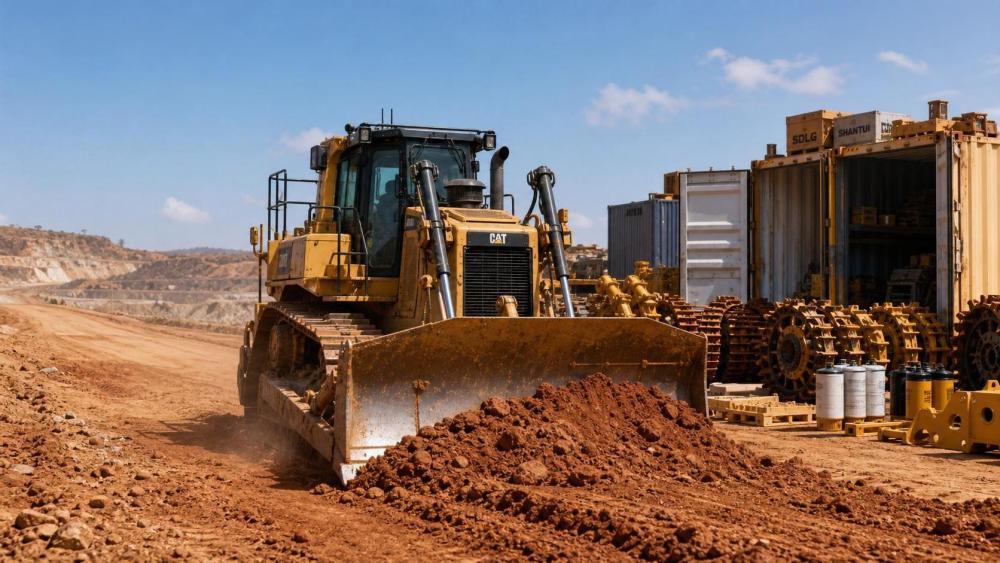
A bulldozer that performs well in a mature support market may struggle in a region where undercarriage wear is accelerated and dealer response is uneven. That gap explains many disappointing fleet purchases.
Bulldozers Africa projects often face long transport corridors, mixed operator skill levels, and difficult ground conditions. Even a strong machine can become a weak asset when filters, track chains, or electronic components are hard to source.
This matters even more as major projects demand tighter schedule control. Road building, quarry development, mine expansion, and industrial site preparation all punish downtime quickly.
In practical terms, a cheaper unit with poor parts coverage can become the most expensive option in the fleet.
The Cost Story Starts Before Delivery
Upfront machine price still matters, but it is only one layer. Import duties, inland transport, setup, blade configuration, ripper selection, and training can shift the landed cost significantly.
For bulldozers Africa procurement, the better question is how many productive hours the machine can deliver before major expense arrives. That changes the comparison immediately.
A lower-priced dozer may use more fuel, wear tracks faster, or require more frequent service intervention. A premium model may cost more initially, yet recover that difference through lower hourly ownership cost.
Used equipment adds another layer. It can improve capital efficiency, but hidden wear in final drives, pins and bushings, or hydraulic systems may erase the savings if inspection discipline is weak.
Key cost layers to compare
- Delivered machine price, tax exposure, and port-to-site logistics
- Fuel burn under actual blade load, not brochure conditions
- Undercarriage life in rock, abrasive sand, or mixed terrain
- Operator training needs and controls familiarity
- Major component rebuild timing and local rebuild capability
Uptime Is the Real Separator
In many African markets, uptime decides the winner more clearly than price. The machine that stays working through heat, dust, and irregular maintenance intervals usually creates the strongest return.
That does not always mean choosing the simplest machine. It means matching technology to service reality. Electronic monitoring can prevent failures, but only if fault diagnosis and replacement parts are locally reachable.
EMD’s broader view of earthmoving equipment highlights this balance well. Advanced hydraulics, control logic, and efficiency systems matter, yet their value depends on field support and asset utilization, not specification sheets alone.
For bulldozers Africa fleets, uptime typically depends on four things: cooling performance, undercarriage durability, service access, and disciplined preventive maintenance.
Where uptime is commonly lost
Parts Access Often Decides Lifecycle Cost
Parts access is where many bulldozers Africa comparisons become clear. Not every market has the same dealer density, warehousing depth, or cross-border delivery speed.
Availability must be judged by part category. Fast-moving items such as filters, cutting edges, rollers, and seals should be routinely stocked. Higher-risk items need a realistic emergency path.
A supplier may advertise regional presence, yet still rely on overseas backorders for final drives, hydraulic pumps, or control modules. On a remote site, that is a serious commercial risk.
Parts quality also matters. Cheap aftermarket components can lower invoice cost while shortening service intervals. That trade-off is especially damaging on high-hour fleets.
What strong parts support looks like
- Regional inventory for wear parts and common service kits
- Transparent lead times for major components
- Clear interchange policy for approved aftermarket items
- Field technicians able to install and validate repairs
- Digital parts lookup linked to machine serial numbers
Comparing Brand and Supply Models
In broad terms, bulldozers Africa buyers usually compare three supply paths: established global brands, value-focused new entrants, and used imports from mature markets.
Established brands often lead on resale strength, technical documentation, and dealer support. Their weakness is a higher initial price and, in some cases, expensive genuine parts.
Value-focused new machines may improve acquisition economics. They can work well where the distributor holds real inventory, provides service engineers, and supports commissioning properly.
Used imports can fit seasonal or budget-limited projects. Still, they demand stricter inspection, especially when service history is partial or emissions-era electronics complicate support.
There is no universal best option. The right choice depends on utilization rate, jobsite remoteness, local support maturity, and the penalty cost of idle equipment.
Matching the Dozer to the Job
The most successful bulldozers Africa deployments start with application clarity. A machine sized for mine support behaves differently from one assigned to municipal landfill work or road formation.
Track-type tractors used for bulk pushing need a different balance of horsepower, blade capacity, and undercarriage protection than dozers focused on finish grading or slot dozing.
Ground condition matters just as much. Soft overburden, broken rock, laterite, and sandy soils each affect traction, wear rate, and blade productivity.
That is where EMD’s cross-equipment view becomes useful. Bulldozers rarely work alone. Their efficiency often depends on coordination with excavators, wheel loaders, graders, and haul units across the same production system.
Useful fit questions
- Is the dozer pushing, ripping, spreading, clearing, or finishing?
- How many hours per year will it realistically run?
- How remote is the site from technical support?
- What is the cost of one day of lost production?
- Will telematics and grade-assist features be used fully?
A Practical Evaluation Framework
A workable bulldozers Africa comparison should reduce sales language and increase measurable evidence. Shortlisting becomes clearer when the same field questions are applied to every option.
Start with landed cost. Then test service reach, critical parts availability, fuel performance, undercarriage strategy, and rebuild pathway. After that, look at operator acceptance and resale prospects.
Site references are particularly valuable. Machines working in similar climate, altitude, soil, and logistics conditions usually reveal more than showroom demonstrations.
It also helps to separate essential features from attractive extras. In some settings, robust protection packages and service simplicity matter more than advanced automation.
A disciplined shortlist should include
- Verified delivered cost and first-year service budget
- Lead times for top twenty replacement parts
- Undercarriage wear assumptions by application
- Local technical escalation route for breakdowns
- Expected residual value after planned ownership period
Where the Next Decision Should Focus
The strongest bulldozers Africa decisions usually come from comparing total ownership logic, not just machine specifications. Cost, uptime, and parts access should be assessed together because each one changes the meaning of the others.
A sensible next step is to map project conditions first, then request evidence on support depth, wear expectations, and emergency parts response. That creates a clearer basis for comparing premium, value, and used options.
For teams tracking broader earthmoving strategy, EMD’s intelligence approach is relevant here: asset utilization improves when machine choice, support structure, and operational context are judged as one system. That is the most reliable path to choosing bulldozers in Africa with confidence.