
Related News
- 00
0000-00
What determines equipment durability on airport construction sites? - 00
0000-00
How terrain and dealer support shape machinery selection in Latin America - 00
0000-00
How market insight content analysis reveals shifts in equipment demand - 00
0000-00
When do OEM heavy machinery parts justify their higher cost? - 00
0000-00
What to compare among construction equipment manufacturers in North America
Mining Equipment Cost Breakdown: What Impacts Total Ownership
For finance decision-makers, mining equipment costs rarely stop at the invoice.
The purchase price is visible. Total ownership cost is not.
That gap often decides whether a fleet supports margins or drains them.
In mining operations, every hour, liter, tire, filter, and delay has a cost.
The real question is simple: what drives mining equipment ownership cost over time?
A clear cost breakdown helps compare suppliers, defend budgets, and reduce lifecycle risk.
It also supports smarter planning as uptime, autonomy, and decarbonization reshape fleet economics.
Why Total Ownership Matters More Than Sticker Price
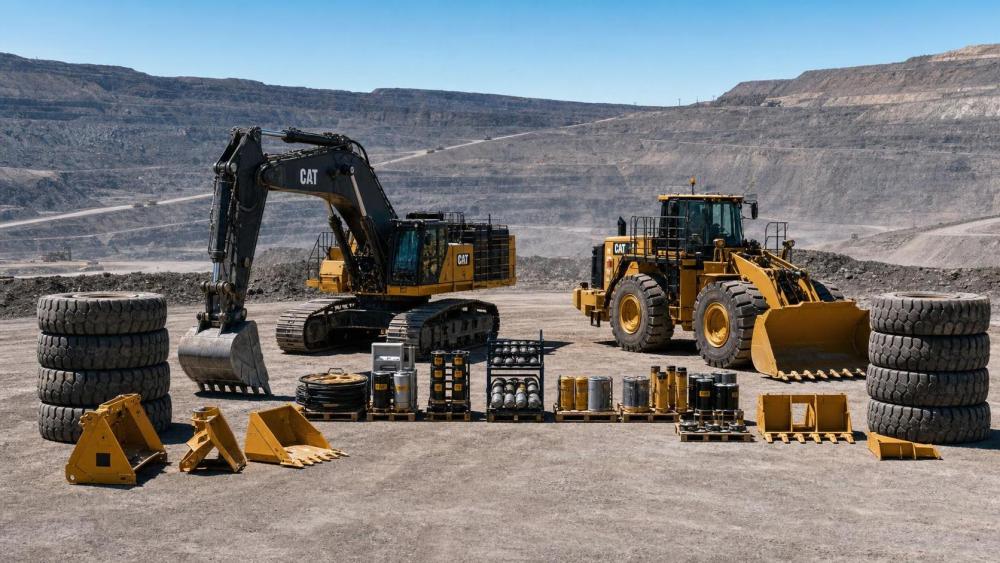
Mining equipment works in punishing conditions, so small cost differences quickly multiply.
A cheaper excavator or wheel loader can become the expensive option within one operating season.
That usually happens through fuel burn, weak component life, and lower machine availability.
More importantly, downtime creates hidden losses far beyond repair invoices.
When loading equipment stops, trucks wait, production slows, and labor efficiency drops.
That is why advanced buyers assess mining equipment through total cost of ownership, not base price.
EMD tracks this shift closely across crawler excavators, bulldozers, loaders, and precision support machines.
The Main Cost Buckets in Mining Equipment Ownership
A useful mining equipment cost model starts with six major buckets.
These buckets make ownership cost easier to forecast and compare across brands.
1. Acquisition and Delivery
This includes purchase price, freight, taxes, import duties, and site commissioning.
For large mining equipment, transport and setup can materially change landed cost.
2. Fuel or Energy Use
Fuel remains one of the largest operating costs for mining equipment fleets.
Even slight efficiency gains matter when machines run long shifts every day.
3. Maintenance and Wear Parts
Scheduled service is predictable. Wear parts and failures are where budgets get tested.
Tracks, buckets, cutting edges, GET, tires, pins, hoses, and pumps all influence cost.
4. Downtime and Lost Output
This is often the biggest hidden line in any mining equipment ownership review.
A stopped machine affects production targets, contractor commitments, and unit cost per ton.
5. Operator Productivity
Machine responsiveness, visibility, automation aids, and ergonomic design affect output quality.
Higher productivity spreads fixed ownership cost across more tons moved.
6. Residual Value
Resale value closes the ownership loop and deserves more attention during procurement.
Strong residuals reduce effective mining equipment cost over the asset lifecycle.
What Usually Has the Biggest Financial Impact
In practice, three factors usually dominate total mining equipment ownership cost.
The first is uptime.
Reliable equipment protects production plans and reduces emergency maintenance spending.
The second is fuel efficiency.
This is especially important for high-hour excavators, bulldozers, and wheel loaders.
The third is parts and service support.
A strong dealer network shortens repair time and improves lifecycle planning.
From recent market changes, these priorities have become even clearer.
Supply chain delays raise the cost of carrying weak mining equipment platforms.
At the same time, stricter emissions rules increase the value of efficient, future-ready fleets.
A Practical Cost Breakdown Table for Equipment Evaluation
A simple comparison table helps keep mining equipment procurement grounded in numbers.
This structure makes mining equipment bids easier to compare on a like-for-like basis.
How Equipment Type Changes the Cost Equation
Not all mining equipment behaves the same from a cost perspective.
Crawler excavators usually concentrate value in digging force, hydraulics, and structural durability.
Wheel loaders often live or die by fuel use, tire wear, and loading efficiency.
Bulldozers bring major undercarriage cost, especially in abrasive ground conditions.
Motor graders can appear secondary, yet precision and uptime strongly affect road maintenance budgets.
Skid steer loaders in mining support roles depend heavily on attachment utilization and service simplicity.
That also means benchmarking should reflect actual duty cycle, not generic brochure averages.
A productive machine in one quarry may underperform badly in another site profile.
Questions to Ask Before Approving a Mining Equipment Purchase
The most effective procurement teams challenge suppliers with lifecycle questions early.
- What is the expected hourly fuel burn in our exact duty cycle?
- Which wear components fail first, and what is their replacement cost?
- What uptime commitment backs this mining equipment model?
- How fast can critical parts reach the site during a breakdown?
- Which telematics data is included for maintenance and utilization tracking?
- How does this machine retain value after three to five years?
- Does the platform align with future emissions, electrification, or remote-control needs?
These questions shift the conversation from price negotiation to cost control.
That is where better mining equipment procurement decisions usually begin.
Where Smarter Planning Protects Margins
Better mining equipment economics rarely come from one dramatic change.
They usually come from several disciplined decisions made before purchase.
Match machine size to material density and haul plan.
Review dealer support by region, not by brochure promise.
Model annual cost with downtime scenarios, not ideal uptime assumptions.
Include resale expectations in every business case.
Treat telematics and condition monitoring as financial tools, not technical extras.
More clearly now, automation readiness also deserves a place in cost reviews.
Remote diagnostics and semi-autonomous functions can reduce operator variability and service delays.
Over time, that can materially improve mining equipment return on invested capital.
Final Takeaway
The best mining equipment decision is rarely the lowest bid.
It is the option that balances reliability, efficiency, service support, and residual strength.
When ownership cost is mapped carefully, budget approvals become easier to defend.
More importantly, operations gain equipment that protects output in volatile conditions.
Use each mining equipment purchase as a lifecycle investment decision.
That approach keeps capital disciplined, risk visible, and long-term margins healthier.